
Winter sidewalks mean rock salt, ice melt and frozen crust under every paw. If your dog won’t keep boots on, a paw wax or balm is the easy alternative: a thin barrier before the walk, a quick wipe at the door, and a moisturizer when pads look dry. Here are the products dog owners reach for most this season, plus how to use them so they don’t end up on your rugs.
Short version: Wax before salted walks. Wipe or rinse paws every time you come in. Balm on clean, dry pads when they feel rough. Call your vet if a pad bleeds, swells or your dog starts limping.
Quick picks for salt, ice and snow
Best all-round winter wax: Musher’s Secret Paw Wax, 60 Grams
Check price on Amazon
Best budget pad balm: Palmer’s for Pets Cocoa Butter Paw Pad and Nose Balm, 3.5 Oz
Check price on Amazon
Best if your dog licks: PawSono Lick-Safe Dog Paw & Nose Balm (twist-up stick)
Check price on Amazon
Full notes on each pick are below. Need a coat or boots too? See our dog winter coats and boots guide.
Wax vs. Balm: Two Different Jobs
People use “paw wax” and “paw balm” as if they were the same thing. They overlap, but they do different jobs in winter.
- Paw wax goes on before the walk. It is firmer and sits on the pad as a thin barrier between the skin and salt, ice-melt residue and packed snow. Musher’s Secret is the best-known example and describes itself as a breathable barrier for winter ice, snow and salt.
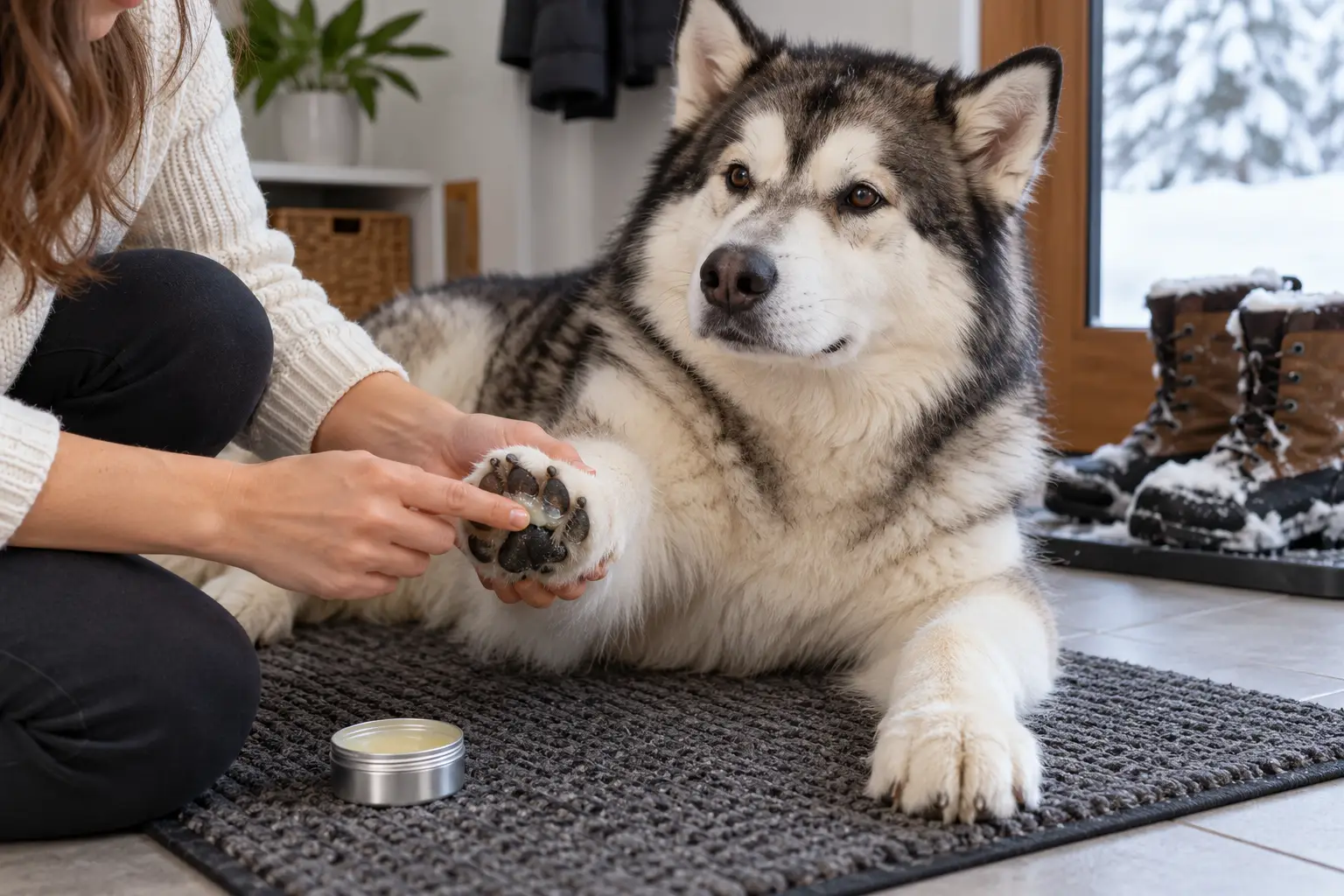
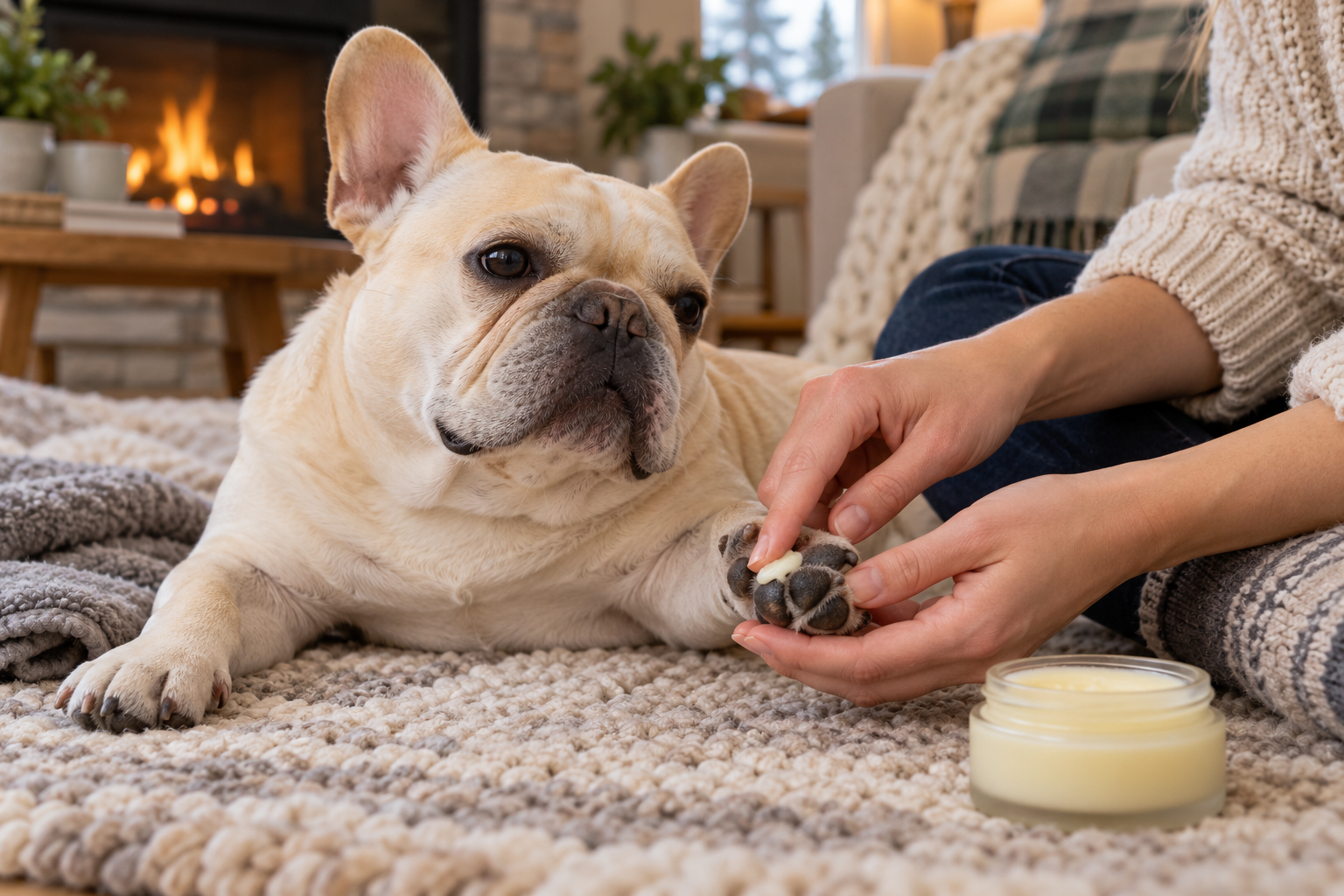
- Paw balm goes on after the walk. It is softer and is meant to moisturize pads that already feel dry or rough. Put it on clean, dry paws once the salt is off, ideally when your dog is settling down for a nap so it has time to soak in.
If you only buy one product, buy the wax and pair it with a good wipe-down routine. Add a balm if your dog’s pads start to look dry, rough or cracked by mid-winter.
The Three Picks, Up Close
Musher’s Secret Paw Wax, 60 Grams
Musher’s Secret Paw Wax — Check price on Amazon
This is the classic winter barrier wax, and the one owners mention again and again when their dog refuses boots. The maker lists 100% natural, food-grade, plant-based waxes and describes the wax as non-toxic and non-staining. One buyer summed up why people stick with it: “This works well and my dog doesn’t try to take it off.” The same buyer had tried boots first, and their dog would not keep them on. Rub a thin layer into each pad and between the toes before you head out.
Best for: Daily walks on salted sidewalks when boots are a no-go.
Palmer’s for Pets Cocoa Butter Paw Pad and Nose Balm, 3.5 Oz
Palmer’s for Pets Paw Pad & Nose Balm — Check price on Amazon
A soft cocoa butter and vitamin E balm for dry pads and noses. The brand lists it as fragrance-free, plant-based and made without parabens or phthalates. It is a moisturizer, not a barrier wax, so use it after the walk on clean, dry pads rather than right before you step onto salt.
Best for: Budget after-walk care, and dogs whose noses dry out in winter too.
PawSono Lick-Safe Dog Paw & Nose Balm

PawSono Lick-Safe Paw & Nose Balm — Check price on Amazon
A twist-up stick, so you glide it straight onto the pad with no scooping from a tin and no greasy fingers. The maker describes the blend as food-grade and lick-safe, with coconut oil, shea butter, olive oil and calendula. If your dog licks off anything you put on their feet, a stick you can apply in seconds, right before a distraction like dinner, is easier to live with.
Best for: Lickers, and owners who want something small for a coat pocket.
Already-cracked pads, or salt cleanup at the door

For dry, cracked pads: Natural Dog Company Paw Soother, 2 oz Stick
Check price on Amazon

For rinsing salt off fast: Dexas MudBuster Large Dog Paw Cleaner (fits 2.5″–3.5″ paws)
Check size and price on Amazon
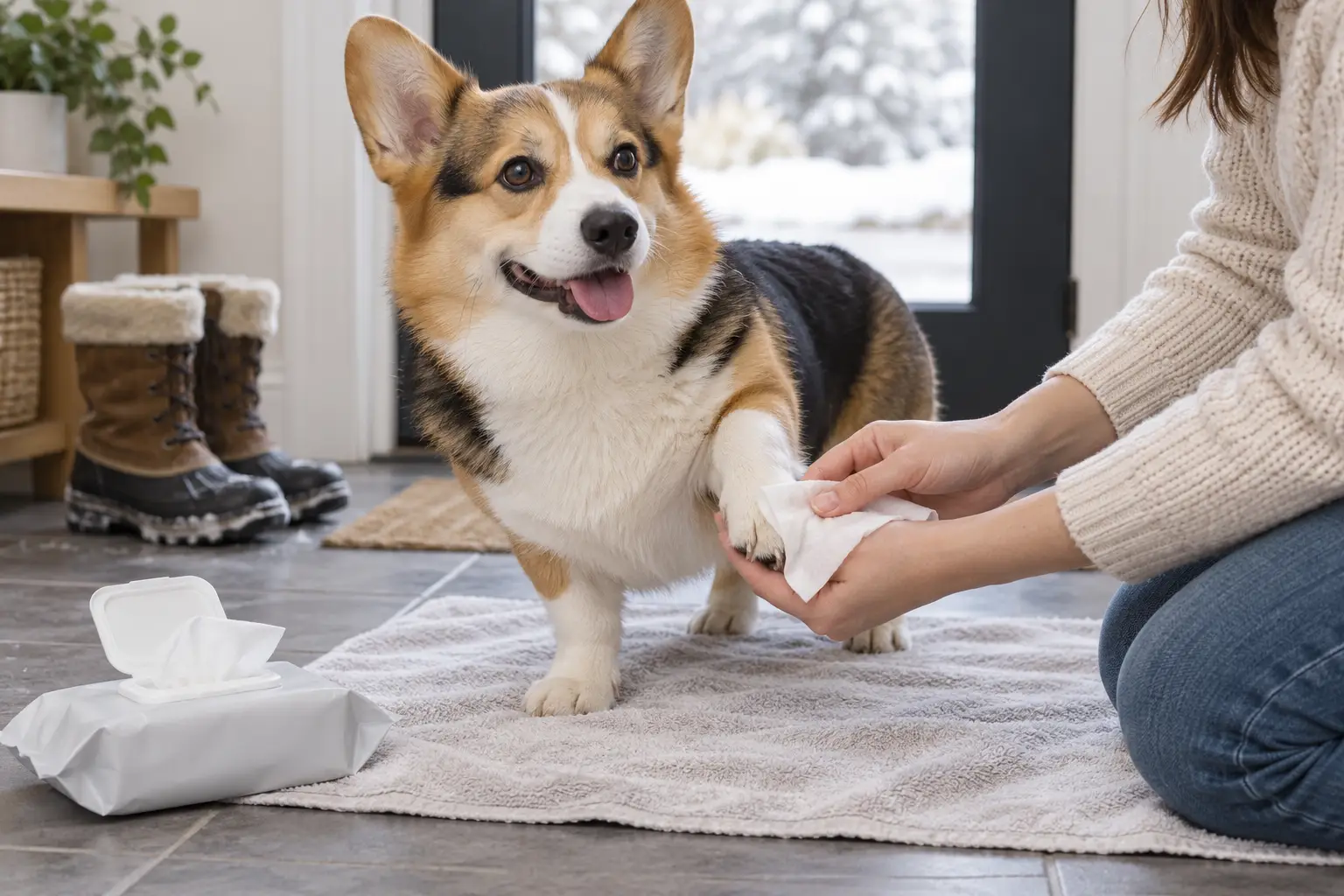
For quick wipe-downs: Earth Rated Dog Wipes for Paws, Unscented, 100ct
Check price on Amazon

The MudBuster also comes in a Medium size for paws 1.5″–2.5″ wide (MudBuster Medium on Amazon). Measure your dog’s paw width before you order.
How to Apply Paw Wax Before a Winter Walk
- Start with dry paws. Wax does not stick well to wet or snowy pads. Towel them first if needed.
- Trim the fur between the pads if it is long. Ice balls form in that fur and pull on the skin. A groomer can do this if you are not comfortable with scissors near toes.
- Use a thin layer. Rub a small amount into each pad and between the toes. More is not better; a thick coat just ends up on your floor.
- Give it a minute. Put the leash on, grab your keys, then go. That short pause keeps more wax on the paw and less on the hallway rug.
- Reapply on long walks or deep snow, following the label.
Another buyer review captures the goal: “So great to have a product that works, doesn’t stain the rugs and the dog doesn’t lick off.” A thin coat and a short pause are how you get there.
Wipe Paws After Every Salted Sidewalk
Wax reduces contact; it doesn’t make salt disappear. Rock salt and ice-melt residue cling to fur and the skin between the toes, and dogs naturally lick their feet once they are home. Make the cleanup part of coming in the door:
- Keep a towel and wipes, or a paw-rinse cup with lukewarm water, right by the entry.
- Rinse or wipe all four paws, including between the toes and the fur around the pads.
- Dry thoroughly. Damp fur between the toes stays cold and can get irritated.
- Apply balm on clean, dry pads if they feel rough.
If your dog comes in smelly as well as salty, our guide to why a dog can still smell after a bath covers the rest of the coat.
Your Own Steps and Driveway
You can’t control city sidewalks, but you can control your own steps. A salt- and chloride-free deicer marketed for homes with pets is one option for the spots your dog crosses every day. Read and follow the label, store it closed and out of reach, and still wipe paws when you come in.

Safe Paw Salt-Free Ice Melt, 8 lb — Check price on Amazon
Boots vs. Wax
Boots give the most complete physical barrier, which is why they are worth a try for dogs who walk a lot on heavily salted streets. The catch is that many dogs hate them. If your dog will wear boots, a non-slip waterproof pair like the CovertSafe Dog Boots & Paw Protectors keeps salt and ice melt off the pads without relying on wax alone.

CovertSafe Non-Slip Waterproof Dog Boots & Paw Protectors — Check sizes on Amazon
Measure the paw and use the maker’s size chart on the listing before you order; fit matters more than brand. For padded boots and coats that work together, see our dog winter coats and boots guide. If boots are a firm no, wax plus a thorough wipe-down is a reasonable plan for most everyday walks.
FAQ
Is paw wax safe if my dog licks it?
Go by the label of the product you buy. Musher’s Secret describes its ingredients as 100% natural food-grade, plant-based waxes and its safety information as non-toxic. PawSono describes its blend as food-grade and safe even if licked. Use a thin layer so there is little to lick, and ask your vet if your dog has allergies or a sensitive stomach.
Can I use human lotion or petroleum jelly instead?
Products made for dogs are the safer bet, because dogs lick their paws and many human lotions contain fragrances or other ingredients that aren’t meant to be swallowed. If you are unsure about an ingredient, ask your vet.
Do I still need wax if my dog wears boots?
Not on the walks they actually keep the boots on. Wax is useful for boot-off days, for the gap above a short boot, and as a backup when a boot comes loose halfway around the block.
How often should I put it on?
Follow the directions on the product. A common routine is a fresh thin coat of wax before each salted walk and balm afterward on clean, dry pads when they feel rough.
Will paw wax stain my floors?
Musher’s Secret lists itself as non-staining. Thin coats and a one-minute pause before the walk keep most of it on the paw and off your rugs.
Final Take
Winter paw care is a three-step habit, not a project: wax before the walk, salt off at the door, balm when pads look dry. Start with Musher’s Secret if your dog won’t wear boots, add Palmer’s or the PawSono stick for after-walk care, and keep a towel, wipes or a MudBuster by the door. Watch for limping, swelling or bleeding, and call your vet when you see it. That covers most dogs from the first cold snap through the last salted sidewalk of the season.
Seasonal pet tips and gear guides
Get seasonal pet-care tips and buying guides with fit, care, and maintenance details. Unsubscribe anytime.