
Tanks & Habitats for Aquatic Turtles
Plan an aquatic turtle habitat around its species, adult size, swimming ability and basking needs. A red-eared slider guideline uses 10 gallons of water per inch of shell length, but gallon capacity alone does not establish suitable dimensions, water depth or dry space. Check those requirements before choosing a tank, and plan for growth rather than relying on a starter-kit label.
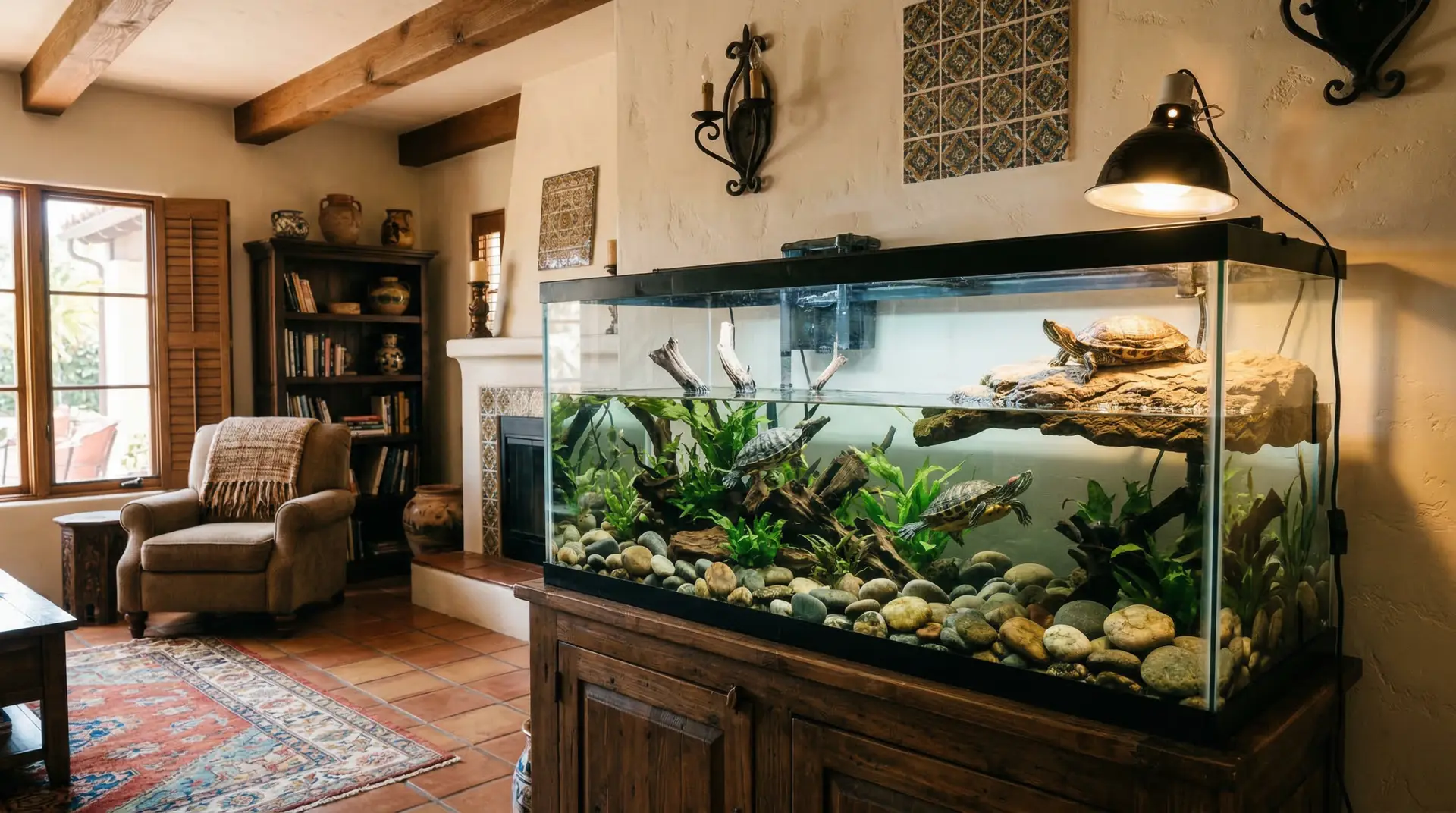
Habitat visual; check actual dimensions, water depth and equipment specifications.
Tank Size Basics
Tank size is one of the most important parts of aquatic turtle care. A small enclosure can limit swimming space, make water quality harder to control, and leave very little room for a proper basking area, filter, heater, and safe decorations. Young turtles may start small, but many common aquatic turtles grow quickly, so it is usually better to plan around the turtle's adult size instead of only its current size.
- Hatchlings: Check species-specific swimming depth and easy access to dry space.
- Juveniles: Plan usable swimming dimensions and space for growth.
- Adults: Check adult size, swimming dimensions and a fully dry basking area.
| Turtle Size | Measure Before Choosing | Planning Focus | Setup Note |
|---|---|---|---|
| Small hatchling | Water depth and easy exits | Species-specific early care | Check depth, dry-platform access and current strength for the species and life stage. |
| Juvenile turtle | Swimming room and growth | Growing turtle habitat | Plan ahead because many turtles outgrow small tanks faster than new keepers expect. |
| Medium adult turtle | Adult swimming dimensions | Longer-term indoor setup | Keep swimming space clear and check water readings and filter performance. |
| Large adult turtle | Adult size and equipment clearance | Large permanent habitat | Check usable dimensions, a stable dry platform and equipment that cannot trap or burn the turtle. |
Core Habitat Setup
A turtle tank is more than just water and glass. The setup needs to support swimming, basking, digestion, shell health, and cleaner water. These are the main pieces most aquatic turtle habitats need.
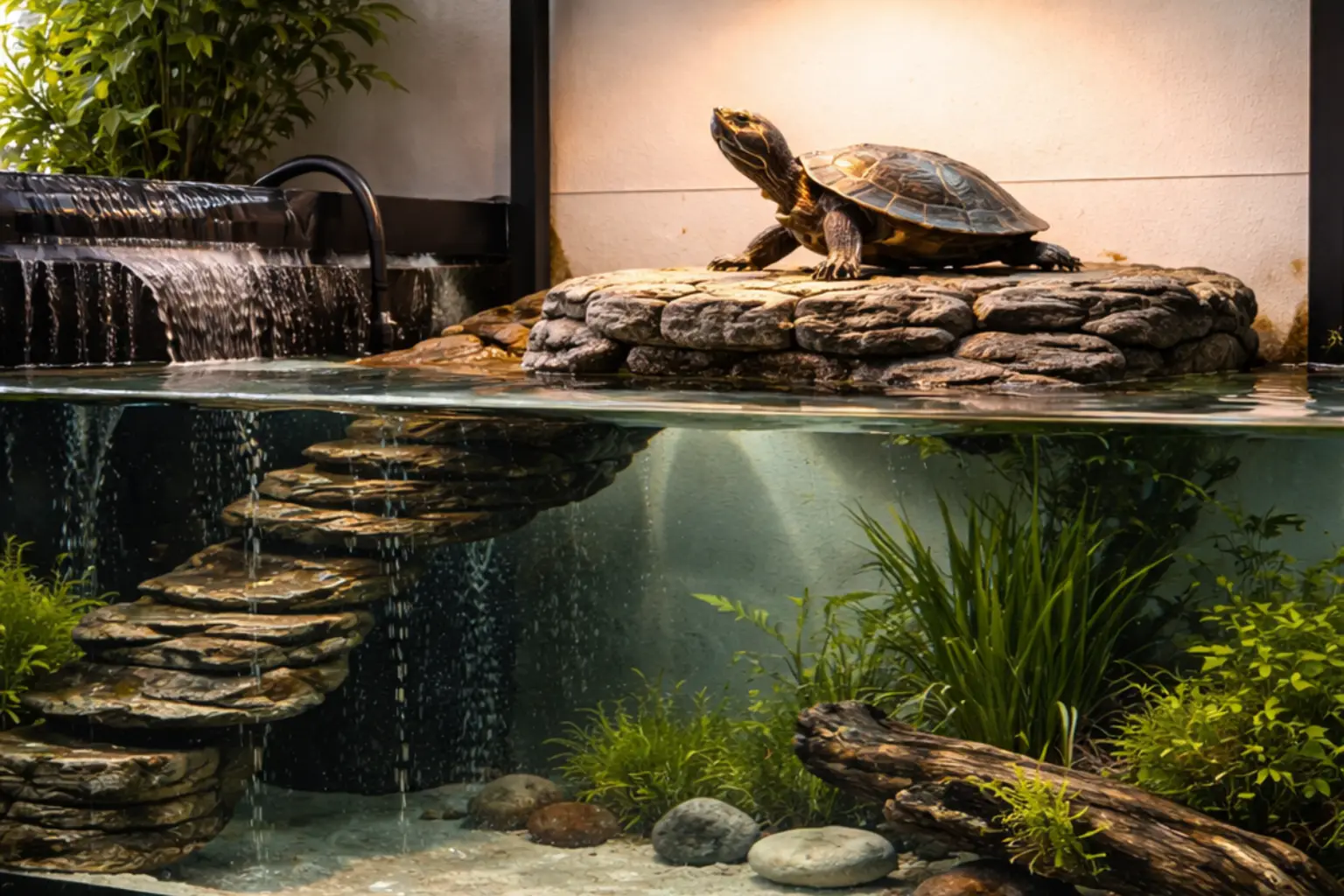
Basking visual; measure the actual dry area and temperature.
Basking Area
Provide a stable, accessible dry area and species-appropriate basking heat. Keep the turtle from touching the heat source and measure the actual basking temperature.
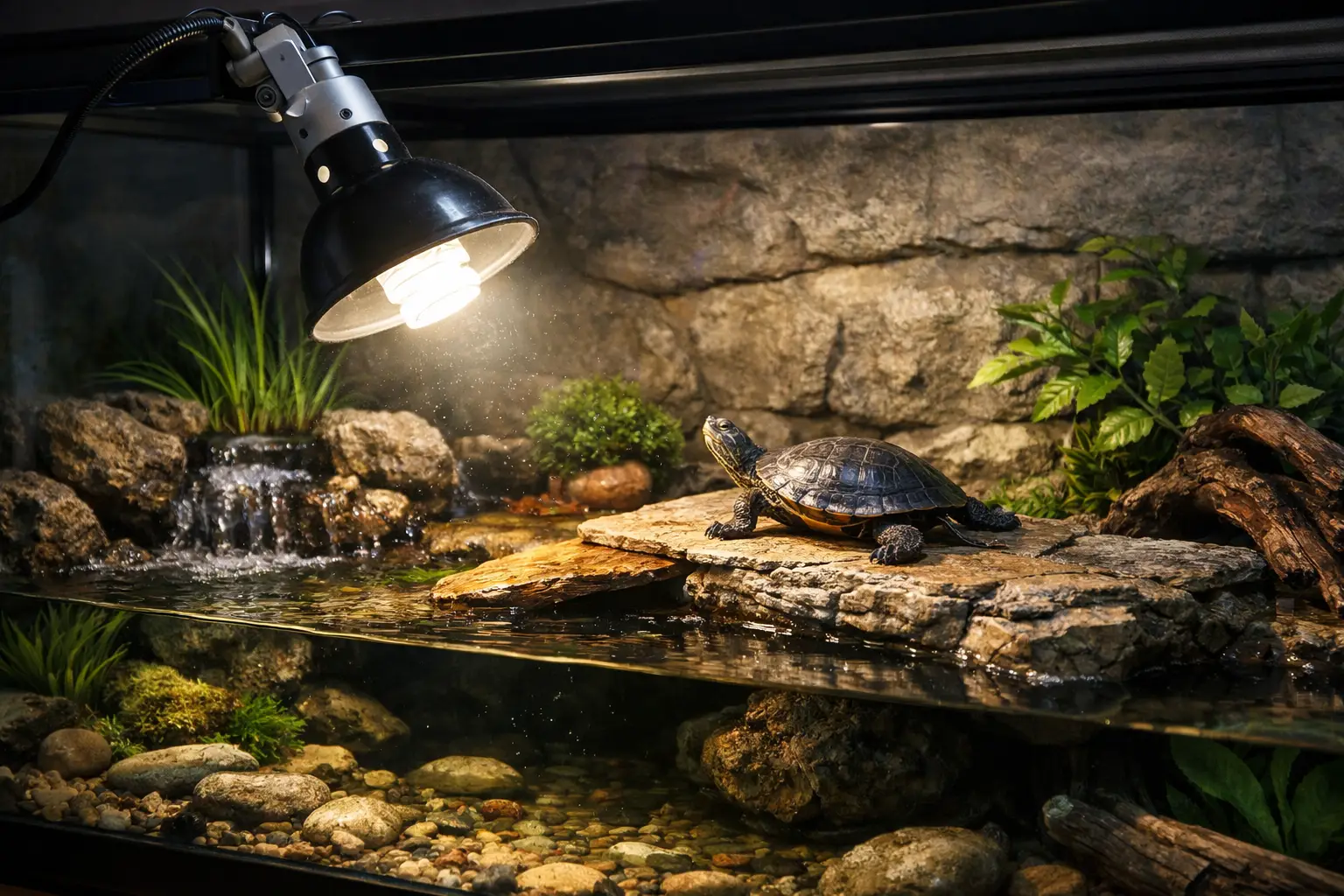
Lighting visual; lamp appearance does not identify UVB output.
UVB Lighting
UVB supports vitamin D and calcium use. Choose a reptile UVB lamp and follow the exact model’s placement, barrier and replacement instructions; a lamp’s appearance does not confirm UVB output.
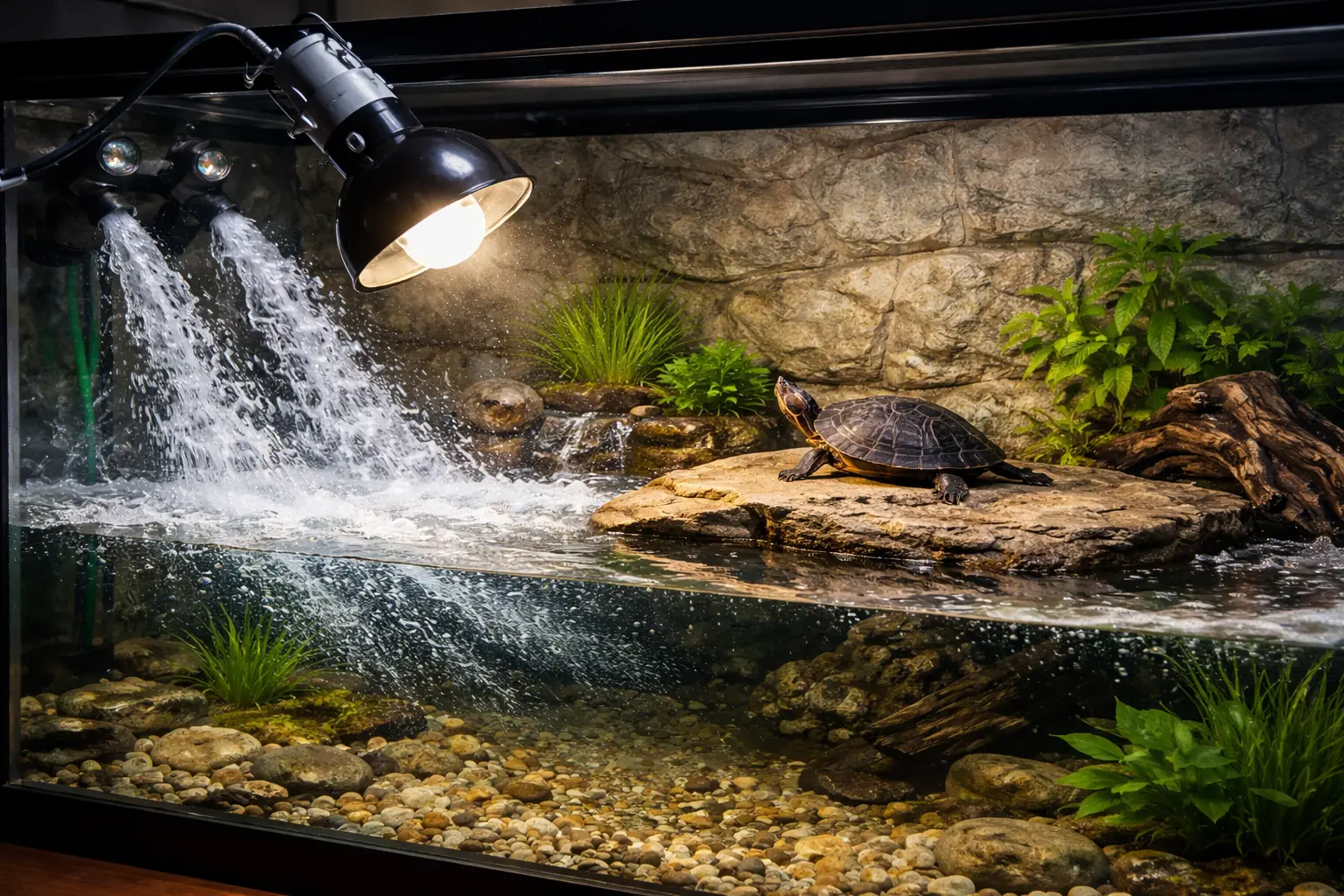
Water-flow visual; test readings and model instructions determine the filtration checks.
Strong Filtration
Compare the filter’s intended use, water-level requirements, flow, media and intake protection with the actual tank. Check water readings and maintenance needs; a gallon rating alone does not establish suitable filtration.
Layout Features to Check
Keep swimming space open and the basking ramp accessible. Check each decoration for stability, entrapment and ingestion risks; the pictured layouts do not establish suitable dimensions or materials for your turtle.
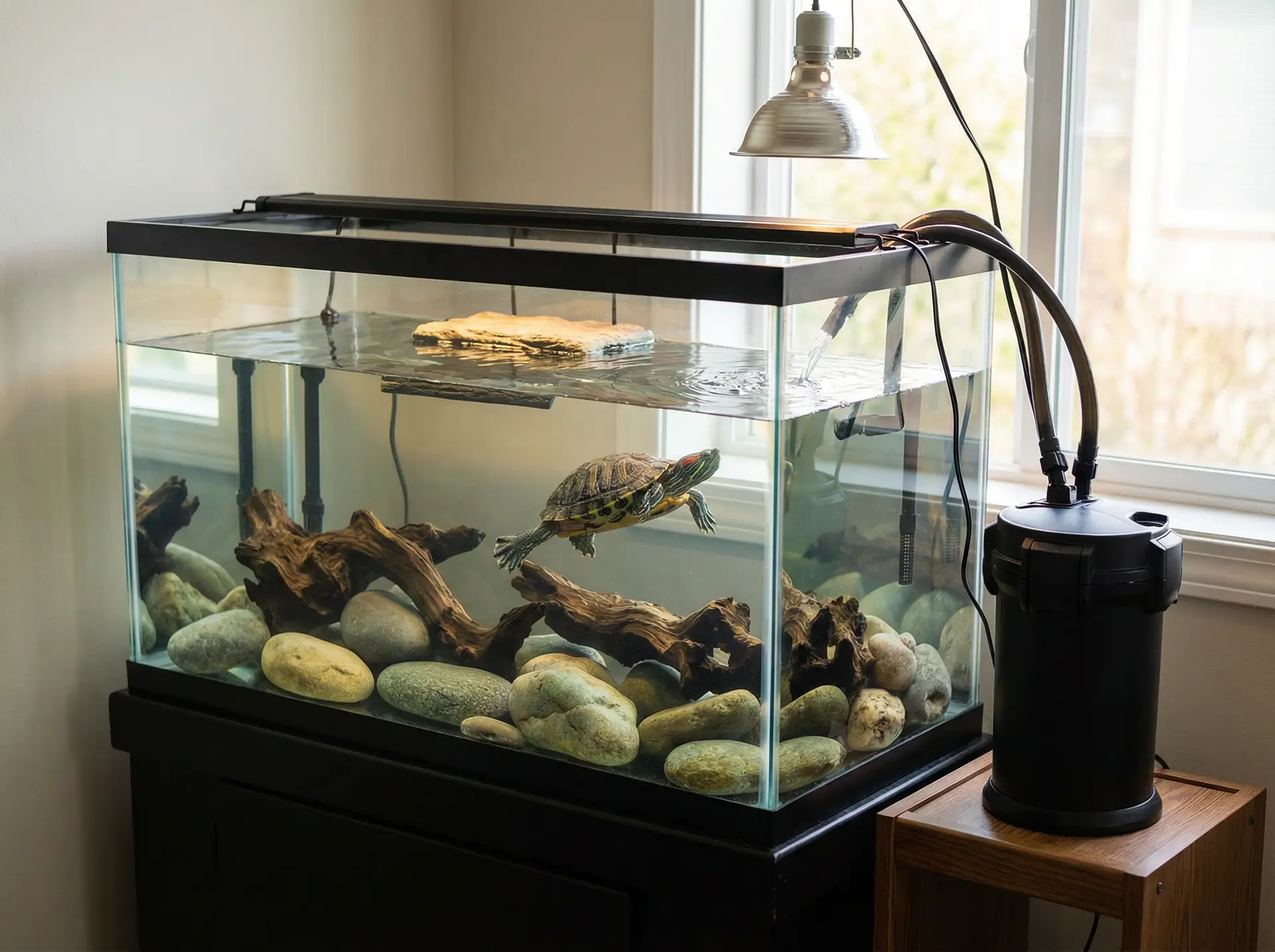
Decorated-tank visual; pictured stones and plants still need species-specific checks.
Decorated Tank
The visual shows rocks, plants and a platform. Assess those materials for the actual species: secure decorations, avoid swallowable stones and check plant suitability and access for cleaning.
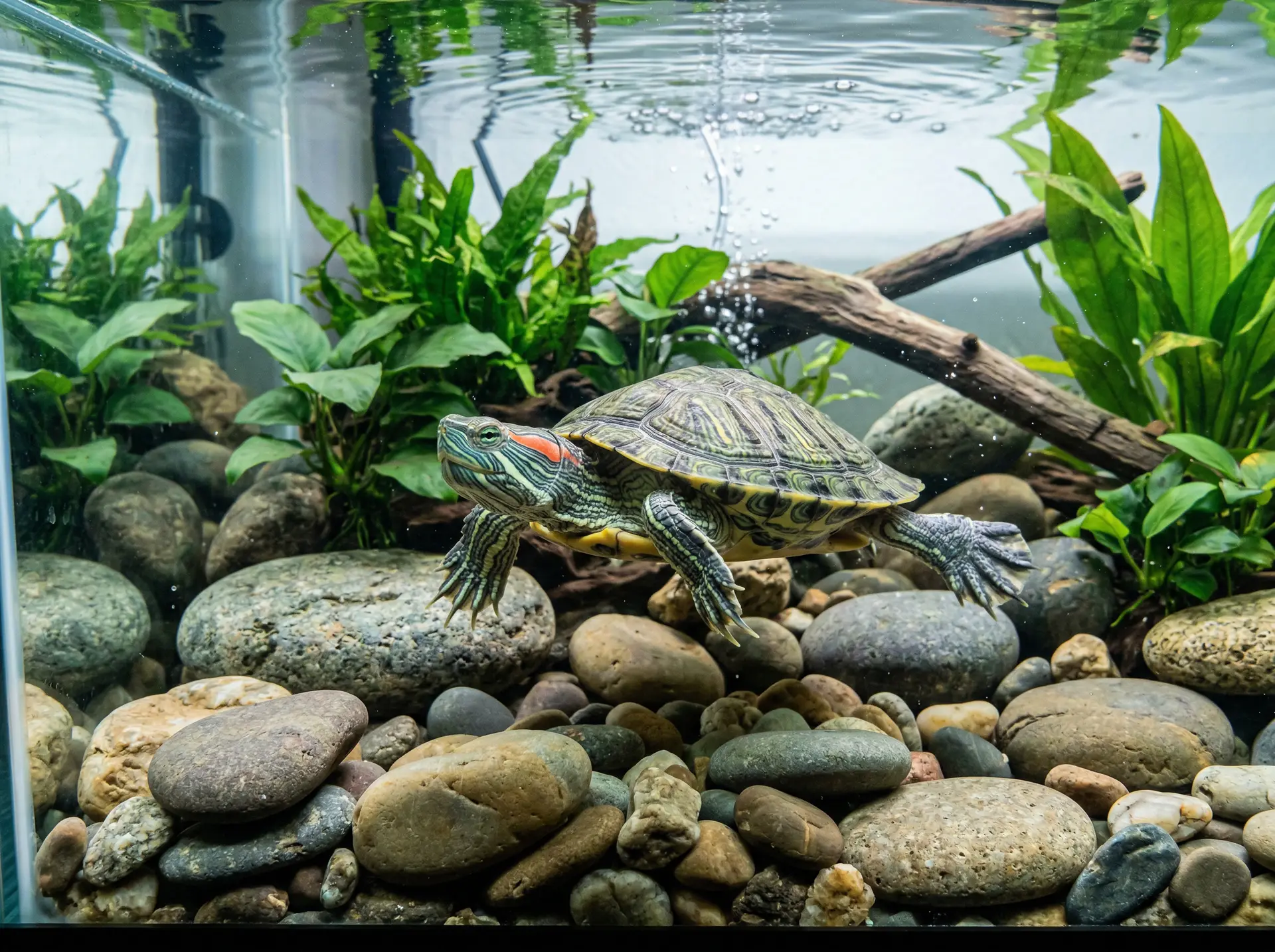
Rock-and-plant visual; this close-up does not show a minimal or complete habitat.
Rock-and-Plant Detail
This close-up contains many stones and plants, rather than a minimal layout. Leave usable swimming room and check stability, ingestion risks and access for removing trapped debris.
Basic Aquatic Turtle Habitat Checklist
Before bringing a turtle home or upgrading a small setup, make sure the habitat has the basics covered. A tank that is large enough but missing heat, UVB, or filtration is still incomplete.
- Large tank: Enough water volume for swimming and future growth.
- Dry basking platform: A stable area where the turtle can fully leave the water.
- Heat lamp: Helps create a warm basking spot above the platform.
- UVB light: Supports healthy shell and bone development.
- Strong filter: Check debris capture, flow and water readings; clean according to actual conditions.
- Water heater: Follow species-specific targets and the heater’s water-level, placement and protection instructions.
- Thermometer: Lets you check the real water and basking temperatures.
- Secure lid or screen top: Helps prevent climbing escapes while allowing safe light placement.
- Cleaning tools: A siphon, bucket, algae scraper, and waste-removal tools make maintenance easier.
Common Turtle Tank Mistakes to Avoid
Starting Too Small
Tiny tanks get dirty fast and are quickly outgrown. It is usually smarter to plan around the turtle's adult size instead of buying the smallest starter setup.
Skipping the Dry Basking Area
Aquatic turtles still need a dry place to climb out, warm up, and rest. A floating or raised basking platform should be stable, easy to access, and large enough for the turtle.
Using Weak Filtration
Assess filtration against the actual water volume, waste load, flow and test readings. Clean-looking water or a fish-tank gallon rating alone does not establish adequate water quality.
Aquatic Turtle Tank FAQ
What size tank does an aquatic turtle need?
A red-eared slider guideline uses 10 gallons of water per inch of shell length. Treat it as one planning check: confirm species-specific swimming dimensions, depth, growth and dry space. It is not a universal minimum for every aquatic turtle.
Do aquatic turtles need a basking area?
Yes. Aquatic turtles need a dry platform where they can climb out of the water, warm up, and rest under proper heat and UVB lighting.
Can I keep an aquatic turtle in a small starter tank?
A small tank may only work temporarily for a very young turtle. Most aquatic turtles grow, create heavy waste, and need more room than a small starter kit can provide long term.
Why does a turtle tank need strong filtration?
Filtration handles debris and supports water care, but it does not replace test readings, cleaning or water changes. Choose it for the actual tank and follow its installation and maintenance instructions.
Should turtle tanks be simple or natural-looking?
Compare usable swimming space, access for cleaning and each material’s suitability for the species. A natural appearance or a sparse layout alone does not establish a suitable habitat.
Build It Right From the Start
Before buying, check species-specific dimensions, a dry basking area, UVB, measured temperatures, filtration and equipment access. Compare the actual listing with those requirements; a setup label does not establish that every needed part is included.
Review the Linked Amazon Listing