
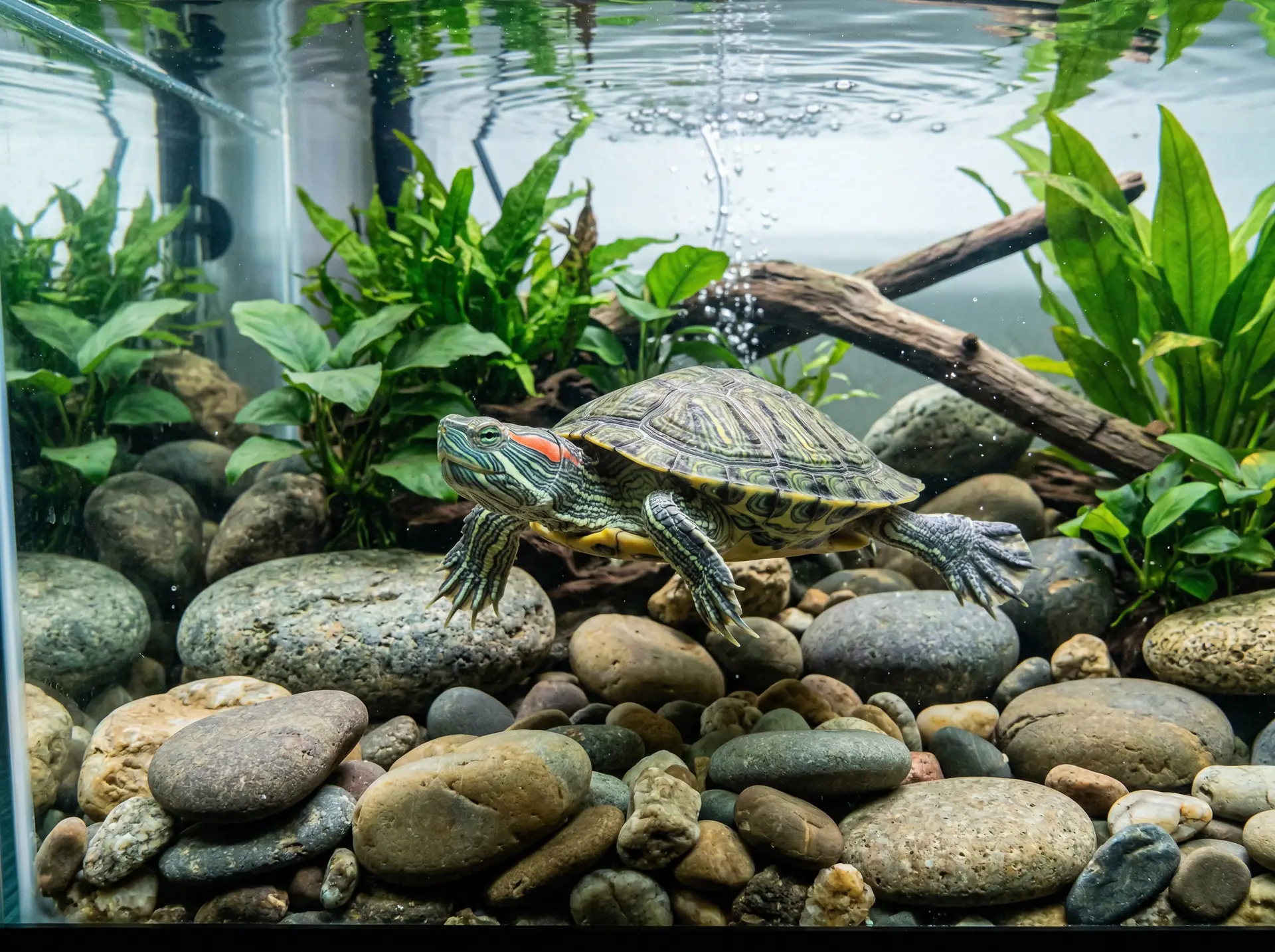
Turtle Shell Changes: Shedding, White Patches, and When to Call a Vet
You looked closely at your turtle's shell and saw something that made you stop scrolling: flaking pieces, a chalky white patch, or a soft spot that just looks wrong. Before you panic, take a breath — there are several possible causes, and appearance alone may not identify them.
This guide walks through all three to help you notice warning signs and prepare questions for a reptile veterinarian.
Shell Warning Signs to Check
Record when the shell change began and whether appetite, activity or basking has changed. Normal-looking behavior alone does not establish that a new shell change is harmless.
- Hard shell, normal appetite, normal basking, flaking in flat translucent flakes → can fit normal shedding in species that shed scutes. New or uncertain changes still deserve veterinary advice.
- Soft, pitted, discolored (gray, black, red, or yellow-green) patches, foul smell, or the turtle is basking less → this could be shell rot, and it needs attention.
- White, fuzzy, or chalky patches that scrub off but the shell underneath is still hard → cannot be identified reliably from color or whether a film wipes away. Ask a reptile veterinarian about new or persistent patches.
Scute Shedding: What to Observe
In aquatic turtles that shed scutes, outer shell plates can flake as they grow. Shedding alone does not establish health; ask a reptile veterinarian if the change is new, persistent or uncertain.
Observations to record:
- Flat, thin, semi-translucent flakes (not chunks or thick pieces)
- The shell underneath is smooth, hard, and normally colored
- No smell
- Your turtle is eating, basking, and swimming normally
- Record the timing, progression and any other changes
Do not pull or peel loose scutes to check the shell. Photograph the change and ask a reptile veterinarian if you are unsure whether it is normal.
The one thing worth checking: shedding still requires a healthy setup to happen properly. If you haven't verified your basic water parameters and basking setup recently, it's worth a quick check against our aquatic turtle tank setup guide.
Cause 2: Shell Rot (Bacterial or Fungal Infection)
This is the one that actually worries people, and rightly so — shell rot (ulcerative shell disease) is a real infection, not cosmetic, and left untreated it can eat through to the bone plate underneath.
What shell rot looks like:
- Soft, mushy, or pitted areas instead of hard shell
- Discoloration: gray, black, reddish, or greenish patches that don't wipe off
- A distinct foul or musty smell (this is the same odor issue we cover in our tank and shell odor troubleshooting guide if the smell is coming from the whole tank, not just the shell)
- Flaking that leaves an uneven, eroded surface rather than a smooth one underneath
- The turtle may bask less or seem lethargic in more advanced cases
What to review. Shell injury and habitat conditions are relevant observations, but they do not establish the cause of a shell change. A reptile veterinarian should assess suspected infection and advise on care.
Veterinary assessment and habitat review
First — for suspected shell infection or unexplained discoloration, contact a reptile veterinarian. Shell rot can progress quickly and a vet can confirm whether it's bacterial, fungal, or both, and whether it's reached the bone. This is not optional if the shell is soft or pitted, not just discolored.
Do not start an antiseptic soak based on appearance alone. A veterinarian should diagnose the problem and specify any product, concentration, contact time, and treatment plan:
Betadine Antiseptic Povidone-Iodine Solution, 8 Fl Oz
Use an antiseptic only if your veterinarian prescribes that exact product and gives its dilution, application method and treatment instructions.
Alongside veterinary advice, review water care and basking access with this guide: how to properly filter an aquatic turtle tank.
If the habitat review identifies a filtration issue, our canister filter roundup compares options to assess against the actual waste load, space and maintenance needs.
White Patches: Several Possible Causes
New or unexplained white patches deserve reptile-veterinary advice. Their appearance alone does not distinguish infection, deposits, injury, or shedding.
What this looks like:
- Chalky white or grayish-white film, often patchy
- Photograph the patch; whether a film wipes away does not identify its cause
- Record any odor and other changes; absence of odor does not rule out a problem
- Sometimes paired with green algae staining in other spots
Habitat observations. Review access to a dry basking area, measured temperatures and the actual heat and UVB equipment. These observations help a veterinarian assess care; they do not diagnose a white patch as fungus.
Basking access is one habitat check; a new platform is not a diagnosis or treatment for white patches.
Penn-Plax Reptology Turtle Pier and Basking Platform
Check the exact equipment instructions and suitable heat/UVB requirements for your turtle. Our best UVB lights for aquatic turtles guide lists lighting options to compare; lighting changes do not establish the cause of a shell patch.
Improving the habitat supports care, but it does not diagnose the patch or guarantee it will resolve. Follow the veterinarian's assessment and treatment plan.
When to Stop DIY and Call a Vet
- The shell is soft, spongy, or pitted (not just discolored)
- There's a foul or rotten smell
- You can see red, raw tissue or bleeding under a scute
- Your turtle is lethargic, not eating, or basking noticeably less
- The condition is spreading, worsening, or unexplained; contact a reptile veterinarian promptly
FAQ
Is it normal for a turtle's shell to peel?
Scute shedding can be normal in species that shed scutes. New, persistent, or uncertain shell changes deserve reptile-veterinary advice, especially with softness, pitting, odor, bleeding, or appetite loss.
How can I tell shell rot from normal shedding at home?
Do not press or peel a suspicious area to diagnose it. Photograph the change and contact a reptile veterinarian, especially with softness, pitting, odor, bleeding, or poor appetite.
Can shell rot heal on its own without a vet?
Suspected shell infection needs a reptile veterinarian. Habitat improvements are part of care and do not replace diagnosis or prescribed treatment.
Why does my turtle have white patches even though the water looks clean?
White or pale patches have several possible causes. Clear-looking water and a dry dock do not identify the cause; have new or persistent patches assessed.
Will a new basking platform actually fix white shell patches?
A suitable platform may improve basking access. It cannot establish or treat the cause of a white patch on its own; ask a reptile veterinarian about the shell change.