
Paws Fins and Shells

Why Your Turtle Tank Still Smells (Even With a Filter)

One-line answer: Waste, leftover food, and dirty filter media can contribute to turtle tank odor. Start by removing trapped debris and reviewing water changes and filter maintenance before deciding what equipment to buy.

As an Amazon Associate, PawsFinsandShells may earn from qualifying purchases. Some links are affiliate links at no extra cost to you.

Three maintenance checks

  1. Pull the hidden waste. Siphon the substrate and corners during a partial water change so debris is not rotting under the gravel.
  2. Clear the filter path. Rinse clogged pads/sponges in removed tank water (not tap), and use a compatible intake sponge only if it fits securely and does not restrict flow. Clean it as needed.
  3. Match filtration to turtle mess. If odor keeps returning, review debris removal, feeding, water changes, and filter maintenance. Then check whether the filter suits the habitat.

What to buy

Three equipment options for different maintenance tasks. Check fit and use instructions, and review the habitat before buying.

1) Fluval FX4 canister filter

Fluval FX4 is listed for aquariums up to 250 US gallons. Compare its size, installation and service requirements with your habitat; this aquarium rating is not a guarantee that it will resolve turtle-tank odor.

See price on Amazon
2) Water treatment — beneficial bacteria sludge treatment

API Turtle Sludge Destroyer is the linked 8-ounce bacterial additive for breaking down organic debris. Follow its label; it does not replace water changes, debris removal or filter maintenance.

See price on Amazon
3) DXOPHIEX faucet-connected water changer

DXOPHIEX is a 30-foot water changer with a 19-inch gravel tube and faucet adapters. Check the faucet connection and the distance from your tank before buying; it is a faucet-connected system rather than a short bucket siphon.

See price on Amazon

Optional add-ons already on this page: AQUANEAT intake sponge — check intake fit first — Check price on Amazon · FLIPPER Float Standard cleaner — check panel material and thickness — Check price on Amazon. Full comparisons: canister guide · cleaning tools.

Keep reading: the full odor troubleshooting guide continues below.

Turtle Tank Odor: Waste, Water Care, and Filtration Checks

Odor with a running filter is a reason to review trapped debris, feeding, water changes, flow and filter maintenance. Smell alone does not establish the cause or tell you which equipment to buy.

Last updated: October 2026

As an Amazon Associate I earn from qualifying purchases. Some links in this article are affiliate links.

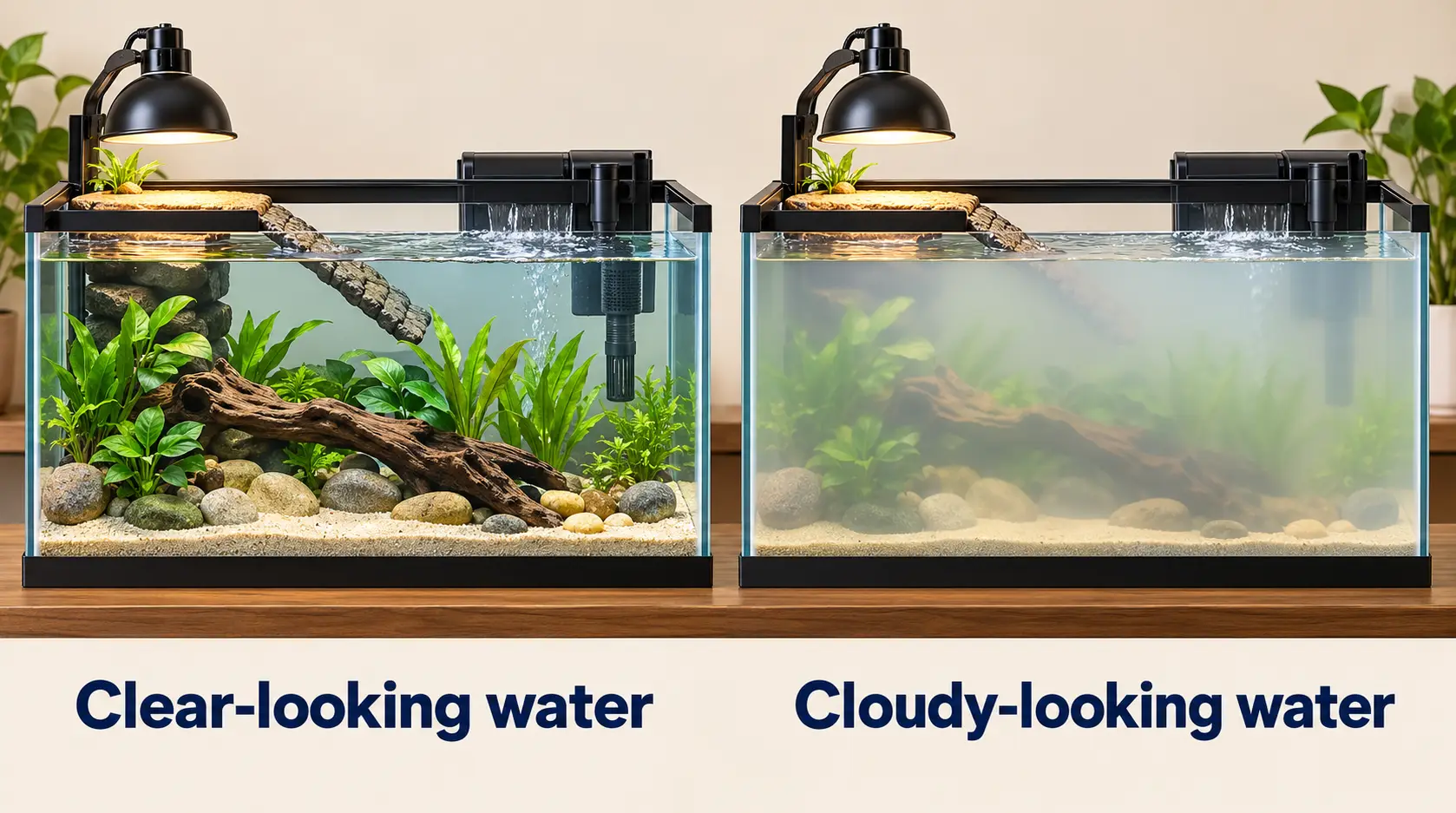
Illustration comparing clear-looking and cloudy-looking aquarium water

Illustration: water appearance alone does not establish water quality or turtle health.

Quick answer: A turtle tank can still smell with a filter because turtles create a lot of waste. The filter helps, but it cannot replace regular water changes, debris removal, leftover food cleanup, and proper filter maintenance.

A running filter does not replace water changes or debris removal. Uneaten food and waste can collect in the habitat and filter media; inspect those areas and review the care routine instead of relying on smell or clear-looking water alone.

Start by checking what has changed and where debris is collecting. If the odor appears to come from the turtle, or you notice shell changes, poor appetite, lethargy or breathing trouble, contact a reptile veterinarian; a habitat review cannot rule out illness.
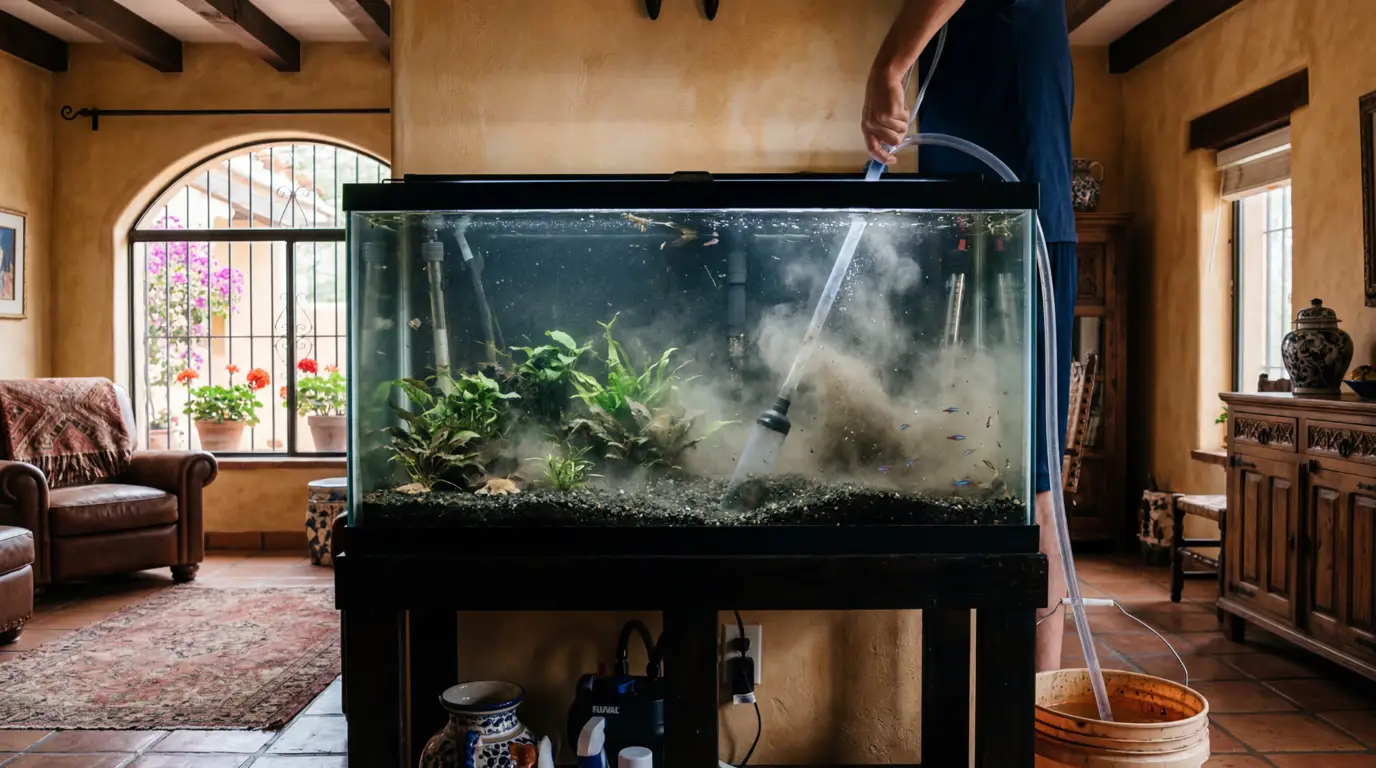
Illustration of aquarium gravel being siphoned into a bucket

Illustration of debris removal with a bucket siphon. Equipment and maintenance needs vary by habitat.

Check for Trapped Waste

Turtles eat and eliminate in the same water. Leftover food and waste can accumulate in the tank and mechanical filter media, so removing debris and keeping up with water care are practical checks when odor develops.

A tank can look mostly clean from the front but still have waste hiding behind decorations, basking ramps, around filter intakes, or in corners where the water does not move well. Inspect these areas for trapped debris. Using a compatible gravel vacuum like the DXOPHIEX aquarium siphon — Check price on Amazon during water changes can remove visible debris; follow the tool instructions and check its connection and reach.

Quick odor checklist

  • Remove leftover food after feeding.
  • Siphon visible waste from the bottom of the tank.
  • Check behind decorations, rocks, ramps, and plants.
  • Clean clogged mechanical filter pads before flow drops too much.
  • Plan water changes for the habitat’s needs; do not wait for odor as the only signal.
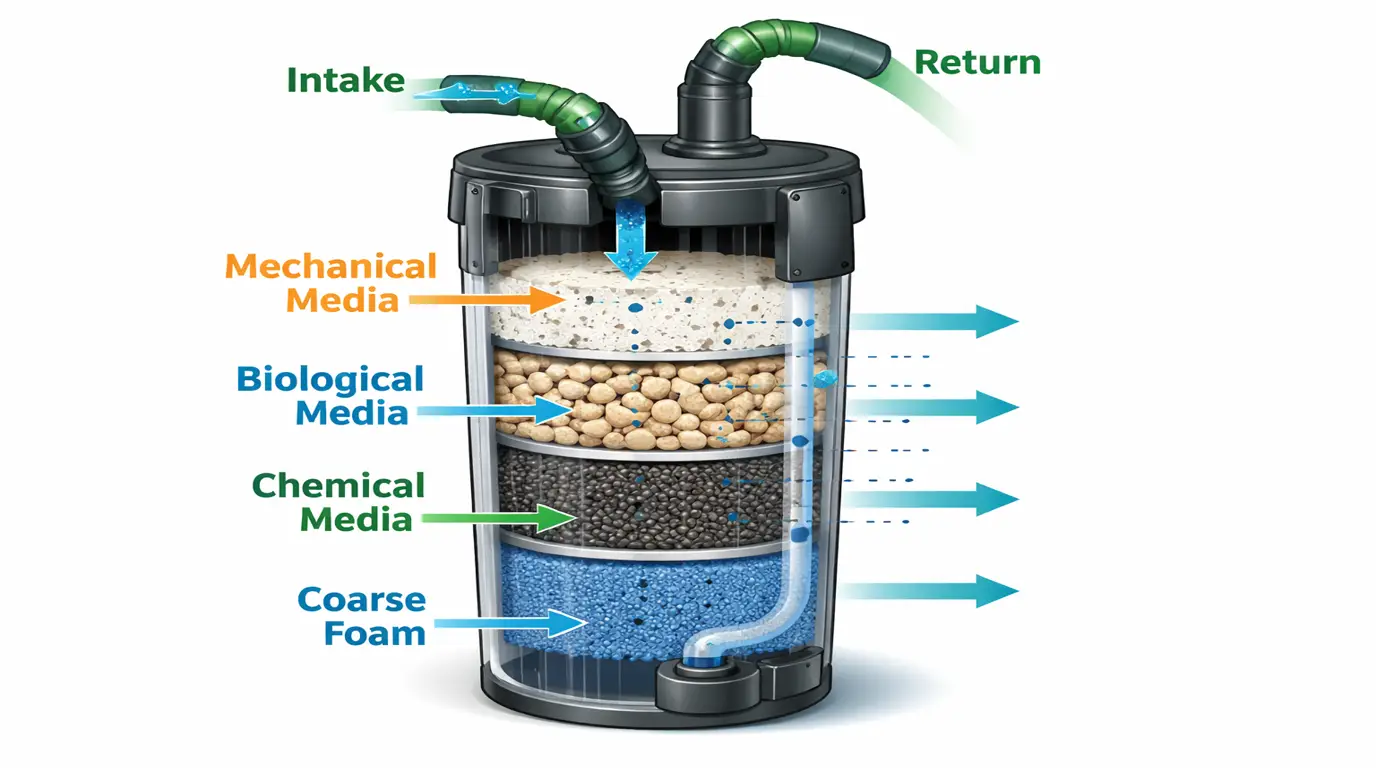
Conceptual cutaway illustration of a canister filter and media layers

Conceptual filter illustration. Media layout and water routing differ by model; follow the exact filter’s instructions.

Filters Help, But They Have Limits

A filter is one of the most important parts of an aquatic turtle setup, but it cannot handle unlimited waste. The filter moves water, traps debris, and gives beneficial bacteria a place to live. Once the filter media becomes packed with waste, the flow drops and the tank can start smelling even though the filter is still turned on.

Filter maintenance matters because clogged mechanical media can reduce flow. The linked AQUANEAT intake sponges — View on Amazon are listed for intakes approximately 0.56–0.69 inches wide. Measure the intake first and clean the sponge regularly; compatibility with a Fluval FX4 is not established here.

When cleaning the filter, avoid replacing every piece of media at the same time unless there is a specific reason to do it. Rinse or replace dirty mechanical pads as needed, but try to preserve biological media so the tank does not lose too much beneficial bacteria at once.
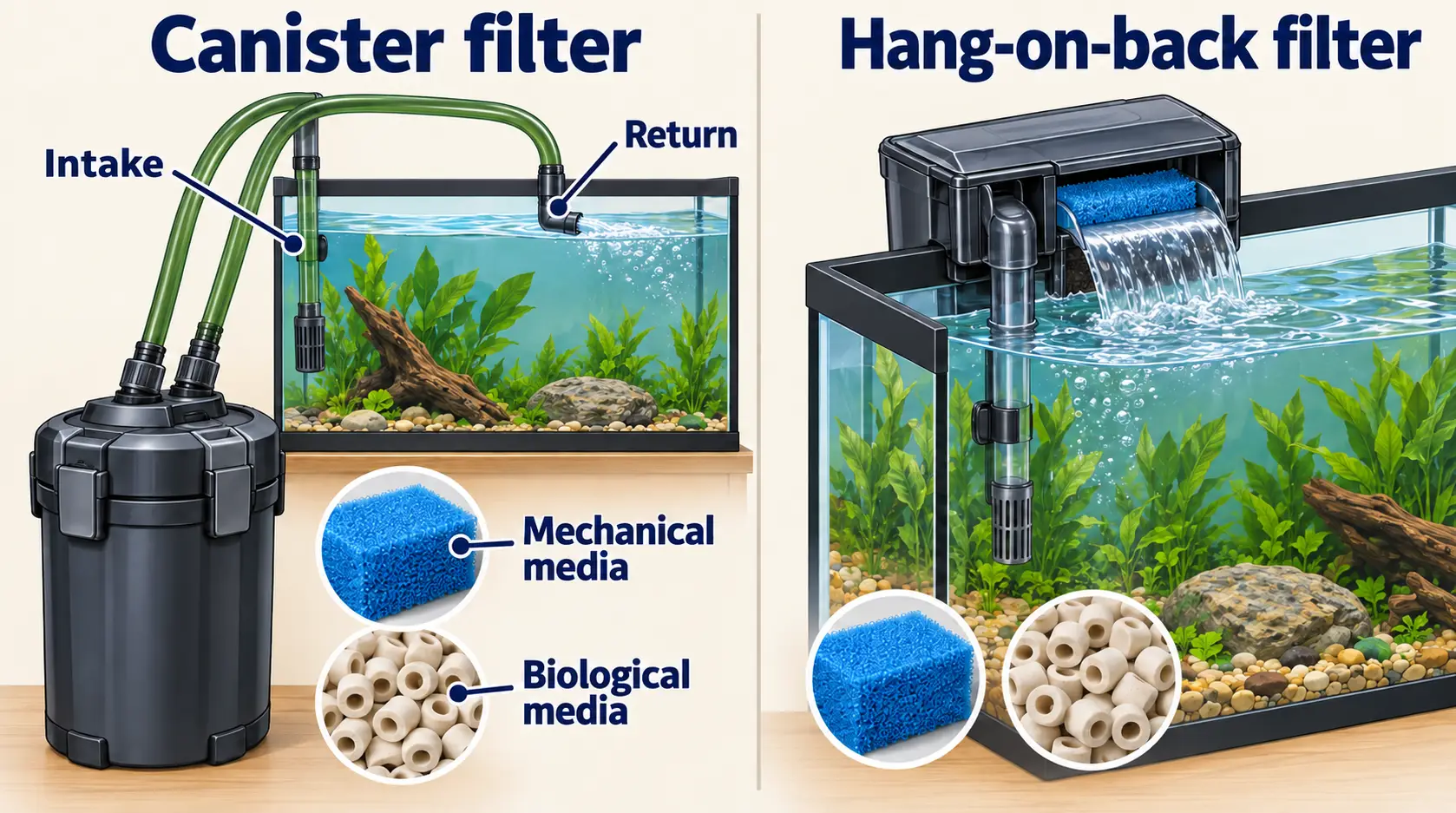
Conceptual comparison of external canister and hang-on-back filters

Conceptual comparison: check the exact filter’s capacity, installation and maintenance requirements.

Filter Type Matters

Review filter fit and maintenance

Compare the linked canister models by actual water volume, installation, media space and cleaning access.

See Top Turtle Canister Filters

Not all filters are equally suited for turtle tanks. A hang-on-back filter requires a water level and installation that suit its instructions. Compare the exact model’s flow, media space and cleaning needs with the habitat; filter style alone does not establish suitability.

A canister filter can provide mechanical and biological filtration between water changes. The linked Fluval FX4 — View on Amazon has an aquarium rating up to 250 US gallons. Assess actual water volume, waste load, flow and maintenance access before choosing a filter; our turtle canister filter guide compares the linked models.

Persistent odor or cloudy water calls for a wider review of water care, trapped debris, feeding, flow and filter condition. It does not establish that a larger filter is needed. For a closer look at the setup checks, see our turtle filtration guide.
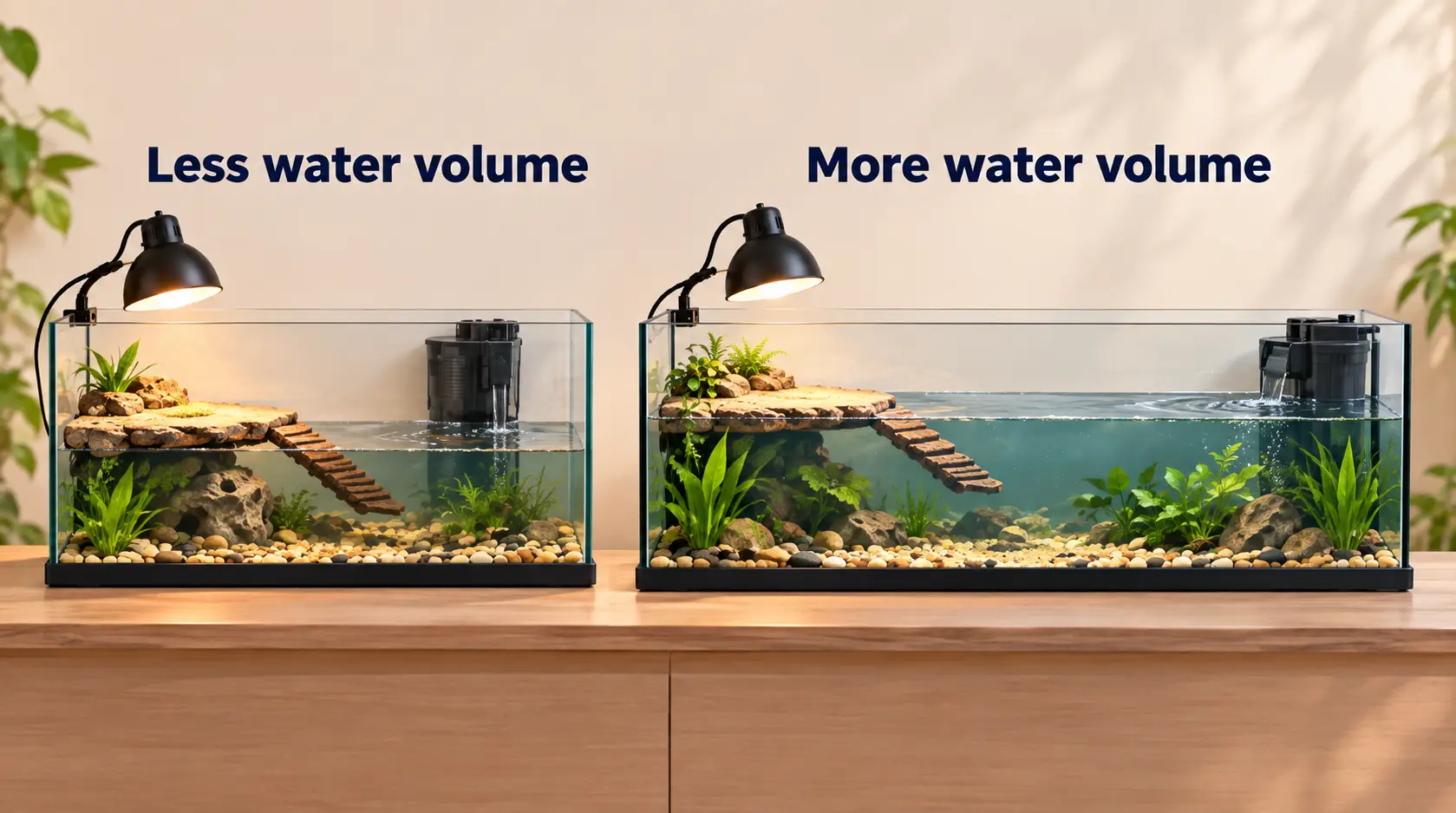
Illustration comparing two aquatic turtle enclosure sizes

Illustration: choose enclosure size and water depth for the turtle’s species, size and needs.

Tank Size Impacts Smell

Enclosure size and water volume must suit the turtle’s species, size and needs. More water can dilute a given amount of waste, but it does not guarantee an odor-free or suitable habitat.

A larger enclosure still needs water changes and filter maintenance. Review usable swimming space, basking access, actual water volume and debris collection rather than treating extra volume as a substitute for care.

If you are cleaning constantly and the smell still comes back, look at the full setup: tank size, filter strength, water movement, feeding habits, and how much debris is collecting in low-flow areas.
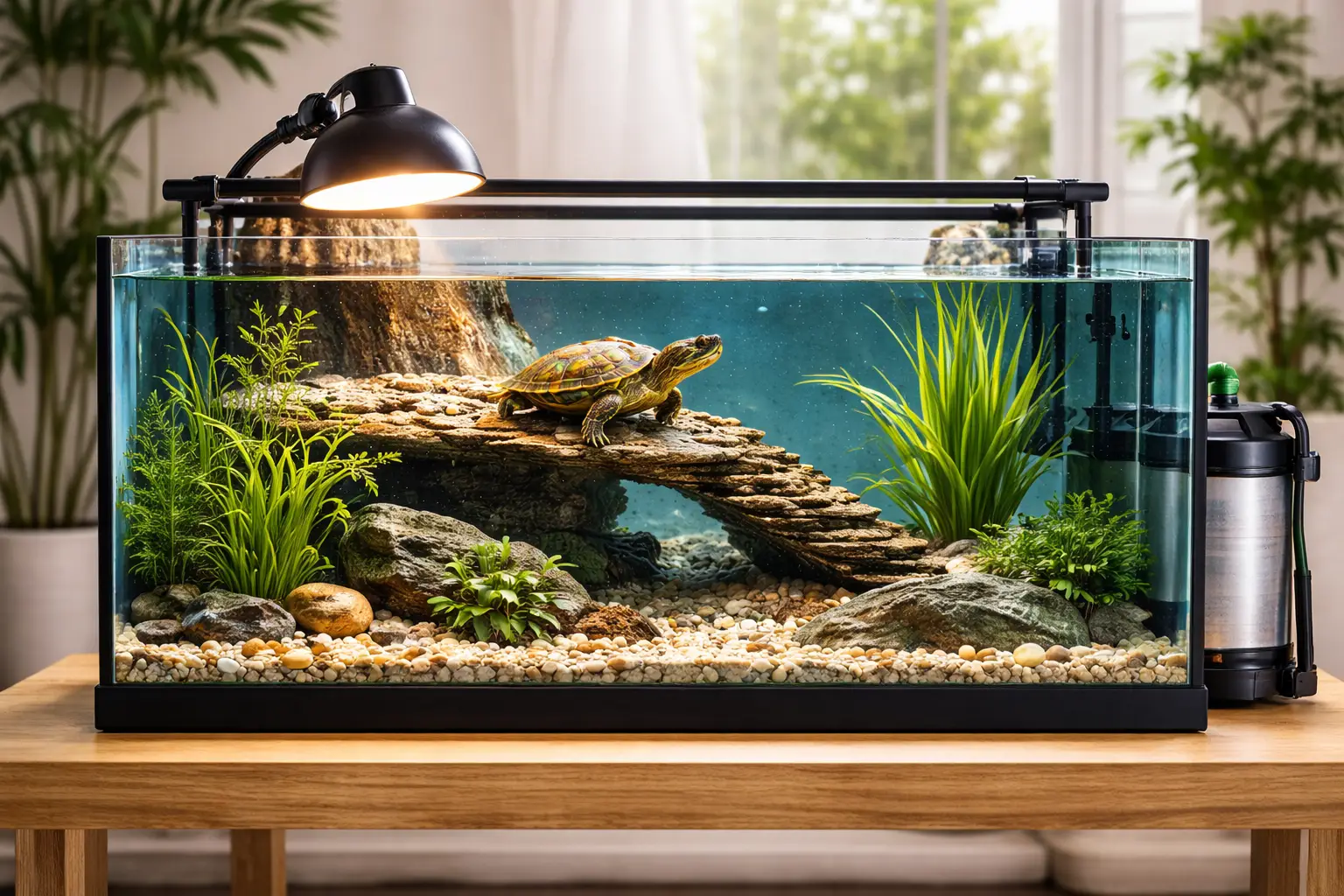
Illustration of an aquatic turtle enclosure with a basking area and external filter

Habitat illustration; enclosure, lighting, filtration and maintenance must suit the turtle’s species and needs.

Build a Regular Maintenance Routine

Remove leftover food and visible debris, check filter flow, and plan water changes for the habitat’s needs. Follow the equipment instructions and review the routine when conditions change. Having the right turtle tank cleaning supplies — a gravel vacuum, glass cleaner, and aquarium-only brushes — can help with the cleaning tasks. Check the tool’s fit and use instructions, and do not use odor as the only water-care signal.

A clean turtle tank is not about making the setup perfect every day. It is about building a simple routine that keeps waste from piling up. Review odor alongside water quality, debris, feeding, flow and any changes in the turtle. Persistent unexplained odor may need further assessment.

Review filtration alongside regular maintenance

A filter can help keep water cleaner between changes, but it does not replace removing debris or changing water. Compare filter options after reviewing the tank's maintenance needs.

See the Canister Filter Guide

Need to Check the Filter Setup?

If odor returns after cleaning, review water care, trapped debris, feeding, flow and filter condition before buying equipment. Compare the filter’s requirements with actual water volume and maintenance access.

Jump to Filter Type Tips →   Compare Turtle Tank Cleaning Supplies →

About Paws Fins And Shells

I create practical pet care guides for everyday pet owners. This article focuses on common turtle tank odor problems, including waste buildup, filtration limits, water changes, and simple maintenance habits that make aquatic turtle tanks easier to manage.

Turtle Tank Smell: Common Questions

Do turtle tanks smell?

Odor can accompany trapped waste, leftover food, or maintenance needs. Review water quality, debris removal, water changes and filter maintenance; odor alone does not establish the cause.

Do turtle tanks stink even with a filter running?

Odor can persist while a filter is running. Aquarium volume ratings alone do not establish suitability for a turtle habitat. Review actual water volume, waste load, flow, debris removal and service requirements before changing equipment.

Why does my turtle tank smell worse after a water change?

Disturbing substrate or filter media can release trapped debris. Siphon visible waste and review water changes and filter maintenance; odor after cleaning does not identify one cause on its own.

How do I get rid of turtle tank smell fast?

Remove trapped debris and uneaten food, review appropriate water changes, and maintain the filter according to its instructions. Check habitat compatibility before buying equipment; a filter or additive does not replace regular water care.

Does feeding in a separate container actually help?

If appropriate for your turtle and its care guidance, a separate feeding container can limit leftover food in the main habitat. It does not replace water changes or filter maintenance, and no odor-reduction timetable is established here.

Do turtles themselves smell bad?

Healthy turtles do not have a strong odour. If the smell is clearly coming from the animal rather than the water, that can point to a shell or skin problem and is worth having a reptile vet look at.

Can leftover food make a turtle tank smell?

Yes. Uneaten food breaks down in the water and can quickly lead to odor, cloudy water, and dirty filter media. Removing leftovers after feeding helps keep the tank cleaner.

Will a canister filter stop turtle tank odor?

A suitable canister filter can support mechanical and biological filtration between water changes. Results depend on the exact model, habitat and maintenance; it cannot guarantee odor control.

Does a small turtle tank smell faster?

Less water can concentrate a given amount of waste more quickly, but smell also depends on feeding, debris removal, flow and maintenance. Choose enclosure size for the turtle’s species and needs; extra volume does not replace care.

How do I keep the smell from coming back?

Remove uneaten food and visible waste, maintain the filter according to its instructions, and plan appropriate water changes. Reassess persistent odor rather than assuming a routine will resolve every cause.