
Aquarium Filter Media: Cleaning and Replacement Checks
Updated
As an Amazon Associate, PawsFinsAndShells earns from qualifying purchases.
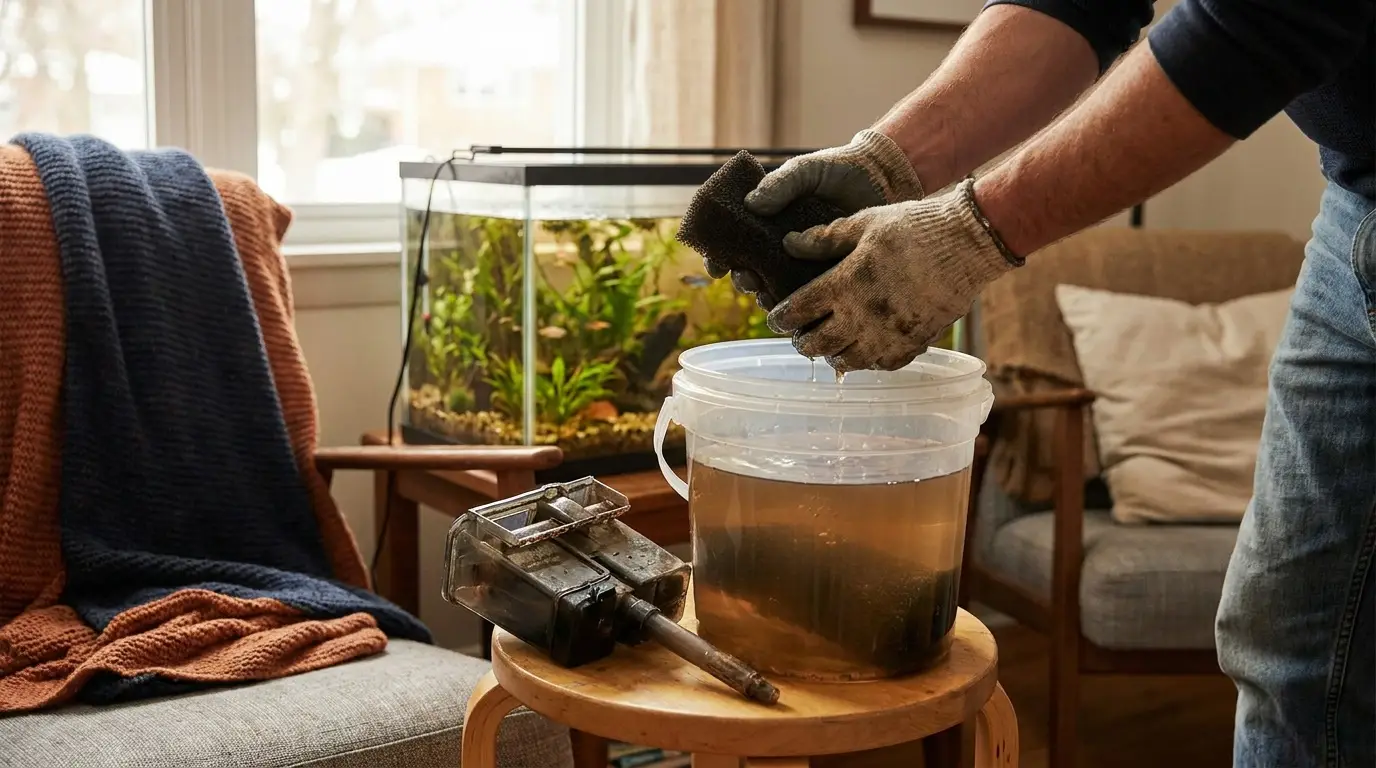
Cleaning and replacement depend on the filter model, media, and condition. Follow its current maintenance instructions, preserve established biological media where possible, and monitor the water after changes.
Affiliate Disclosure: As an Amazon Associate, PawsFinsandShells earns from qualifying purchases. Some links below are affiliate links — we may earn a small commission at no additional cost to you.
Different media have different roles and maintenance requirements. Replacing established biological media can affect filtration, so follow the model instructions and monitor for an ammonia spike after major changes.
Three Media Roles
Every filter, from a hang-on-back to a big canister, holds up to three media types, and they age on completely different clocks:
- Mechanical (floss, pads, sponge inserts). Collects debris. Clean or replace according to the model instructions, condition, and flow; color alone is not a universal replacement test.
- Chemical (activated carbon). Follow the product and filter instructions for use and replacement. Its working life depends on the product and conditions; no single three-to-four-week rule covers every tank.
- Biological (ceramic rings, bio-balls, sponge). Supports bacteria involved in waste processing. Protect established media during maintenance; some manufacturers recommend staggered partial replacement, rather than never replacing it.
The Rules That Protect Your Cycle
Preserve established biological media where possible while carrying out the maintenance your filter requires. Monitor water readings after major changes.
- Protect established biological media. Avoid unconditioned chlorinated water on it. Follow the filter instructions for cleaning each media type.
- Stagger biological-media replacement. Follow the model’s partial-replacement instructions and monitor the water; do not apply a universal one-third schedule or wait only for crumbling.
- Check cartridge-change instructions. Overlap old and new media only where the manufacturer supports it without restricting flow or fit. A fixed overlap period does not prove colonization.
- Stagger the big jobs. Avoid replacing all biological media at once. Keep up water changes required by test results, and stagger major media replacements to preserve established media.
Cloudy water after maintenance has several possible explanations. Test the water and review the changes; the cloudy water guide provides background rather than a diagnosis from appearance alone.
If You Already Replaced Everything
A full media change can disrupt biological filtration. Test promptly, including ammonia, nitrite, pH, and temperature. Check the source water and conditions before choosing water changes or products; distressed fish need qualified help.
API Quick Start Nitrifying Bacteria
A nitrifying-bacteria product to compare by its current directions. Continue testing the water; it is not proof that new media is established or a substitute for correcting the cause.
Fit notes: restarting after a full media swap, a new filter, or a new tank
Skip if: the current label or your tank conditions do not call for this product. A routine rinse alone does not establish a need.
Preserve Established Biological Media
Replacing all biological media can remove an established bacterial population. Preserve mature media where possible, test the water, and do any water changes the results require; neither milky water nor a fixed 48-hour schedule diagnoses the problem.
Filter Media Questions, Answered
How often should I replace my filter cartridge?
Follow the cartridge and filter instructions for cleaning and replacement. Preserve established media where the design supports it, maintain flow, and monitor water readings after a swap; no universal four-to-eight-week interval applies.
Do I really need activated carbon in my filter?
Whether carbon belongs in the filter depends on its instructions and purpose, including compatibility with any treatment. Follow the actual product replacement guidance; no single exhaustion interval covers all media and water conditions.
Why did ammonia spike after I changed my filter media?
Replacing established media can contribute, but other causes are possible. Test the water and review filtration, feeding, source water, pH, and temperature before choosing a response.
Can I clean filter media with tap water?
Protect established biological media from unconditioned chlorinated water. Follow the model’s instructions for each media type; used tank water is a cleaning option where those instructions support it.
Related guides: Aquarium Setup Guide · Ammonia Spike Checks · Cloudy Water Causes · Beginner Starter Kits
Last updated: October 5, 2026.
Get the picks before the season rush
Get seasonal pet-care tips and buying guides with fit, care and maintenance details. Unsubscribe anytime.
Shop links from this guide
Mentioned in this guide
API Quick Start Nitrifying Bacteria
Seasonal pet tips and gear guides
Get seasonal pet-care tips and buying guides with fit, care, and maintenance details. Unsubscribe anytime.