
Best Automatic Litter Boxes: 4 Styles, Honestly Compared
Updated
As an Amazon Associate, PawsFinsAndShells earns from qualifying purchases.
Card images are general illustrations. Compare the product names and details below.
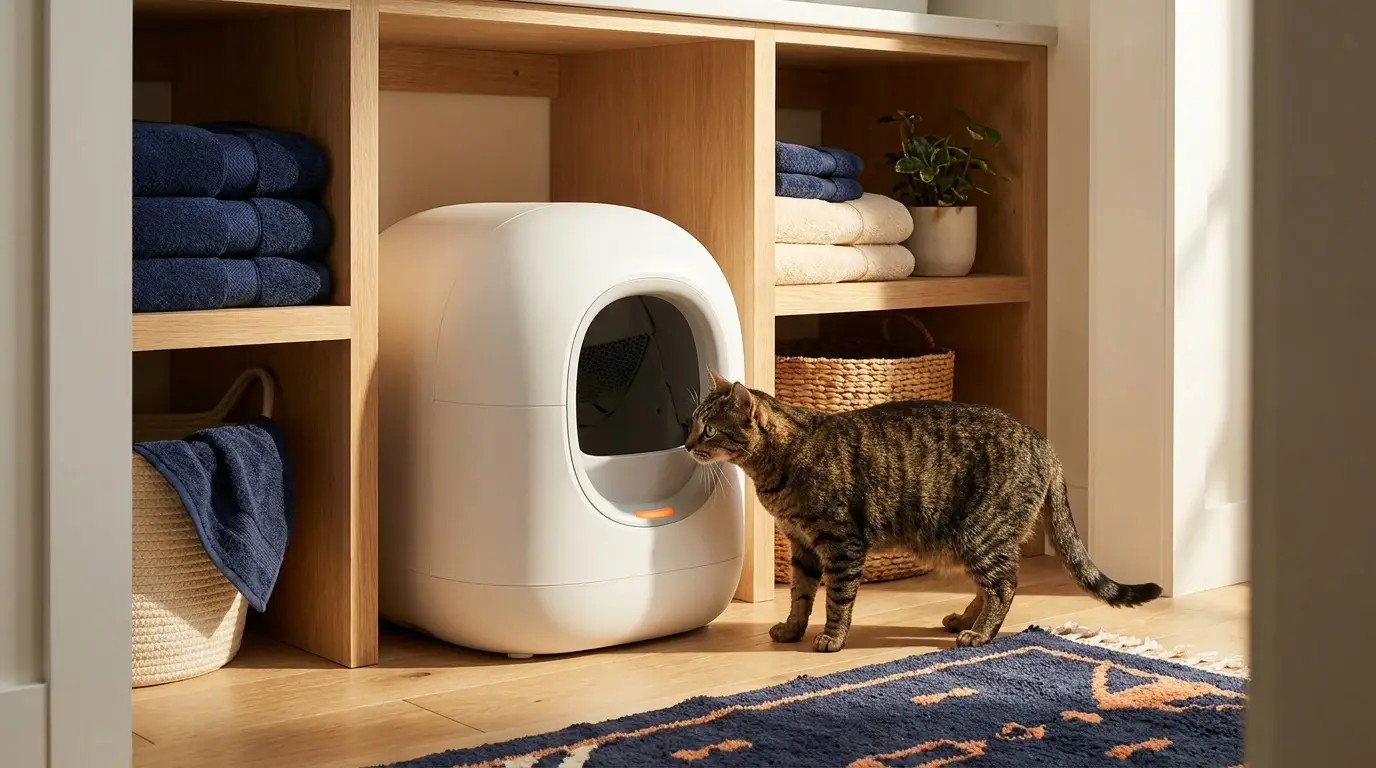
Automatic litter box
Whisker Litter-Robot 4
Cost check: Compare the current purchase price, supplies and cleaning tasks with your conventional box before deciding.
Automatic box alternative
PETKIT PuraMax 2
Fit notes: Check usable interior dimensions and the maker’s introduction and manual-cycle instructions; watch your cat’s response.
Crystal-litter system
PetSafe ScoopFree Crystal Pro
Skip if: you want to keep using your current clumping litter — this system is trays-only.
Open-top automatic box
HHOLOVE Open-Top Self-Cleaning Box
Fit check: Compare the footprint, entry, waste handling and cleaning access; an open top alone does not establish fit or odor control.
Self-cleaning litter boxes went from gimmick to genuinely good in the last few years. Here’s who each style is for, the safety checks that matter more than the app, and whether one is worth it for your household.
Affiliate Disclosure: As an Amazon Associate, PawsFinsandShells earns from qualifying purchases. Some links below are affiliate links — we may earn a small commission at no additional cost to you.
Compare the cost and daily cleaning tasks of an automatic box with a conventional pan and scoop. Consider your cat’s habits, access needs, budget and the maintenance you can provide. The four formats below have different mechanisms and upkeep requirements. New to litter setups generally? Start with the full litter box guide and litter types compared.
The Flagship: Rotating Drum
Whisker Litter-Robot 4
A rotating-drum format to compare by the current model’s sensors, cycle settings and waste-drawer care. Follow its operating instructions and keep checking cleanliness and each cat’s use; automation does not remove those tasks.
Fit notes: Handles multiple cats; check the manufacturer weight minimum for kittens — do not use automatic mode for a kitten below the model’s stated minimum weight, even with supervision.
Cost check: Compare the current purchase price, supplies and cleaning tasks with your conventional box before deciding.
The Strong Middle: Enclosed Self-Cleaner
PETKIT PuraMax 2
An enclosed automatic-box option. Check the selected model’s usable interior, entry, cycle controls and maintenance instructions against your cat’s size and habits.
Fit notes: Check usable interior dimensions and the maker’s introduction and manual-cycle instructions; watch your cat’s response.
Crystal-Litter Rake System
PetSafe ScoopFree Crystal Pro
A crystal-litter rake system. Check the selected model’s compatible trays or litter, cycle settings and cleaning requirements; include replacement supplies in your cost comparison.
Fit notes: Keep a familiar box available while introducing a different litter or mechanism. Follow the model instructions and your cat’s response rather than a fixed deadline.
Skip if: you want to keep using your current clumping litter — this system is trays-only.
Open-Top Design
HHOLOVE Open-Top Self-Cleaning Box
An open-top automatic-box format. Check its entry, footprint, sensors and current price; an open design does not guarantee faster acceptance or a fixed saving over another model.
Fit notes: Compare entry height and usable space with your cat’s mobility and preferences; an open top alone does not ensure easy access.
Fit check: Compare the footprint, entry, waste handling and cleaning access; an open top alone does not establish fit or odor control.
The Safety Checklist (Read Before You Buy Any of Them)
- Weight sensors are non-negotiable — the box must pause when any cat enters, mid-cycle included.
- Kittens wait: follow the exact model’s age and weight limits, and keep automatic cycling off if any cat is below them. Follow the manufacturer’s supervised manual-use instructions.
- Seniors and mobility: check entry height, stable footing and usable space. Discuss individual mobility needs with your veterinarian; a step or open top is not a universal solution.
- Transition gradually: keep a familiar box available and observe use without a fixed deadline. If elimination changes, review the setup and seek veterinary advice; see the guide to peeing outside the litter box.
- The machine doesn’t replace you: waste drawers still empty, sensors still get wiped, and any sudden change in output is health information you now have to check the drawer to see.
Is It Worth It? (The Honest Version)
Compare the purchase and supply costs with the tasks you want help with. Automatic equipment still needs cleaning and checks; a fountain and an automatic feeder can support parts of the routine, but water, food, waste and equipment still need regular checks and care.
Automatic Litter Box FAQ
Are automatic litter boxes safe for cats?
Check the exact model’s safety controls and follow all age, weight and operating limits. Supervise introduction and keep automatic cycling off if a cat is below the stated limits; sensors alone do not establish suitability.
Will my cat actually use one?
Acceptance varies by cat. Keep a familiar box available, introduce the new option gradually and observe actual use. Neither an open top nor a fixed week-or-two deadline guarantees acceptance.
Do they really control odor?
Odor depends on waste removal, cleaning, litter, ventilation and the actual setup. Compare waste-drawer care and cleaning access; an enclosed drum does not guarantee better odor control than a clean conventional pan.
Related guides: Litter Box Guide · Litter Types Compared · Cat Wellness Gear
Check the current retailer listing for model details, price and availability.
Shop our picks
Automatic litter box
Whisker Litter-Robot 4
Automatic box alternative
PETKIT PuraMax 2
Crystal-litter system
PetSafe ScoopFree Crystal Pro
Open-top automatic box
HHOLOVE Open-Top Self-Cleaning Box