
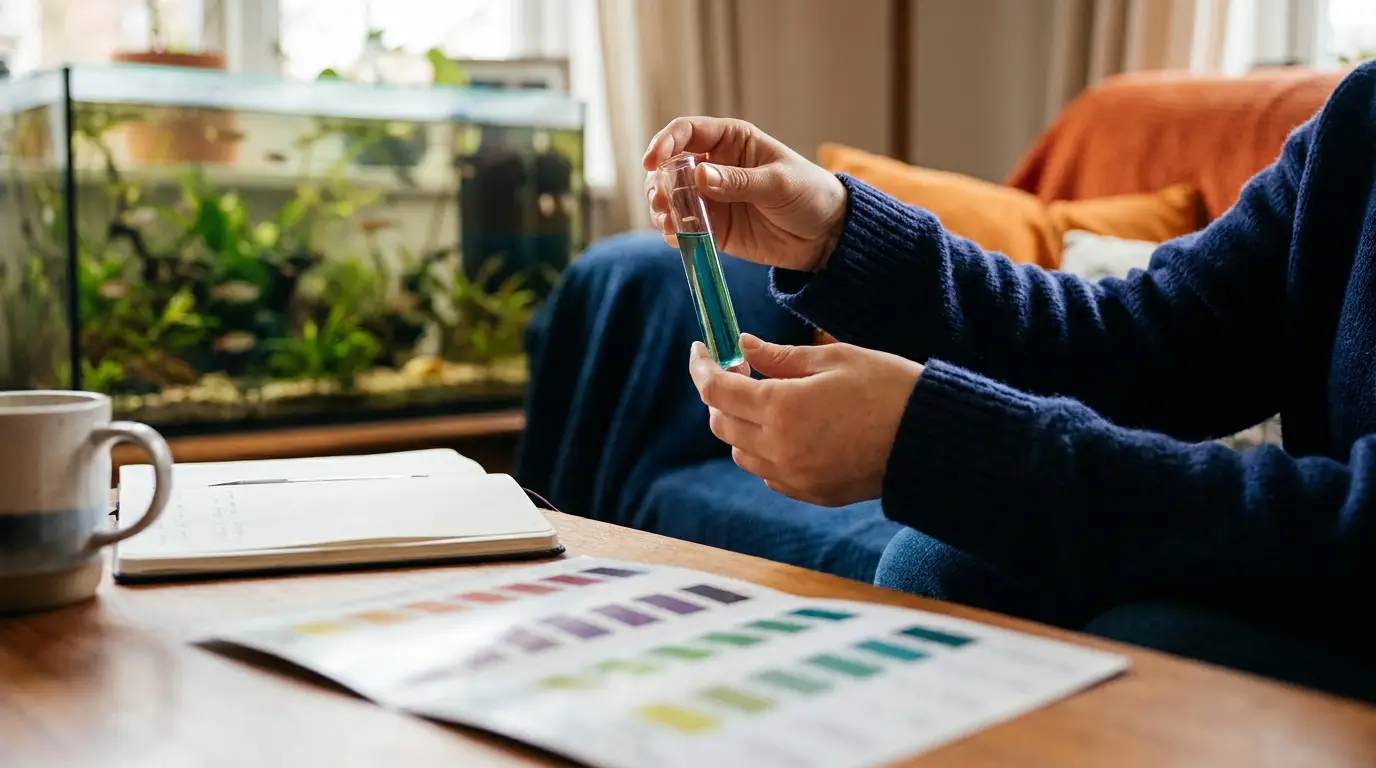
Check the water readings and fish condition promptly. The checks below explain response limits and filter care; a product alone cannot establish recovery.
Affiliate Disclosure: As an Amazon Associate, PawsFinsandShells earns from qualifying purchases. Some links below are affiliate links — we may earn a small commission at no additional cost to you.
Detected ammonia needs investigation. Most kits measure total ammonia; the more toxic fraction depends on pH and temperature. Filter problems, feeding, decay, or source water can contribute, so do not assume one cause.
Check the Water and Fish Condition
Confirm the reading and measure pH and temperature. Check replacement water before choosing a partial change: ammonia or chloramine in that water matters. Match temperature and treat chlorine/chloramine as appropriate. A large pH rise in an acidic tank with high total ammonia can increase toxicity; get qualified aquatic help for this situation or distressed fish. Reduce feeding temporarily according to the fish and conditions, with special care for fry. Retest rather than assuming a fixed daily schedule.
API Freshwater Master Test Kit
Check the current kit instructions and the water parameters it measures. Record readings so you can follow changes.
Check the Biological Filter
Recent maintenance can disrupt established media, but timing alone does not diagnose the cause. Check water readings, source water, and the filter instructions before choosing a response.
API Quick Start Nitrifying Bacteria
A nitrifying-bacteria product to compare by its current label. Follow the directions and continue water testing; adding a bottle does not establish that the tank is cycled.
Fit notes: Follow the filter’s current cleaning directions and protect established biological media from unconditioned chlorinated water.
Prevent the Next One
Feed for the species and current water conditions, stock to the honest limits, and match filtration to real load – the filtration guide sizes it. Fish gasping at the surface need prompt water-quality and oxygen checks and qualified help; the sign does not identify ammonia as the sole cause.
Welfare note
Ammonia can injure fish. Aim for no detectable ammonia and investigate changes promptly. Distress or deaths need qualified assessment; apparently normal behavior does not prove that exposure caused no harm.
Ammonia FAQ
What causes ammonia spikes in an established tank?
Possibilities include disrupted filtration, feeding or stocking changes, decay, and ammonia in source water. Test the relevant water conditions instead of assuming maintenance killed the bacteria.
How fast does a water change lower ammonia?
A partial change can lower measured ammonia if the replacement water has none. Test source and tank conditions, including pH and temperature; there is no single daily replacement schedule for every ammonia problem.
Can fish recover from ammonia poisoning?
Recovery depends on the exposure, species, and condition of the fish. Correcting the water does not guarantee recovery; persistent illness or distress needs qualified aquatic assessment.
Related guides: Test Kits · Cloudy Water · Sudden Deaths
Last updated: October 5, 2026.
Seasonal pet tips and gear guides
Get seasonal pet-care tips and buying guides with fit, care, and maintenance details. Unsubscribe anytime.