
Aquarium Size and Stocking Guide
As an Amazon Associate, PawsFinsAndShells earns from qualifying purchases.
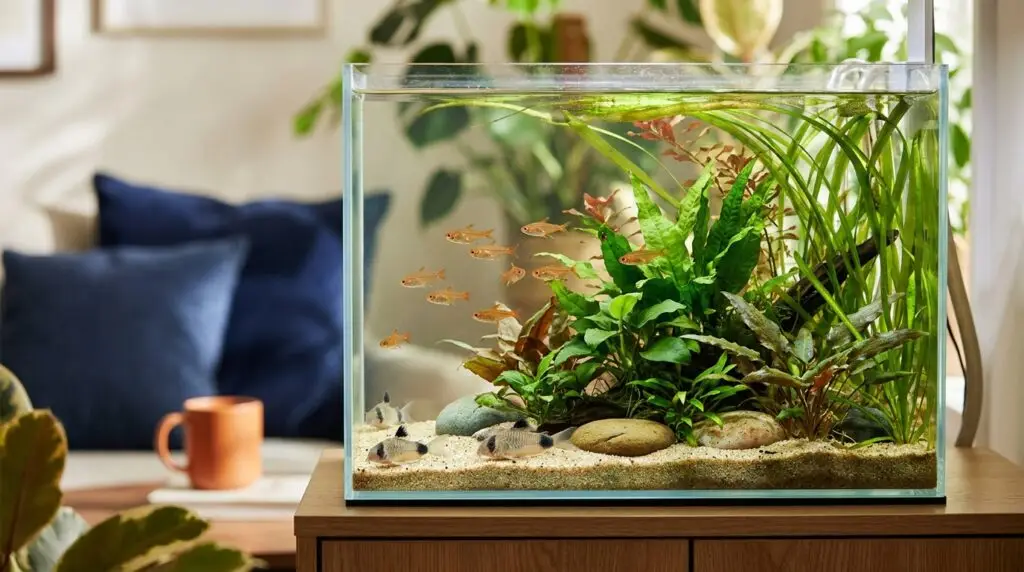
Plan for adult fish size, swimming space, compatible species and water conditions. Tank volume alone cannot establish a suitable stocking list.
"One inch of fish per gallon" cannot determine suitable stocking. Compare adult size, behavior, required group size, tank dimensions, filtration and water quality before choosing fish or equipment.
Aquarium stand
GRLEAF aquarium stand
Compare the selected stand’s stated load limit and supported tank dimensions with the filled aquarium, substrate and equipment. Confirm a level, suitable installation before filling.
Before you add fish
Pawfly 5-in-1 test kit
Use tests for the parameters your aquarium needs, including ammonia and nitrite when cycling or after stocking changes. Follow the kit instructions and record readings; clear water does not establish water quality.
Everyday filter
Marineland Penguin 200
A hang-on-back filter option. Compare the selected model’s tank guidance, flow, media and maintenance instructions with the species and stocking. Preserve established biological media when cleaning according to the instructions.
What to Check at Each Tank Size
| Tank | Plan before stocking | Limits to check |
|---|---|---|
| 5 gallons | Check the intended species’ adult size, activity and care requirements before choosing a small setup. | Limited space and water volume leave little margin for unsuitable stocking or water changes. |
| 10 gallons | Confirm the footprint, adult fish sizes, required group sizes and compatibility. | A small fish’s size alone does not mean a group fits this tank. |
| 20 gallons long | Compare swimming length and territory with the proposed species and group. | Acceptable test readings do not establish sufficient swimming space or compatibility. |
| 40 gallons | Plan for the adult fish, waste load, territory and filtration needs. | Extra filtration cannot make an unsuitable tank size or species mix appropriate. |
Plan additions around species compatibility, quarantine and the aquarium’s established biofiltration. Check water quality during changes. Appropriate readings and a filter rating are only part of a suitable stocking plan.
Stocking Checks
- Check the particular schooling species’ required group size and swimming space; there is no single group number for all schooling fish.
- Adult size is the size that counts. A goldfish sold at 1 inch is not a 1-inch fish.
- Long tanks give more swimming room than tall tanks with the same gallon number.
- Check species and sex compatibility before mixing bettas or adding tankmates. Do not assume a divider or extra filtration resolves aggression or space requirements.
Questions people ask
Is the inch-per-gallon rule safe?
It cannot establish suitable stocking. Adult size, body shape, behavior, required groups, tank dimensions and waste load all matter.
Can I fill the tank on day one?
Set up and cycle the aquarium before stocking. Use water testing and a suitable cycling plan rather than a fixed number of days. The setup guide explains the checks.
What filter goes with a 20-gallon?
Choose a filter using the manufacturer’s tank guidance, media, stocking and flow requirements. A gallons-per-hour figure is not a tank-capacity rating. Confirm which adjustments the actual model supports and whether its flow suits the fish.
More: starter kits, cloudy water after a clean, the aquarium setup guide.