
Why Is Your Fish Tank Cloudy After Cleaning?
Cloudiness can follow cleaning. Appearance alone does not identify its cause; measure water conditions and check your fish.
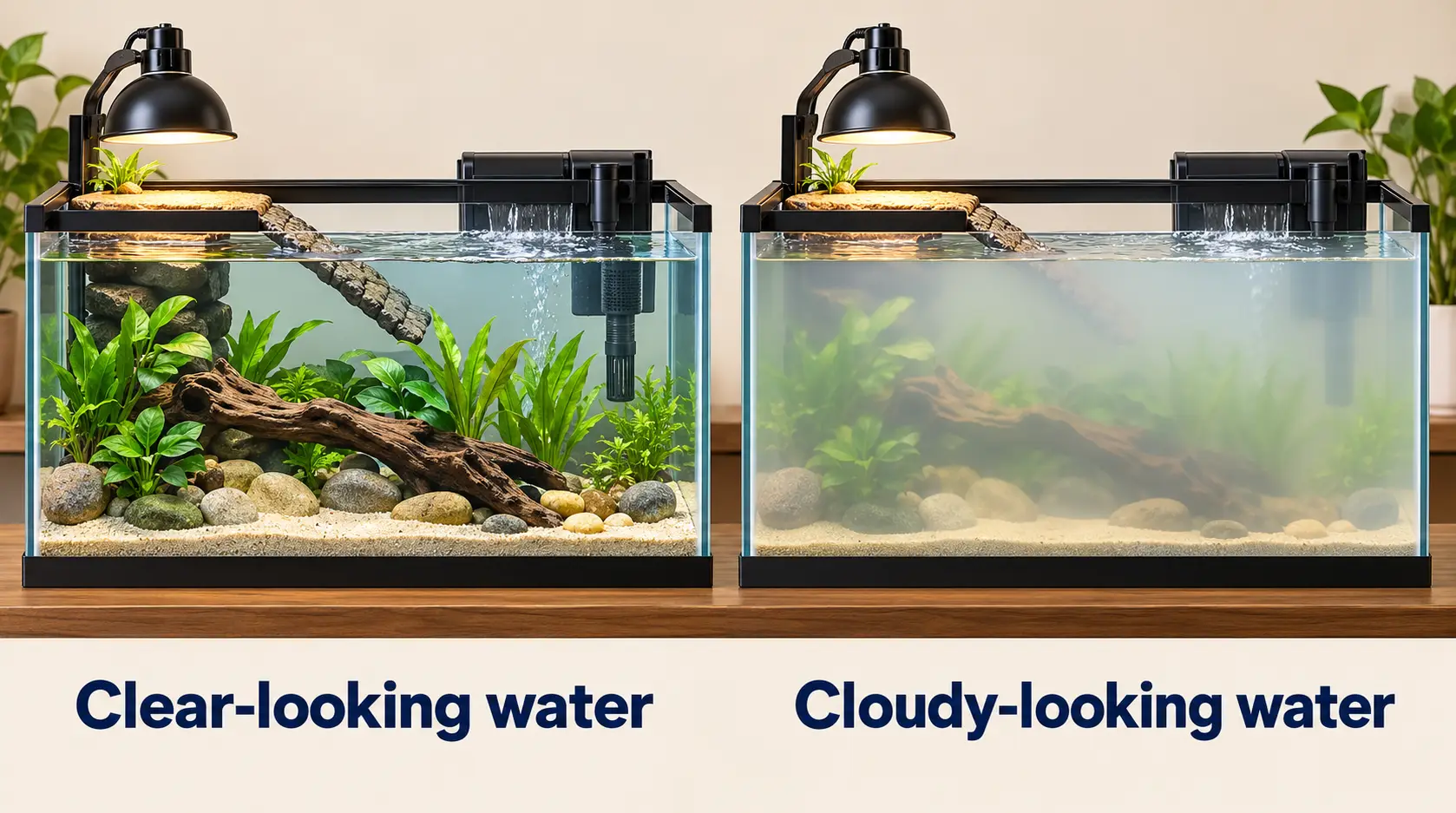
Illustration: water appearance alone does not establish water quality or fish health.
Review recent maintenance, water-test results and fish behavior before deciding what to change.
Gravel dust, tiny waste particles, leftover food, algae, or a short bacterial bloom can all make the water look cloudy. The key is figuring out what kind of cloudiness you are seeing before you start changing more water or cleaning the tank again.
What to Do Right Now
Check water conditions now; normal-looking fish or clear water does not establish suitable conditions.
- Make sure the filter is running normally.
- Measure ammonia, nitrite, pH and temperature; get qualified help if unable to test.
- Condition replacement water according to its label. If untreated water was used, seek advice on appropriate correction.
- Follow media instructions while preserving established biological filtration; plan necessary replacements carefully.
- Remove uneaten food and review feeding against the fish’s needs and test results.
- Gasping or changed breathing needs prompt water checks and aquatic-veterinary advice; appearance alone does not identify the cause.
Disturbed Substrate and Suspended Particles
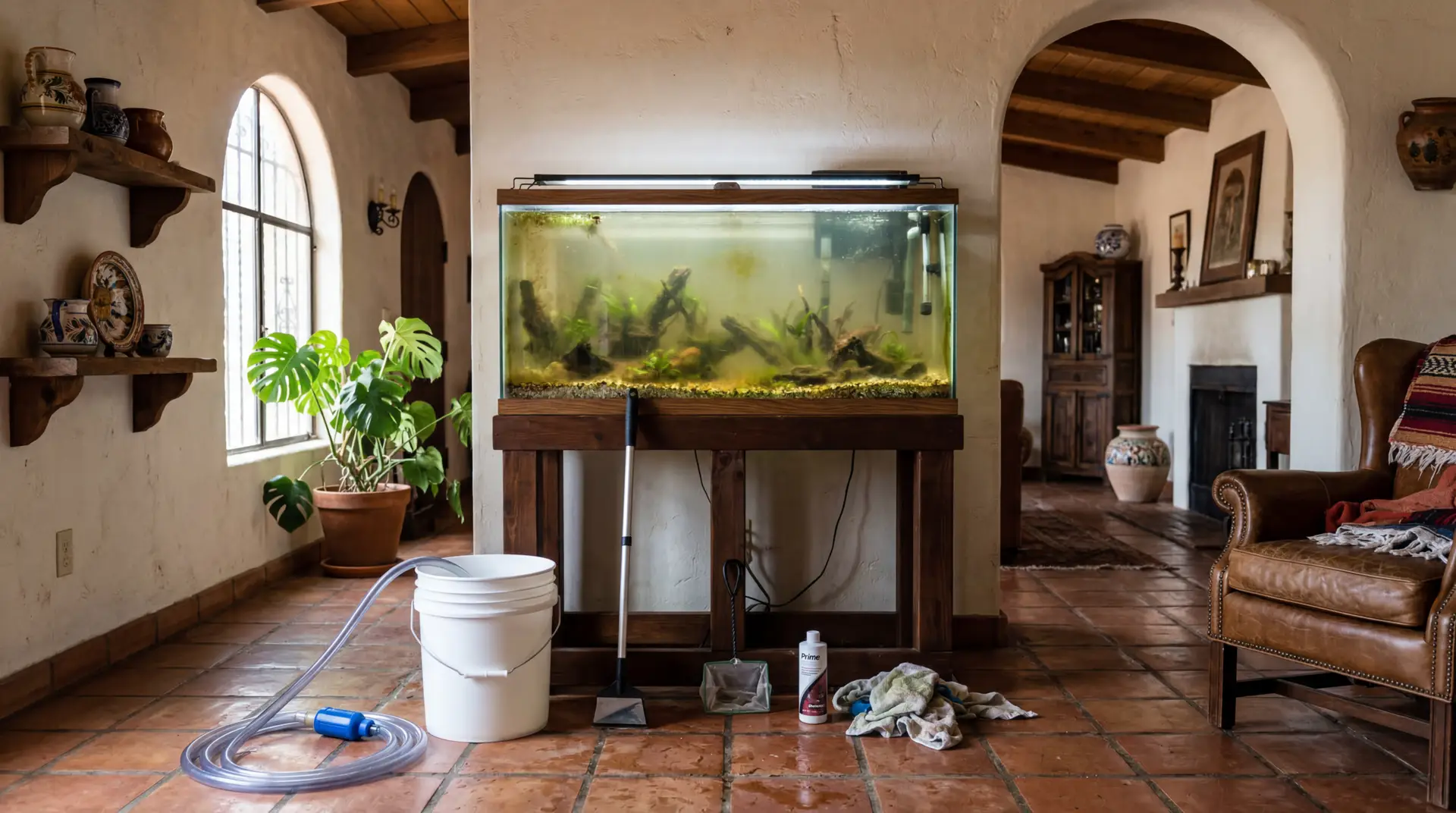
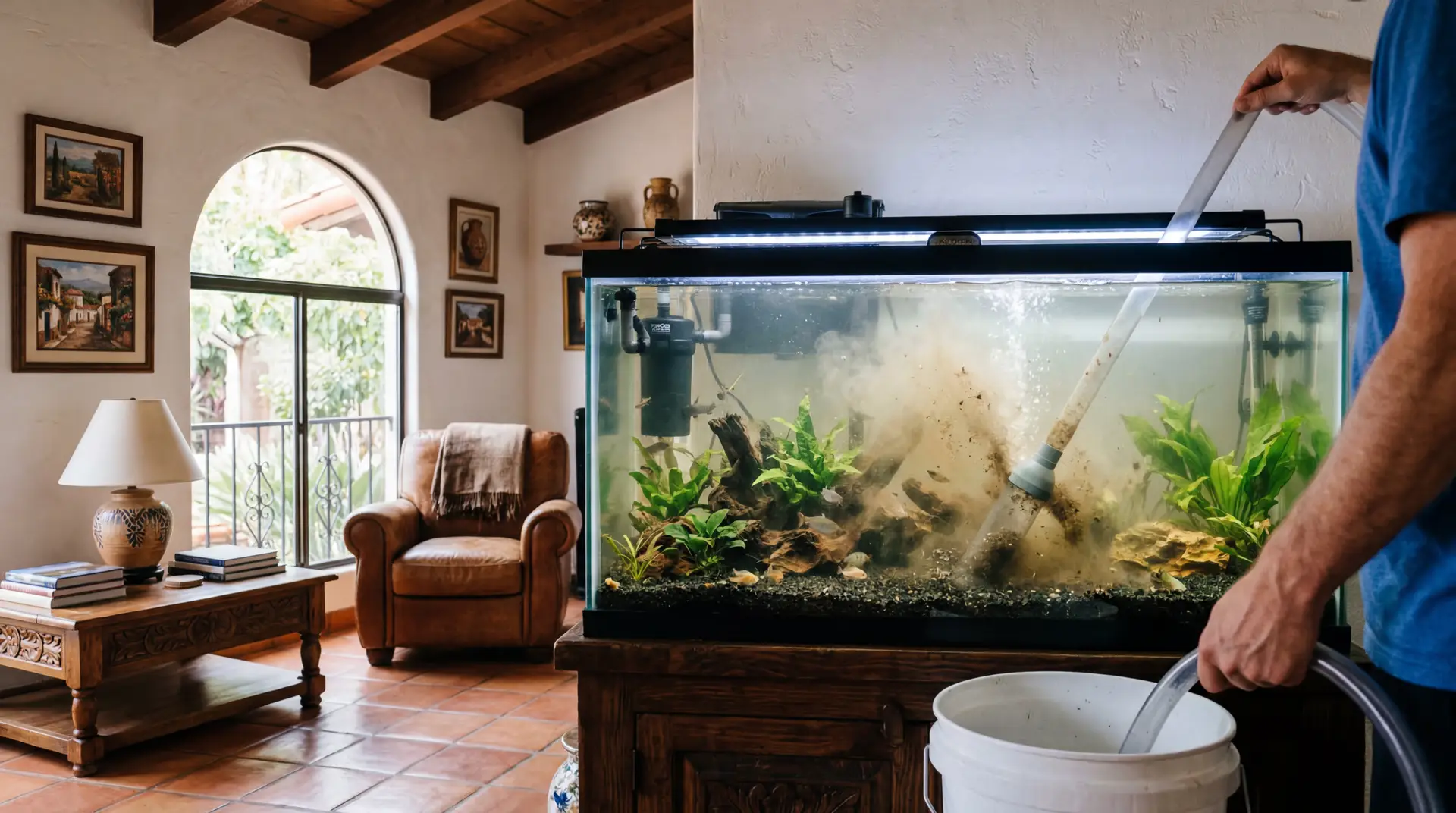
One of the most common reasons a fish tank gets cloudy after cleaning is disturbed gravel or sand. When you vacuum the substrate, move decorations, trim plants, or scrub near the bottom of the tank, tiny particles can lift into the water and make the aquarium look dusty or muddy.
Particles can settle, but fish behavior alone does not measure water quality.
Check water conditions before deciding to wait or clean again.
Milky Water and Bacterial Blooms
If the water looks white, cloudy, or milky after cleaning, the tank may be going through a bacterial bloom. This can happen when the aquarium's balance gets disturbed, especially if too much beneficial bacteria was removed during cleaning.
Beneficial bacteria live mostly on surfaces inside the tank, including filter media, gravel, decorations, and hardscape. If you scrub everything at once, rinse filter media under untreated tap water, or replace too much filter material, the tank may need time to stabilize again.
Test even when fish look normal; cloudiness cannot establish water quality.
Green Cloudy Water vs. White Cloudy Water
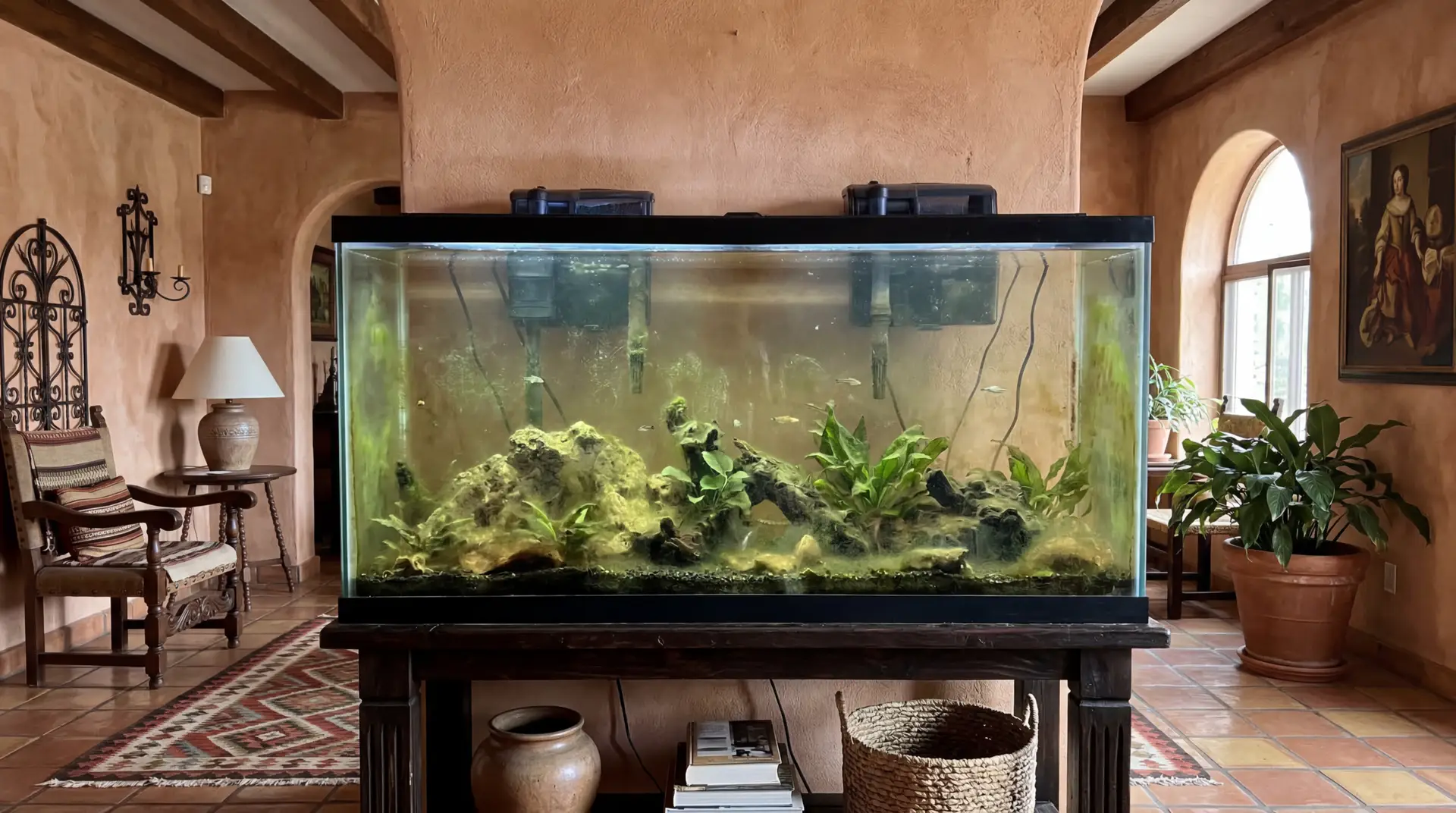
Not all cloudy aquarium water means the same thing. White or gray cloudiness usually points to stirred-up debris or a bacterial bloom. Green cloudy water usually points to algae.
Green water can show up when the tank gets too much light, too much food, or too many nutrients in the water. Cleaning the glass may make the tank look better for a short time, but algae usually comes back if the cause is still there.
To reduce algae-related cloudiness, keep the tank out of direct sunlight, avoid overfeeding, remove uneaten food, and stay on a steady maintenance schedule instead of doing one huge cleanup once in a while.
Water Changes and Sudden Imbalance
A water change is supposed to help the tank, but changing too much at once can sometimes cause stress. This is especially true if the new water was not treated, the temperature was very different, or the tank already had a weak biological filter.
Tap water may contain chlorine or chloramine, which should be neutralized with aquarium water conditioner before the water goes into the tank. Sudden changes in water chemistry can stress fish and make the aquarium look cloudy while the system adjusts.
Plan water changes from measured conditions and the aquarium’s needs, with qualified advice for abnormal results.
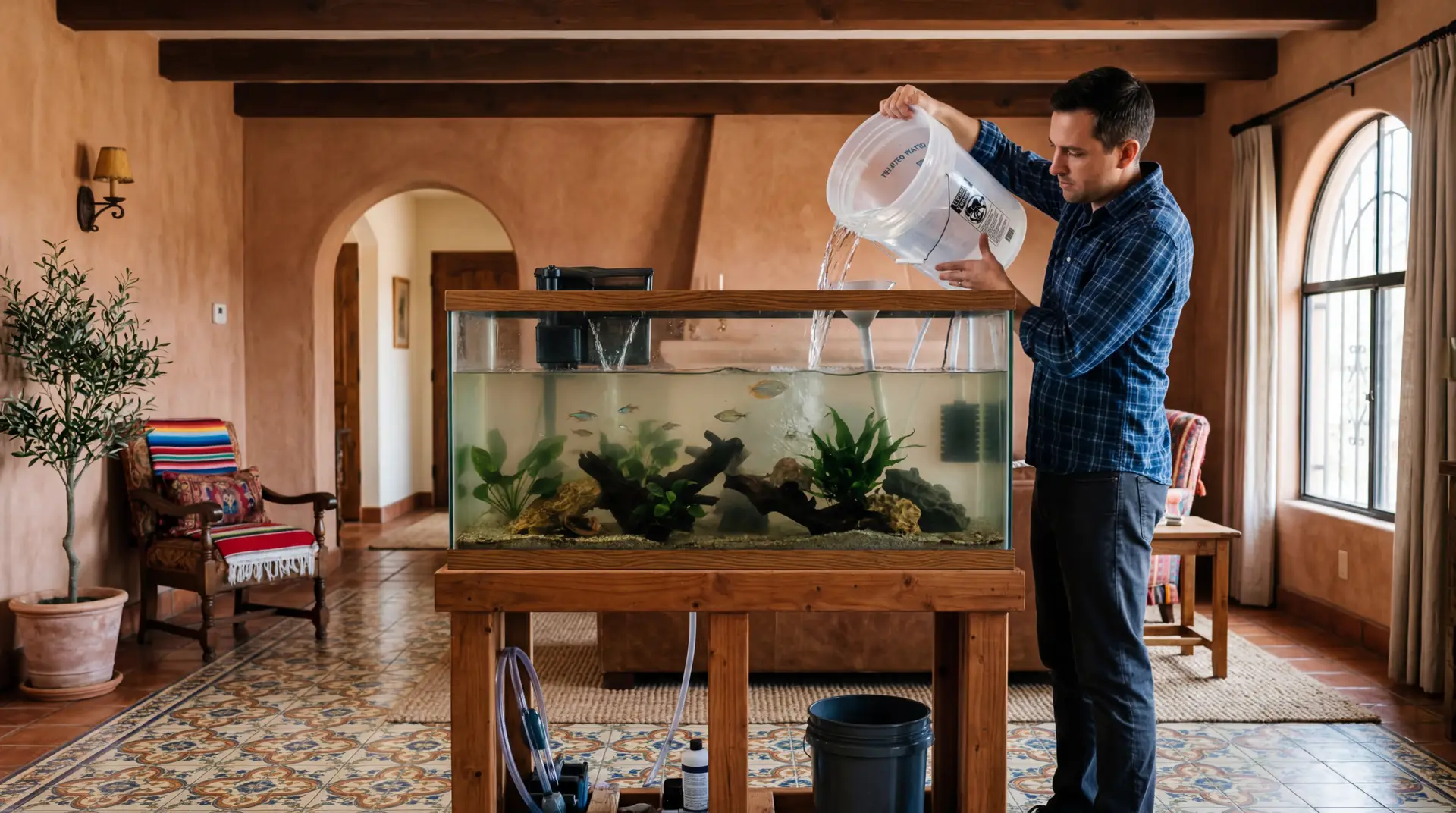
Avoid Over-Cleaning the Tank
One of the biggest mistakes beginners make is cleaning too much at once. It feels helpful, but it can remove the bacteria that keep the aquarium stable.
Try not to deep-clean the gravel, replace the filter cartridge, scrub every decoration, wipe every surface, and do a large water change all on the same day. That can shock the tank and make cloudy water more likely.
A better approach is to clean in stages. Vacuum part of the substrate, keep useful filter media when possible, and rinse reusable filter parts in removed tank water instead of untreated tap water.
When Cloudy Water Is a Warning Sign
Cloudy water is not always dangerous, but it should be taken seriously if your fish are acting different. Watch for fish gasping near the surface, hiding more than usual, clamped fins, heavy breathing, or sudden loss of appetite.
If you see those signs, test the water as soon as you can. Ammonia and nitrite are the big ones to check because they can rise when the biological filter is disturbed. When in doubt, focus on water quality first instead of trying to make the tank look perfect.
Seek aquatic-veterinary help promptly for gasping, severe distress or deaths; assess water and equipment immediately.
FAQ: Cloudy Fish Tank After Cleaning
How long does cloudy aquarium water last after cleaning?
There is no universal clearing time. Test water now and review filtration; do not wait several days to investigate.
Should I do another water change if the tank is cloudy?
Not always. If the fish are acting normal and water tests are safe, another water change may not be needed right away. Repeated cleaning can keep disturbing the tank. If ammonia or nitrite is present, then a careful water change may be necessary.
Can I replace the filter cartridge after cleaning?
Follow the selected media’s maintenance and replacement instructions while preserving established biological filtration.
Why is my tank green after cleaning?
Green cloudy water usually means algae. It can happen when the tank gets too much light, too much food, or too many nutrients in the water. Reducing light, feeding less, and improving maintenance can help.
Is cloudy water harmful to fish?
Cloudiness can have different causes. Measure water conditions; concerning symptoms also need aquatic-veterinary assessment.
Recommended Next Step
If your aquarium stays cloudy after routine cleaning, start by checking whether the filter media was replaced, rinsed too aggressively, or clogged with debris. A stable filter and steady cleaning routine are usually more helpful than another deep clean.
Jump to Filter Media Tips →Helpful aquarium gear
If the water stays cloudy after a normal clean, leave the filter running. Biological media in several filter types supports the colony; preserve established media and monitor water quality during maintenance.
Tetra Whisper IQ series hang-on-back filter — Check price on Amazon
Compare the linked Whisper IQ variant’s capacity, media arrangement, installation and maintenance instructions with your aquarium. Noise depends on the model, installation and condition.
Tetra Whisper EX 70 hang-on-back filter — Check price on Amazon
For the linked Whisper EX 70, confirm the selected model’s capacity and media instructions against actual aquarium volume, stocking and maintenance needs.