
Winter Turtle Tank Temperatures: Keep the Cold From Sneaking In
Updated
As an Amazon Associate, PawsFinsAndShells earns from qualifying purchases.
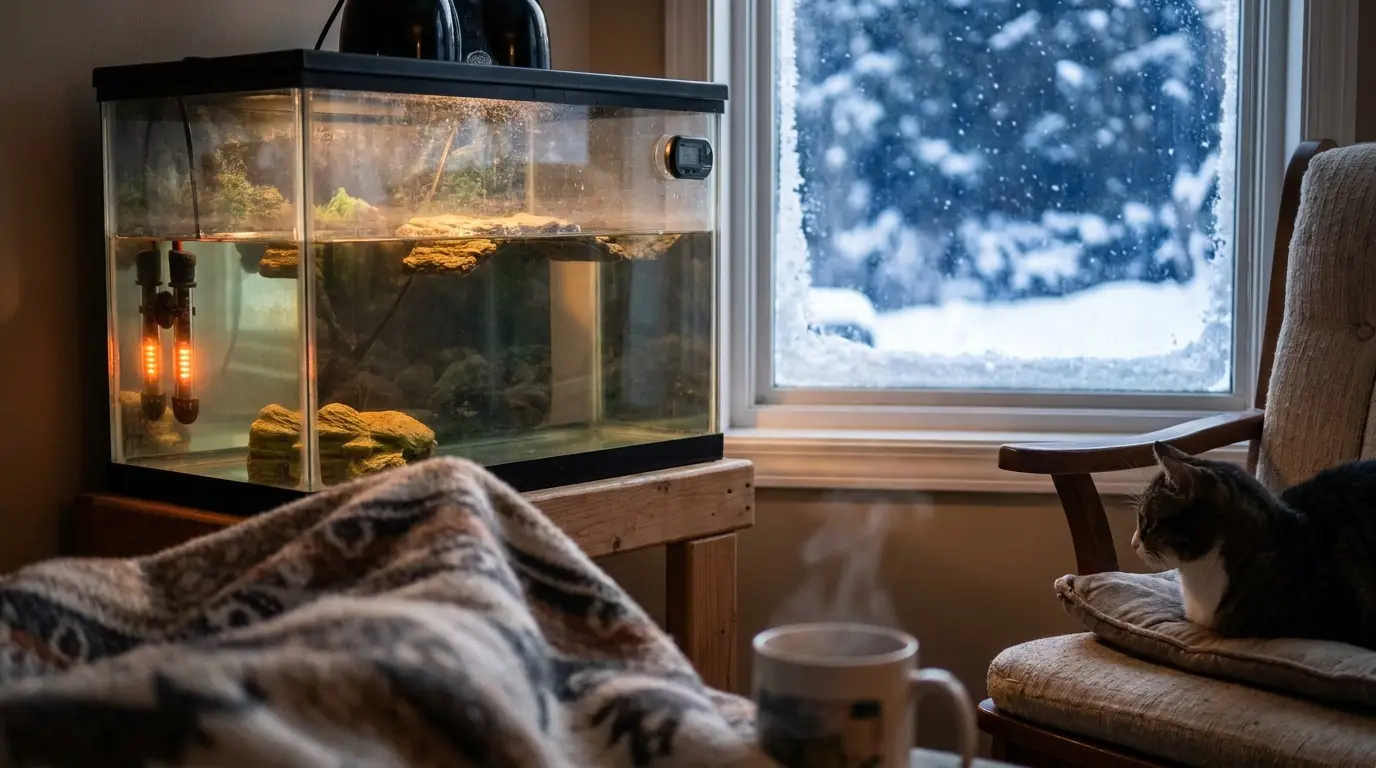
Measure the actual water and basking temperatures as room conditions change. Compare those readings with species- and age-appropriate targets; reduced eating or activity should not be attributed to cold without a health review.
Affiliate Disclosure: As an Amazon Associate, PawsFinsandShells earns from qualifying purchases. Some links below are affiliate links — we may earn a small commission at no additional cost to you.
Window placement, room heating and overnight changes can affect the enclosure. Record temperatures where the turtle lives, including the cooler and warmer areas, and review equipment against the actual conditions. New appetite or behavior changes can have several explanations.
Confirm Species-Specific Temperature Targets
Confirm water, basking and overnight temperature targets for the turtle’s species, age and care plan with a reptile veterinarian. Measure the enclosure rather than applying one range to every aquatic turtle. Review the turtle not eating guide for habitat questions and veterinary warning signs; a cooler room does not establish the cause of food refusal.
Compare Heater Rating, Installation and Protection
Match the heater’s approved water volume and operating conditions to the actual fill level and room temperature. Check required submersion, mounting, protection from contact and electrical instructions. Wattage alone does not establish appropriate or reliable heating.
hygger Submersible Aquarium Heater (300W-1000W)
A submersible-heater series to compare by the exact selected wattage, rated water volume, installation and protection requirements. Verify temperatures independently after setup; an external controller does not guarantee performance through a cold snap.
Fit notes: check the selected model’s rated water volume, permitted immersion and room-temperature limits
Skip if: its rating, required water depth or mounting does not suit the enclosure
Compare heater and installation considerations in the turtle water heater guide, then follow the exact model’s instructions.
Verify, Don’t Trust the Dial
Use independent thermometers to check warmer and cooler areas and overnight changes. Compare measured results with the agreed targets and the heater’s instructions. If considering a thermostat, confirm compatibility and placement in the thermometer and thermostat guide; it is not a substitute for monitoring.
Draft-Proofing the Tank’s Corner of the Room
- Check location and drafts. Measure conditions around the enclosure before changing its position; keep any move compatible with support, lighting and equipment.
- Review the cover arrangement. Preserve ventilation, secure access and the required light path. Check with the care plan before covering more of the enclosure.
- Record overnight conditions. Compare room and enclosure readings with species-specific targets and the heater’s operating limits.
- Follow the lighting plan. Do not add lamp hours as a substitute for checking measured temperatures and the species-specific light cycle.
- Prepare for outages. Agree on a species-appropriate temperature and temporary-care plan with a reptile veterinarian. Review the pet emergency preparedness guide before an outage rather than improvising heat or feeding rules.
Brumation is not a beginner project
Do not deliberately cool the enclosure or treat unexplained inactivity as brumation. Seasonal care depends on species and health and should be planned with a reptile veterinarian. Lethargy or persistent food refusal requires assessment, even when measured temperatures appear appropriate.
Winter Tank Questions, Answered
What temperature should a turtle tank be in winter?
Use the targets established for the turtle’s species, age and seasonal care plan. Measure water, basking and overnight conditions, and review changes with a reptile veterinarian rather than using one range for all turtles.
Why did my turtle stop eating in winter?
Measure temperatures and review recent husbandry changes, but do not assume that cold explains food refusal. Contact a reptile veterinarian for persistent refusal or other illness signs; changing the temperature does not rule out disease.
Should I let my pet turtle brumate?
Discuss any planned brumation with a reptile veterinarian using the turtle’s species and health history. A sluggish turtle needs assessment and measured habitat checks, rather than an assumed brumation diagnosis or automatic warming prescription.
What size heater does a turtle tank need in winter?
Compare the exact heater’s rating and operating limits with actual water volume, permitted immersion, room conditions and mounting. Check measured temperatures after installation; there is no single wattage that fits every winter turtle enclosure.
Related guides: Turtle Water Heaters · Thermometers and Thermostats · Turtle Not Eating Guide · Tank Size Guide
Last updated: October 5, 2026.
Get the picks before the season rush
Get seasonal pet-care tips and buying guides with fit, care and maintenance details. Unsubscribe anytime.
Shop links from this guide
Mentioned in this guide
hygger Submersible Aquarium Heater
Seasonal pet tips and gear guides
Get seasonal pet-care tips and buying guides with fit, care, and maintenance details. Unsubscribe anytime.