
Turtle Tank Size Guide: How Big a Tank Does Your Turtle Need?
As an Amazon Associate, PawsFinsAndShells earns from qualifying purchases.
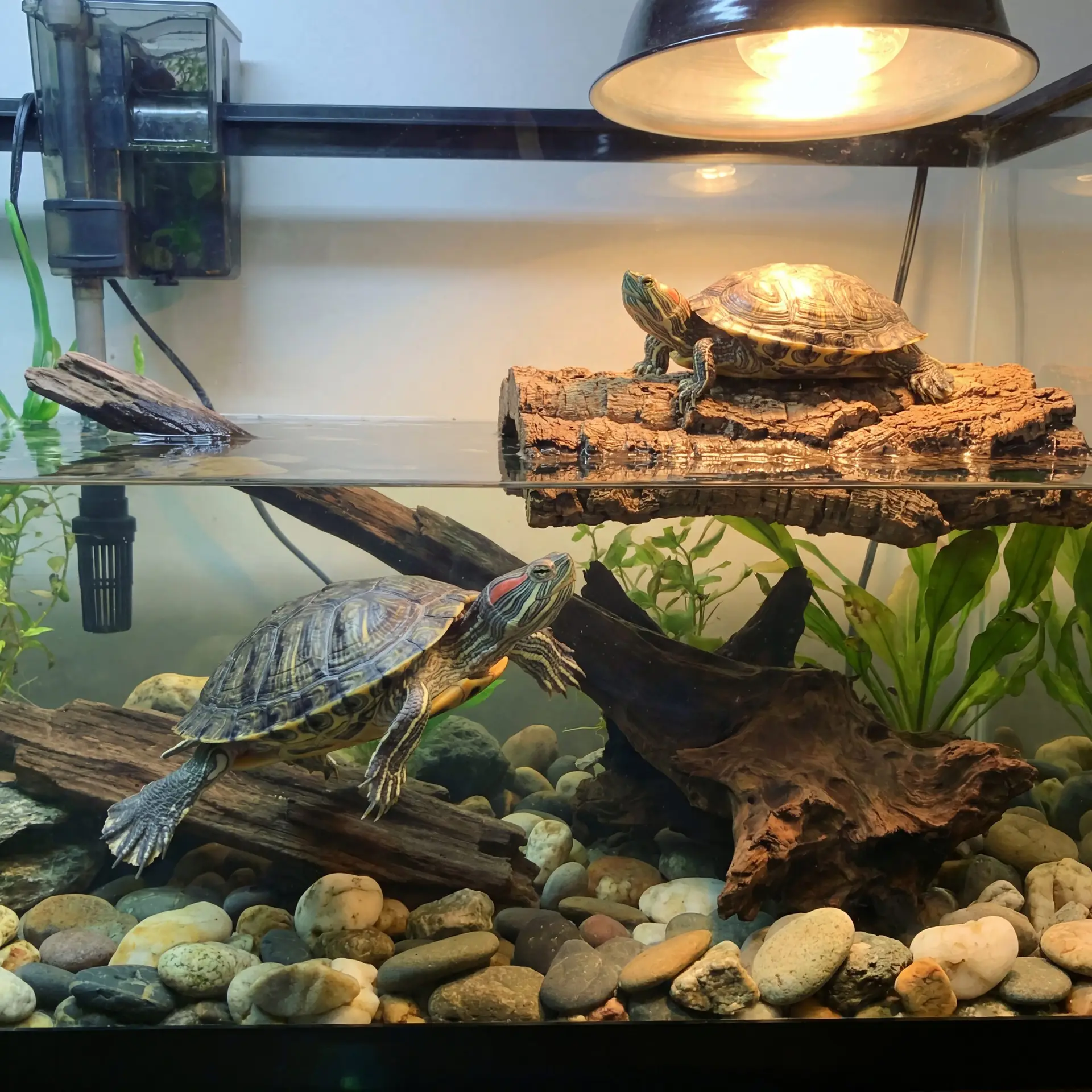
Plan the enclosure for the turtle’s expected adult size and species-specific needs. Check usable swimming space, water depth, dry basking access and the equipment needed to maintain it before buying.
Start with the exact species and, where relevant, sex. Confirm expected adult size and housing guidance, then compare the tank’s actual footprint and usable water volume with that plan.
Use Volume Rules as a Starting Calculation
Measure straight shell length from front to back. Ten gallons per inch is one suggested starting guideline for red-eared-slider housing, rather than a verified minimum for every turtle. That calculation gives 60 gallons for a 6-inch shell and 100 for a 10-inch shell; still check usable depth, footprint and the actual turtle’s care needs.
- Confirm swimming-space and water-depth needs for the exact species; a second gallons-per-inch formula does not establish fit.
- Use the adult size, not today's size.
- Compare usable water volume and internal dimensions, allowing for the actual basking area and equipment.
- Plan cleaning access and waste management alongside tank size. See the filtration guide.
Canister filter to compare
Fluval FX4 canister
Compare the selected Fluval FX4 model’s current ratings, media space, plumbing and cleaning access with the turtle’s waste load and enclosure. A fish-tank gallon rating alone does not establish turtle suitability. Read the canister guide before planning installation.
Heat
hygger aquarium heater
Check the exact hygger model’s wattage, immersion, protection and installation instructions against the tank and room conditions. Verify the actual water temperature with a separate suitable thermometer.
UVB over the basking dock
Zoo Med T5-HO 5.0 UVB hood
Review the selected Zoo Med hood and lamp instructions for UVB placement and compatibility. Assess heat separately; a UVB product name does not establish that the basking area has the required warmth or exposure.
Plan the Adult Enclosure Before Buying
A small turtle does not establish that a small tank meets its current needs. Before choosing a species, confirm the adult enclosure, care demands and resources you can provide. The full build is the aquatic turtle tank guide.
Species Details to Confirm
| Turtle | Confirm first | Use in the tank plan |
|---|---|---|
| Red-eared slider | Sex and expected adult shell size | Usable swimming space and basking access |
| Painted turtle | Exact subspecies and expected adult size | Footprint and usable water depth |
| Musk turtle | Exact species and swimming/access needs | Depth, resting access and floor materials |
| Map turtle | Exact species, sex and expected adult size | Swimming space and dry access |
| Any shared enclosure | Species-specific compatibility advice | Separate resources and a separation plan |
Do not use a fixed volume multiplier to clear shared housing. Compatibility, individual needs and access to resources need assessment, with a separate enclosure available if required.
Red-eared slider
Confirm sex, expected adult size and a species-specific housing plan. Compare actual swimming space, usable depth, basking access and waste-management needs before selecting equipment. Gear to assess for the planned tank: canister filters, heaters, UVB, basking docks.
Painted turtle
Identify the painted-turtle subspecies and confirm expected adult size. Check housing guidance for the actual turtle rather than treating one gallon figure or comparison with sliders as a complete plan.
Musk turtle
Confirm the exact musk-turtle species and its swimming, resting and access needs before choosing tank depth or footprint. Assess floor material and basking access alongside usable water volume: substrate, docks.
Map turtle
Identify the map-turtle species and sex, and confirm expected adult size. Assess swimming space, basking access and any compatibility concerns under guidance for that turtle.
Box turtles are not this setup
This aquatic-tank guide should not be used as a box-turtle enclosure plan. Confirm the exact species and its land, moisture and water-access needs with appropriate care guidance.
Questions people ask
How should I plan for an adult female slider?
Confirm expected adult size and species-specific housing advice, then check usable swimming space, depth and dry basking access. A single gallon figure is not a complete enclosure assessment.
Can I start small and upgrade?
Plan and fund the adult enclosure before buying. Any interim enclosure still needs to meet the turtle’s current needs; an upgrade plan does not make an undersized tank suitable.
Is ten gallons per inch right for every species?
It is a starting calculation discussed for red-eared-slider housing, not a verified minimum for every species. Confirm expected adult size, footprint, swimming ability and usable depth for the specific turtle.
Can I mix species?
Space and similar size do not guarantee compatibility. Start with one turtle and seek species-specific advice before considering shared housing.
Next: tank setup, a turtle that will not eat, turtle water care.