
Best Thermometers & Thermostats for Turtle Tanks
Temperature is one part of a turtle’s habitat review. Measure water and basking conditions against guidance for the actual species, age and health needs. Compare three measurement purposes here: water readings, dry basking-surface readings and heater control. A sick turtle needs reptile-veterinary advice; a new device does not establish the cause of illness.
Start with our complete tank guide and filtration guide alongside this guide. Review usable swimming space, water care and basking access together with measured temperatures.
Why Measured Temperatures Matter
Water temperature is a habitat measurement to review when appetite or activity changes. Temperature alone does not explain those signs — see our why won't my turtle eat guide. Seek reptile-veterinary advice for unexplained or persistent changes.
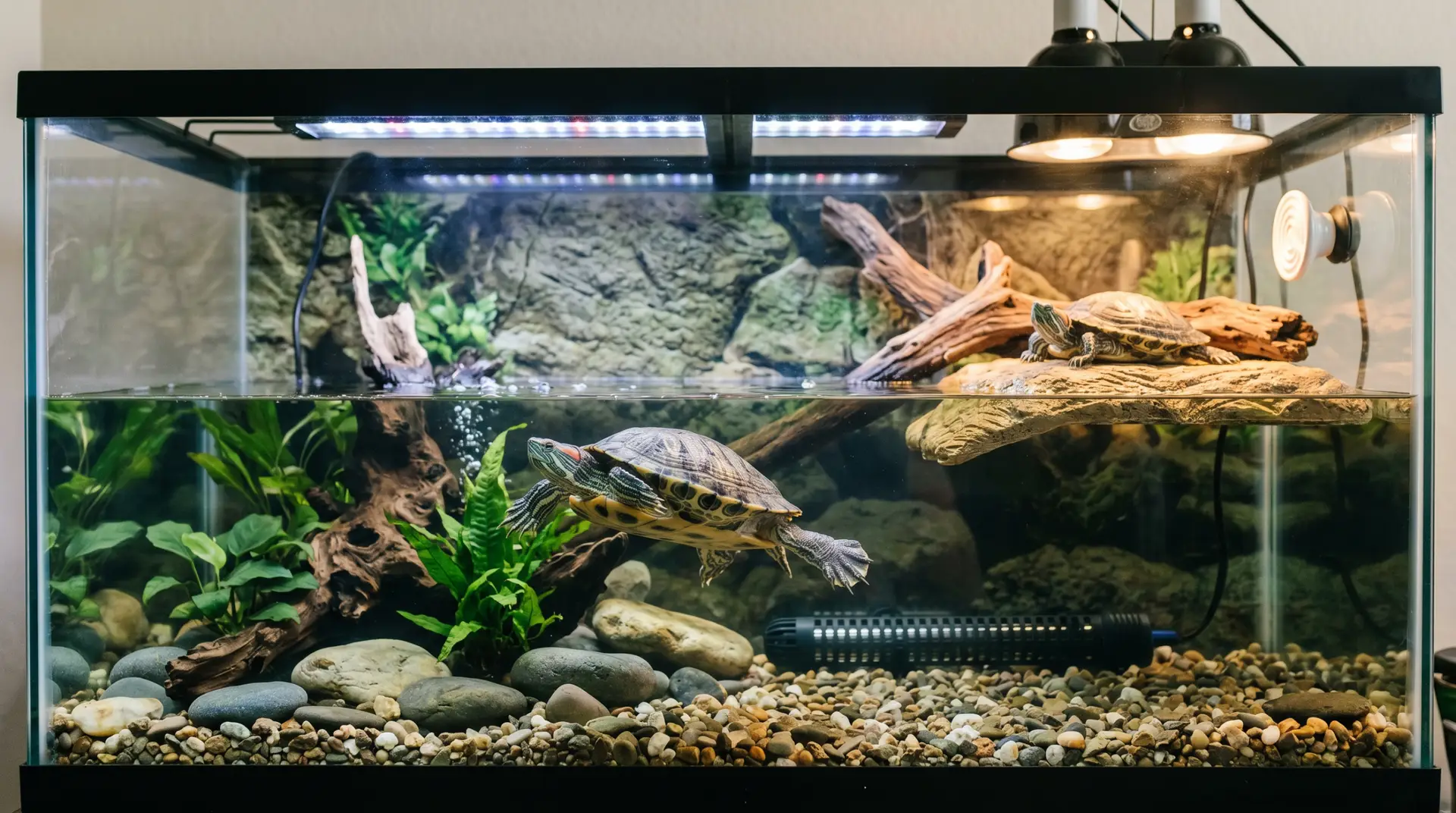
Basking spot temperature needs to be checked separately from water temperature. Review dry access, the available temperature gradient and UVB setup under species-specific guidance. A basking-temperature reading does not prove infection prevention or adequate UVB exposure. See UVB lighting guide.
Digital Water Thermometer
AQUANEAT Digital Aquarium Thermometer — Check price on Amazon
Check the selected AQUANEAT model’s probe, display and intended placement. Choose a readable water-temperature device whose instructions match the enclosure; confirm the actual specification and current price before buying.
Placement: Follow the selected thermometer’s immersion and positioning instructions. Record where the reading was taken and compare it with the turtle’s care target; one reading may not represent the whole enclosure.
Basking-Area Infrared Thermometer
Etekcity Lasergrip 774 Infrared Thermometer — Check price on Amazon
An infrared thermometer measures a surface rather than the water throughout a tank. Check the Etekcity model’s measurement distance, intended use and instructions before using its reading to adjust the basking setup.
How to use it: Measure the actual basking surface under the equipment manufacturer’s operating and measurement instructions. Recheck after changes to lamp position, equipment or room conditions; wattage alone does not establish the surface temperature.
Controller for Heater Settings
Inkbird ITC-306A Aquarium Temperature Controller — Check price on Amazon
Check the Inkbird ITC-306A’s outlet ratings, probe, control range and installation instructions against the actual heater and enclosure. A controller is another control point, and its settings still need comparison with an independent temperature reading.
Placement: Follow the controller’s probe and outlet instructions. Check the measured water temperature independently, including after equipment or setting changes.
See water heater picks for heater and controller compatibility checks, and canister filter roundup for waste load, media and maintenance considerations.
Record Measurements Against Species Guidance
| Check | Record | Compare with |
|---|---|---|
| Care target | Species, age and current care advice | Guidance for this turtle |
| Water | Reading, time and probe location | Applicable water-temperature target |
| Basking surface | Reading and measurement location | Applicable basking guidance |
| Equipment change | New settings, placement or room conditions | Measurements after the change |
| Health change | Appetite, activity or other observations | Reptile-veterinary advice |
Room conditions are part of the review, but they do not replace measured water and basking-surface conditions. Confirm the targets with species-specific care guidance.
FAQ
Do I really need both a water thermometer and an infrared thermometer?
Measure both the water and the dry basking surface with instruments intended for each job. The exact devices depend on the setup; a water reading alone does not describe a dry platform.
How often should I check temperatures?
Build temperature checks into the care routine recommended for the turtle and equipment. Recheck after changes in settings, placement or room conditions, and when appetite or activity changes.
My turtle stopped eating — could temperature be the cause?
Temperature is one possible part of the habitat review. Appetite loss can have other causes and needs reptile-veterinary advice if unexplained or persistent. See why won't my turtle eat guide.
Can I trust my heater's built-in dial instead of buying a separate thermostat?
Compare the actual water reading with the care target rather than relying on the dial setting alone. Check heater and controller compatibility under the manufacturer’s instructions; a separate controller is not a substitute for measurement.