
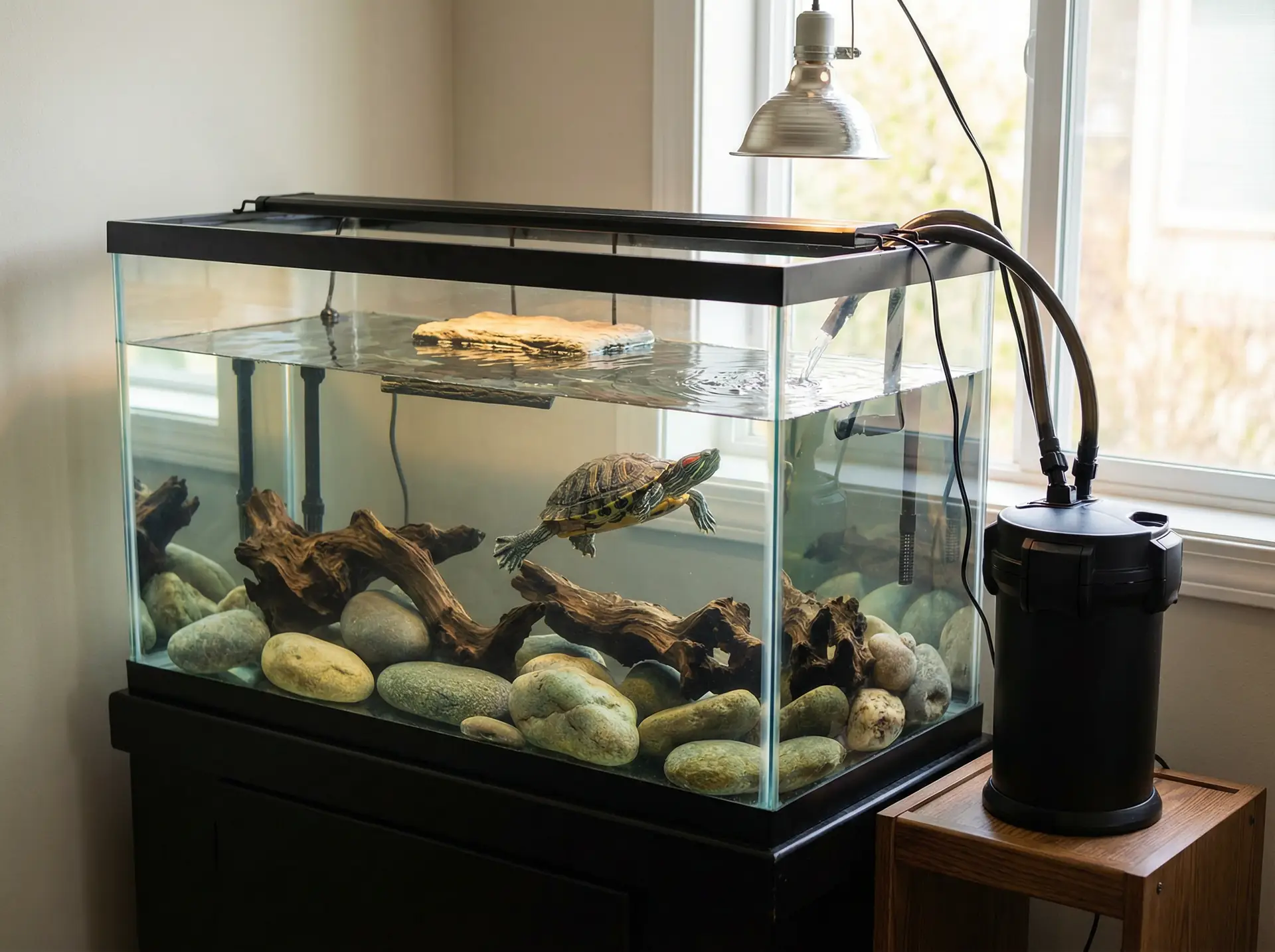
Turtle Tank Substrate: Bare Floor, Sand and Stone
Substrate changes the cleaning routine and the objects your turtle can contact or swallow. Compare the actual material with species-specific care guidance before choosing it.
Short version: A bare floor avoids loose-substrate exposure and makes debris visible. It is one option to assess against the turtle’s species and care needs; it does not establish that the whole habitat is suitable.
Quick picks: compare against your turtle's species and size first
Large stone option: Zoo Med Aquatic River Pebbles for Turtle
Check bag size and price on Amazon
Sand option: CaribSea Super Naturals Aquarium Sand
Check price on Amazon
Any floor, including bare-bottom: DXOPHIEX 30-ft gravel vacuum and water changer
Check price on Amazon
Full notes on each option are below. Cleaning gear: turtle tank cleaning supplies.
The Honest Bare-Bottom vs. Substrate Debate
Bare-floor considerations: Debris is visible and there is no loose floor material to swallow or clean. Review waste load, cleaning access and actual filtration alongside the floor choice.
Bare-bottom considerations: Assess traction, resting areas and any species-specific digging or substrate needs, as well as how the tank will be cleaned.
Substrate considerations: Appearance, cleaning demands and species-specific needs matter. A substrate choice does not replace suitable filtration and maintenance.
Cleaning and ingestion checks: Material can trap debris or cloud water when disturbed. Inspect what the turtle could swallow and choose a maintenance plan appropriate to the material and habitat.
Recommendation: check whether a bare floor meets the species’ needs, and review the cleaning routine (see filtration basics) before adding substrate. Experience or vacuuming alone does not establish that a material is suitable.
Reasons to Compare a Bare Floor
A bare floor makes accumulated debris easier to see. Review your tank setup and filtration alongside the floor choice. Assess every piece against the turtle and species-specific guidance.
Substrate Checks Before Use
- Remove gravel and any object your turtle could swallow. Size relative to the head is not a universal safety test.
- Assess every rock against the turtle and the enclosure. Do not use stones the turtle could swallow; check stability, edges and gaps that could trap it. Fist size is not a universal suitability threshold.
- Use sand only when species-specific care guidance supports it. Confirm the actual material and aquatic preparation instructions; a fine grain or a play/pool-filter label does not establish suitability for every turtle.
- Verify any coating or treatment and intended aquatic use; do not use a material whose suitability is uncertain.
- Avoid substrates that visibly cloud water when disturbed.
- Match cleaning methods to the actual material, debris and habitat maintenance needs.
Three Linked Substrate Options to Assess
Stone Option: Zoo Med Aquatic River Pebbles for Turtle
Zoo Med Aquatic River Pebbles for Turtle — Check bag size and price on Amazon
Check the actual bag’s size range and surfaces against your turtle. A turtle-product label does not guarantee that every stone is suitable or cannot be swallowed.
Stone Option: Exo Terra Turtle Pebbles, Large
Exo Terra Turtle Pebbles, Large — Check bag size and price on Amazon
Smooth, rounded turtle pebbles in a 10-pound bag. Exo Terra sizes the Large grade for turtles with a shell of about 4 inches or more, so it is not a hatchling option; check the actual pebbles against your turtle’s head and remove any piece it could swallow.
Sand Option: CaribSea Super Naturals Aquarium Sand
CaribSea Super Naturals Aquarium Sand — Check price on Amazon
Verify the selected material and preparation instructions, and ask whether sand is suitable for the turtle’s species. Fine grains do not guarantee harmless ingestion; cleaning demands also need review.
What to check: Avoid loose stones or other objects the turtle could swallow. Confirm materials, coatings and intended aquatic use; no universal one-inch rule or aquarium label establishes suitability.
Making Either Choice Work
Substrate or bare-bottom, it doesn't replace the fundamentals: strong filtration (filtration basics and canister filter roundup), proper basking heat and UVB lighting, and a suitable water heater. Whichever floor you pick, debris has to come out on schedule: see our turtle tank cleaning supplies and, if odor appears, why a turtle tank smells even with a filter.
Final Verdict
Choose a floor or substrate that meets the turtle’s species-specific needs and your cleaning plan. Remove swallowable loose objects, and ask a reptile veterinarian if the material or setup is uncertain.
FAQ
Is bare-bottom bad for a turtle's feet or shell?
A bare floor avoids loose floor material, but suitable surfaces, access and any species-specific substrate needs still matter. Assess the whole habitat rather than assume the floor alone establishes suitability.
Can I mix substrate and bare-bottom?
A mixed layout is an option only when the materials and placement suit the turtle. Check stone size, stability, gaps and the ability to clean the actual enclosure.
What's the actual risk if my turtle swallows a small piece of gravel?
It can lodge in the digestive tract and cause a blockage that sometimes requires vet care or surgery.
Do baby/juvenile turtles need different substrate rules?
Assess the actual juvenile and species; stones that a larger turtle cannot swallow may still be swallowable by a smaller one. Neither an adult-safe label nor close supervision establishes that sand is suitable.