
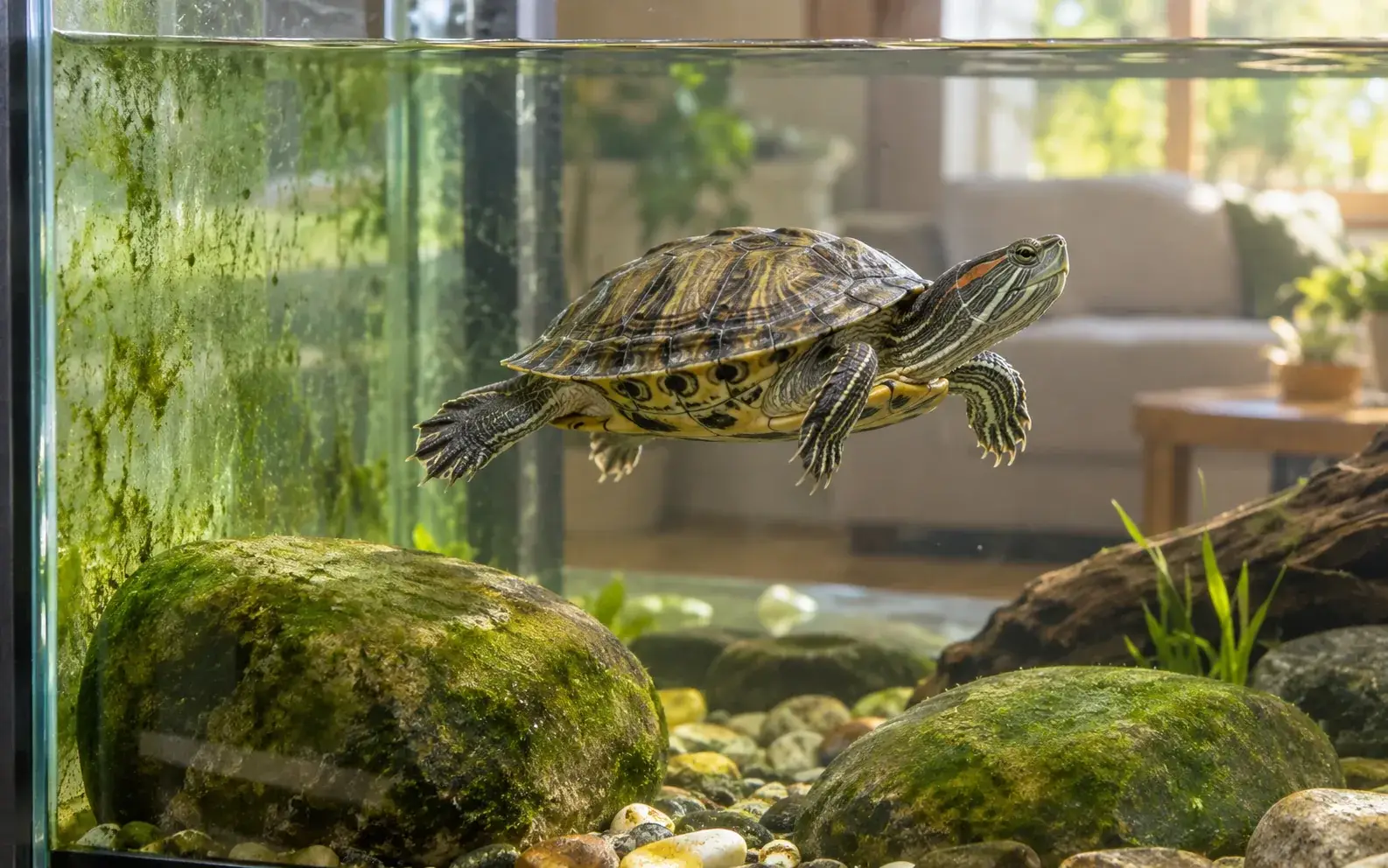
Algae on the shell and algae in the tank need separate checks. Review water care and ask a reptile veterinarian about unusual shell changes before trying a cleaning treatment.
Affiliate Disclosure: As an Amazon Associate, PawsFinsandShells earns from qualifying purchases. Some links below are affiliate links — we may earn a small commission at no additional cost to you.
Algae can occur on an aquatic turtle’s shell, but its appearance alone cannot establish that the shell is healthy. Excessive buildup or an unexplained change warrants a veterinary assessment alongside a review of tank care.
Shell Changes: When to Get Veterinary Advice
Do not scrub or treat an abnormal shell to test whether it is healthy. For thick buildup, damage, softness, unusual patches or other changes, contact a reptile veterinarian. Our shell peeling and rot guide explains observations to record; ask your vet whether shell cleaning is appropriate and how to do it.
Review access to a dry basking area and the measured conditions in the habitat. Algae regrowth alone does not diagnose a basking problem; a persistent behavior change may also need veterinary advice. See why won’t my turtle bask for setup checks.
Why Turtle Tanks Grow So Much Algae
Review water cleanliness, filtration and accumulated waste when algae becomes excessive. Its color or amount cannot, by itself, identify a single cause or confirm that the water is suitable.
Plan Tank Maintenance for Your Setup
Plan water changes from species guidance and measured water conditions. Remove settled waste and clean glass and removable decor with suitable aquarium tools, following their instructions.
Aquarium Gravel Vacuum Siphon (30 ft)
Compare the listed hose length, faucet connection, adapters and tank-access requirements before choosing a water changer. Cleaning time depends on the setup and work needed.
Fit notes: compare hose reach, tank depth and the selected faucet adapter with your setup.
Skip if: a small setup near a sink — a short siphon does the job
API Turtle Sludge Destroyer
Check the exact label’s intended use, dose and compatibility before buying. A tank additive does not replace the water-change and waste-removal plan.
Fit notes: review the product label and the cause of accumulating waste before buying.
Skip if: you keep up with vacuuming and the bottom stays clean — save the money
The rest of the toolkit — scrapers, brushes, and bucket-free options — is in our turtle tank cleaning tools guide.
Prevention: Light, Load, and Water
- Check the lighting plan. Follow species-appropriate heat and UVB guidance and the lamp’s instructions. Algae control must not compromise the turtle’s lighting or temperature needs.
- Review feeding and waste. If considering separate feeding, discuss suitability and handling with your turtle’s veterinarian; it is not a guaranteed algae fix.
- Review the water-change plan. Use species guidance and measured conditions. Follow the exact conditioner label; our water conditioner guide compares product uses.
- Check the substrate choice. Consider particle size, ingestion risk and maintenance needs; the substrate guide discusses tradeoffs.
Separate Shell Care From Tank Cleaning
Do not apply tank-cleaning products to a turtle. Follow product instructions and obtain veterinary advice about shell changes. For aquarium-water maintenance, our green water guide covers a separate topic.
Turtle Algae Questions, Answered
Is algae on a turtle’s shell bad?
Algae may occur, but it is not proof that the shell is healthy. Excessive buildup or an abnormal shell needs veterinary advice; ask whether cleaning is appropriate rather than diagnosing it from a photo.
How do I get rid of algae in my turtle tank?
Review waste removal, filtration and water-test results. Plan changes and lighting around the turtle’s requirements and product instructions; there is no universal percentage or timer setting for every setup.
Can I use an algaecide in a turtle tank?
Check the exact product label for compatibility with the occupied turtle habitat and ask your reptile veterinarian if unsure. Do not use a tank additive as shell treatment.
Why does my turtle’s shell keep growing algae back?
Regrowth alone cannot identify the cause. Review tank care and basking access, and contact a reptile veterinarian about excessive buildup, shell changes or a change in normal behavior.
Related guides: Cleaning Tools · Water Conditioners · Substrate Guide · Shell Problems Guide
Last updated: October 5, 2026.
Seasonal pet tips and gear guides
Get seasonal pet-care tips and buying guides with fit, care, and maintenance details. Unsubscribe anytime.