
Best Water Heaters for Aquatic Turtles
Choose water-temperature targets for the turtle’s species and life stage. Compare the heater’s rated range and installation instructions, then monitor actual water temperature with a separate thermometer.
Compare three linked heater options by the exact variant, rated water volume, installation instructions, and whether the equipment can be protected from the turtle.
Quick picks: match wattage to actual water volume
Larger tanks: hygger multi-wattage submersible heater
Check price on Amazon
Mid-size tanks: hygger 200W aquarium heater
Check price on Amazon
Budget option: HiTauing 300W aquarium heater
Check price on Amazon
Compare all three in the comparison table, and confirm water temperature with a separate thermometer (turtle tank thermometers).
What Water Temperature Do Aquatic Turtles Need?
Water-temperature requirements depend on the turtle’s species, age and health. Use a species-specific care source or advice from a reptile veterinarian, and monitor actual water temperature with a separate aquarium thermometer.
A heater helps stabilize the water, but it should not be the only thing you rely on. Use a separate aquarium thermometer so you can confirm the real water temperature instead of trusting only the heater dial.
Adult Turtles
Choose the target water temperature for the turtle’s exact species and life stage.
Young Turtles
Use a temperature range appropriate for the turtle's exact species and age. Check a species-specific care source or a reptile veterinarian.
Check Daily
Use a separate thermometer and check the water regularly so the tank does not run too cold or too hot.
Quick Comparison
| Model | Listed variant and water volume | Listed features | Before buying |
|---|---|---|---|
| hygger submersible heater | 300W; 40–80 US gal | External controller and protective casing | Confirm the selected wattage; follow placement instructions and use a separate thermometer |
| hygger aquarium heater | 200W; 20–40 US gal | External controller and ABS cover | Check actual water volume and room temperature; a cover is not proof of turtle-impact safety |
| HiTauing aquarium heater | 300W; 40–75 US gal | External controller and removable protective cover | Confirm the selected wattage and listed range; follow the placement instructions |
Top Picks
hygger 300W Submersible Heater
The linked listing currently selects 300W and describes a 40–80 US-gallon aquarium range, an external controller and a protective casing. Confirm the selected variant and the manufacturer’s installation instructions; these features do not establish impact or burn protection for every turtle setup.
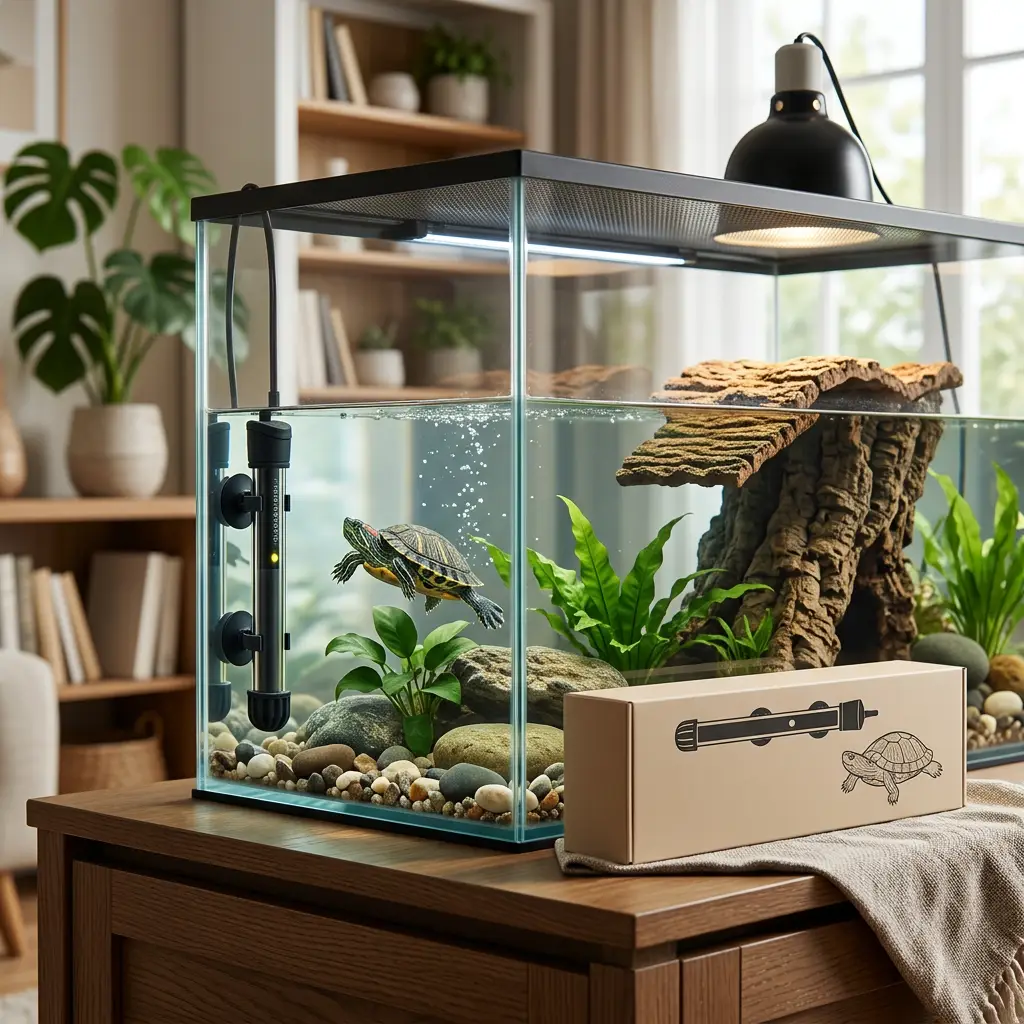
Heater-placement illustration; this is not a photograph of the linked hygger 300W. Follow the exact model’s placement instructions.
- Confirm the exact model and wattage
- Match actual water volume and room conditions to the instructions
- Use a separate aquarium thermometer
- Protect the heater and cord from contact and movement
Fit check: Confirm the selected variant, installation directions and actual water temperature before relying on this heater.
hygger Multi-Wattage Submersible Heater — Check Price on Amazonhygger 200W Aquarium Heater
The linked model is 200W and lists a 20–40 US-gallon aquarium range, an external controller and an ABS cover. Compare the actual water volume and room temperature with its directions. Current prices were not compared, so this is not a verified lowest-cost pick.
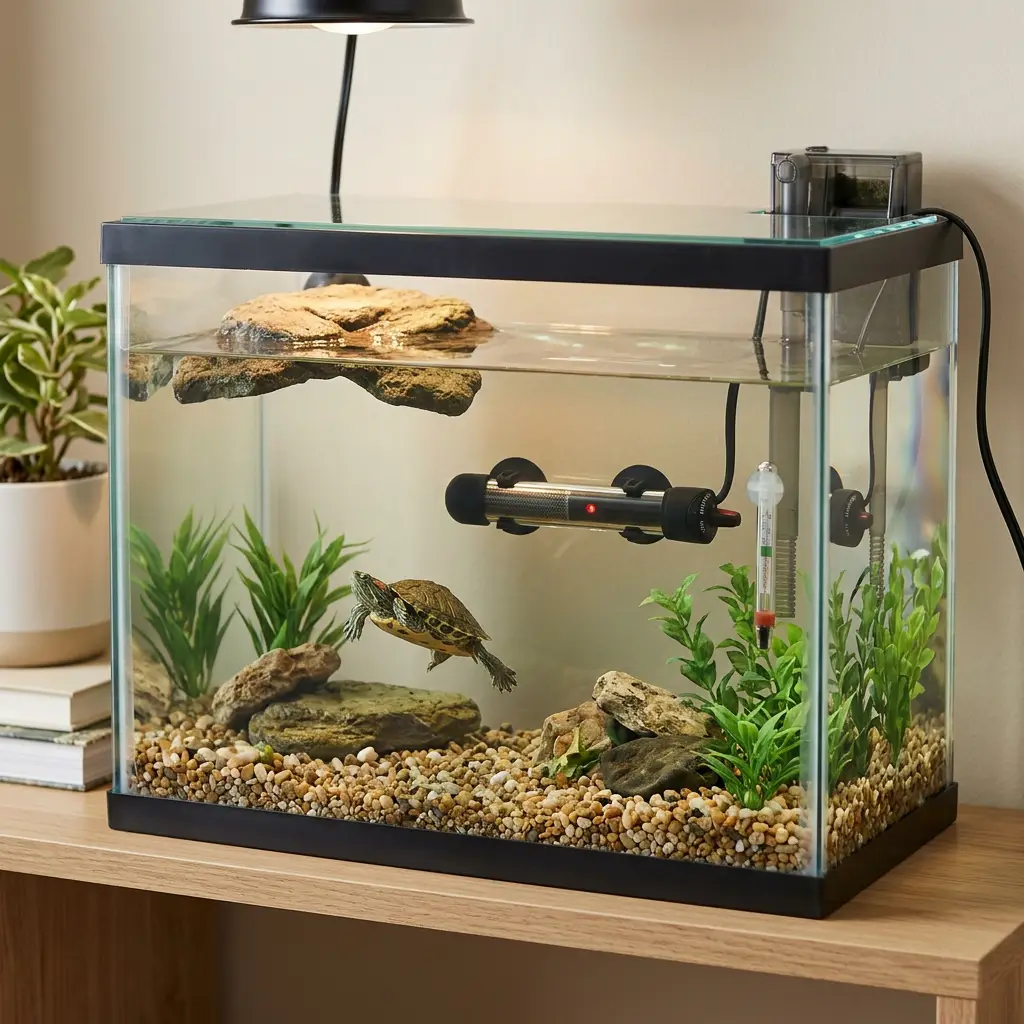
Heater-placement illustration; this is not a photograph of the linked hygger 200W. Follow the exact model’s placement instructions.
- Confirm the exact model and wattage
- Match actual water volume and room conditions to the instructions
- Use a separate aquarium thermometer
- Protect the heater and cord from contact and movement
Fit check: Confirm the selected variant, installation directions and actual water temperature before relying on this heater.
hygger 200W Aquarium Heater — Check Price on AmazonHiTauing 300W Aquarium Heater
The linked listing currently selects 300W and describes a 40–75 US-gallon aquarium range, an external controller and a removable protective cover. Its wattage does not make it categorically stronger than the linked hygger 300W model. Check placement and protection from the turtle.
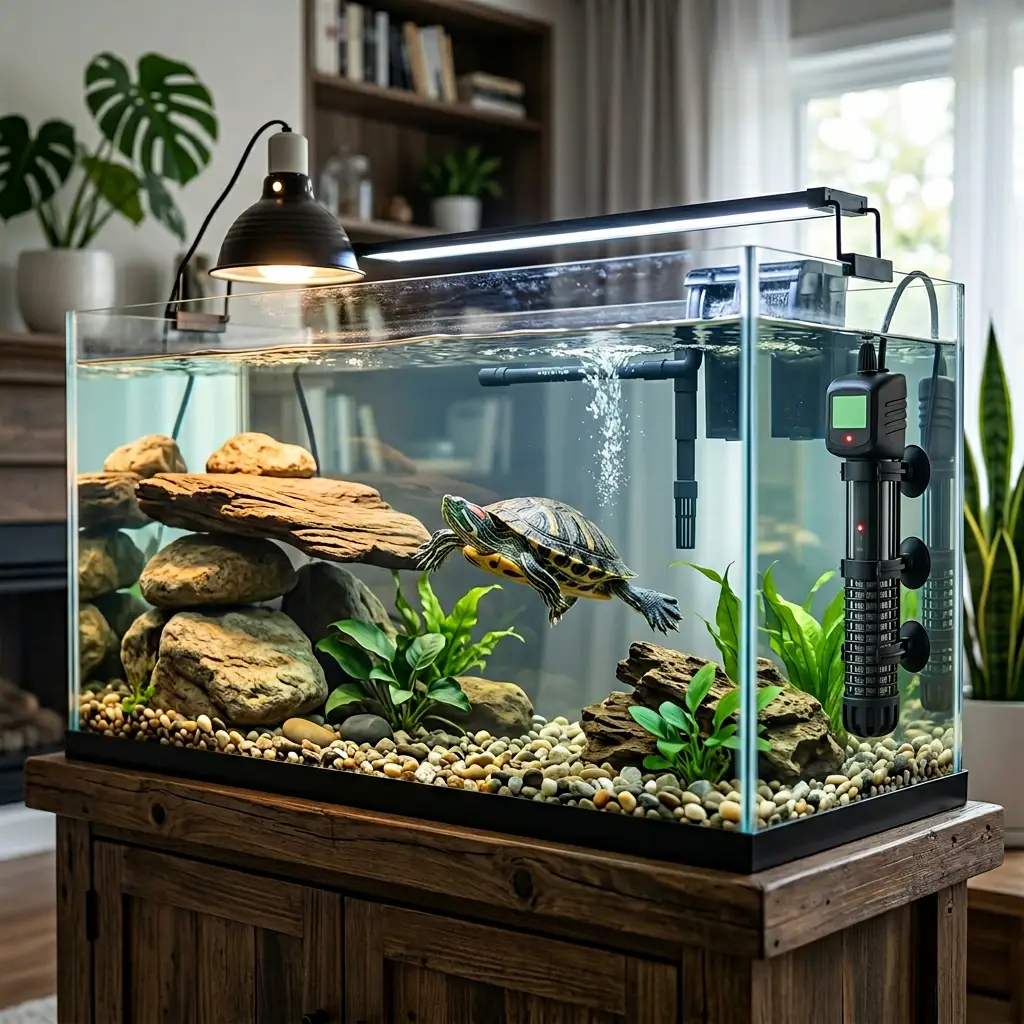
Heater-placement illustration; this is not a photograph of the linked HiTauing 300W. A depicted guard does not establish impact protection.
- Confirm the exact model and wattage
- Match actual water volume and room conditions to the instructions
- Use a separate aquarium thermometer
- Protect the heater and cord from contact and movement
Fit check: Confirm the selected variant, installation directions and actual water temperature before relying on this heater.
HiTauing 300W Aquarium Heater — Check Price on AmazonHow To Choose a Safe Turtle Tank Heater
Aquatic turtles are stronger and messier than many fish, so heater safety matters. They may bump equipment, move decorations, or bite at cords. For many setups, a heater guard or protective cover is worth considering, especially with glass heaters.
Match the Tank Size
Choose a heater with enough wattage for the actual water volume. Larger tanks usually need stronger heating than small starter tanks.
Keep It Submerged
Use the heater according to the manufacturer's directions and make sure submersible heaters stay underwater while running.
Protect the Heater
Consider a heater guard if your turtle bumps equipment, bites cords, or moves objects around the tank.
FAQ: Aquatic Turtle Water Heaters
Do aquatic turtles need a water heater?
Many indoor aquatic turtle tanks need a water heater because normal room temperature can be too cool or inconsistent. A heater helps keep the water stable, especially at night or during colder months.
What temperature should turtle tank water be?
Water-temperature needs vary by species and age. Check a species-specific care source and use a separate aquarium thermometer to monitor the actual water temperature.
Can a turtle break a glass aquarium heater?
Aquatic turtles may move or contact equipment. Follow the exact heater’s placement and protection instructions. A guard or cover alone does not establish impact or burn protection.
Should I use a separate thermometer?
Yes. A separate aquarium thermometer helps confirm the real water temperature. Do not rely only on the heater dial. See our turtle tank thermometer guide for water and basking-area options.
Should the heater be fully underwater?
Submersible heaters should be used according to the manufacturer's instructions and kept properly underwater while operating. Always unplug equipment before removing water or cleaning the tank.
How I Chose These Turtle Tank Heaters
This comparison uses the linked listings’ model names, selected wattages, stated aquarium ranges and installation features. It does not establish how the heaters perform in a particular turtle habitat. Confirm the current variant and directions before buying.
- Tank-size fit: A heater should be strong enough for the amount of water in the enclosure.
- Steady temperature: The best option should help avoid big water-temperature swings.
- Submersible setup: Turtle tanks usually need heaters that can stay properly underwater while running.
- Safety: Heater guards, cord placement, and durable placement matter because turtles are active animals.
- Ease of use: A good heater should be simple enough for everyday keepers to install, monitor, and maintain.
Pair the heater with a separate thermometer and inspect its placement regularly. Follow the exact model’s operating and submersion instructions.
Related Aquatic Turtle Guides
Best UVB Lights for Aquatic Turtles
Pair heat and lighting so the full habitat works better.
Read GuideBest Basking Platforms for Aquatic Turtles
Build out a proper basking area above the waterline for a more complete habitat.
Read GuideBest Canister Filters for Aquatic Turtles
Useful next step for cleaner water and stronger filtration.
Read GuideFinal Take
Compare the selected wattage and rated water volume with the habitat and room conditions. Follow placement and protection instructions, use a separate thermometer and check measured water temperature; a larger wattage alone does not establish the right fit.