
Dog Beds for Chewers: Compare Materials and Limits
No bed is guaranteed to survive a determined chewer. Start with your dog's habits: occasional scratching calls for different materials than pulling out stuffing or chewing through seams.
Compare five linked models below, including their cleaning needs and important limits. Some are intended for everyday resting and light chewing; check the current listing's cautions before choosing one for an aggressive chewer.

Need more cushion and joint support? Our orthopedic dog bed guide focuses on practical beds for real homes, including support, ease of cleaning, bolsters versus flat styles, durability, and whether the bed fits the way your dog actually sleeps.
View the Best Orthopedic Bed GuideWhat Makes a Dog Bed Better for Heavy Chewers?
Durable dog beds usually have stronger fabric, tighter stitching, cleaner seams, and fewer loose edges for a dog to grab. Thin plush tops, exposed zippers, weak corners, and loosely sewn fabric can give a determined chewer a starting point.
Shape matters too. A fluffy pillow-style bed may look comfortable, but it also gives some dogs more soft material to bite, pull, and shred. Low-profile mats, reinforced beds, and elevated cot-style beds can sometimes last longer because there is less loose fabric to attack.
Quick Comparison Table
| Product | Best For | Style | Main Strength | Possible Drawback | Amazon Link |
|---|---|---|---|---|---|
| Bedsure Orthopedic Dog Bed XL | Resting and light scratching. | Foam bed with removable cover | Washable cover and foam cushioning | Listing cautions against aggressive chewing | View Bedsure Orthopedic Dog Bed XL on Amazon |
| Vonabem Wipeable XL Bed | Owners who prefer a wipeable cover and have measured the resting area. | Flat foam bed with faux-leather cover | Wipeable surface and removable cover | The seller warns against direct sun | View Vonabem Wipeable XL Bed on Amazon |
| EHEYCIGA Orthopedic XL Bed | Dogs that enjoy bolsters and owners who want a removable cover. | Foam bed with three bolstered sides | Removable cover and raised resting edges | Foam is not machine washable; sides are not waterproof | View EHEYCIGA Orthopedic XL Bed on Amazon |
| K9 Ballistics Tough Ripstop Bolster Ortho Bed | Scratching, digging, and occasional mouthing; avoid for heavy or constant chewing. | Foam mattress with ripstop cover and bolsters | Reinforced cover with removable cleaning access | Manufacturer says it is not chew proof | View K9 Ballistics Tough Ripstop Bolster Ortho Bed on Amazon |
| Western Home Elevated Mesh Bed | Dogs comfortable on a raised sleeping surface, within the selected model’s weight limit. | Mesh cot with frame and removable bolster | Air can circulate beneath the sleeping surface | Bolster and mesh remain possible chewing targets | View Western Home Elevated Mesh Bed on Amazon |

Bed-style illustration. Check the retailer photos for the exact product.
Bedsure Orthopedic Dog Bed XL
Consider for: Resting and light scratching.
The retailer listing describes a foam bed with a removable, washable cover.
Choose it only if the size, cover care, and your dog's behavior fit. It should not be the default recommendation for a dog that repeatedly tears beds apart.
Useful features
- Removable cover for cleaning
- Cushioned surface for everyday rest
Limits to check
- No guarantee against chewing damage
- Confirm the selected size and care instructions

Bed-style illustration. Check the retailer photos for the exact product.
Vonabem Wipeable XL Bed
Consider for: Owners who prefer a wipeable cover and have measured the resting area.
This linked model uses a faux-leather cover over foam. Its listing emphasizes wiping the surface clean, which can be useful for muddy paws and everyday spills.
The seller warns that the cover can become hot in direct sunlight. Keep that placement limit in mind, and verify the chosen size and washing instructions. A wipeable cover does not establish chew resistance.
Useful features
- Surface can be wiped clean
- Low-profile shape for a measured resting area
Limits to check
- Keep out of direct sunlight as instructed
- Chewing performance is not independently verified
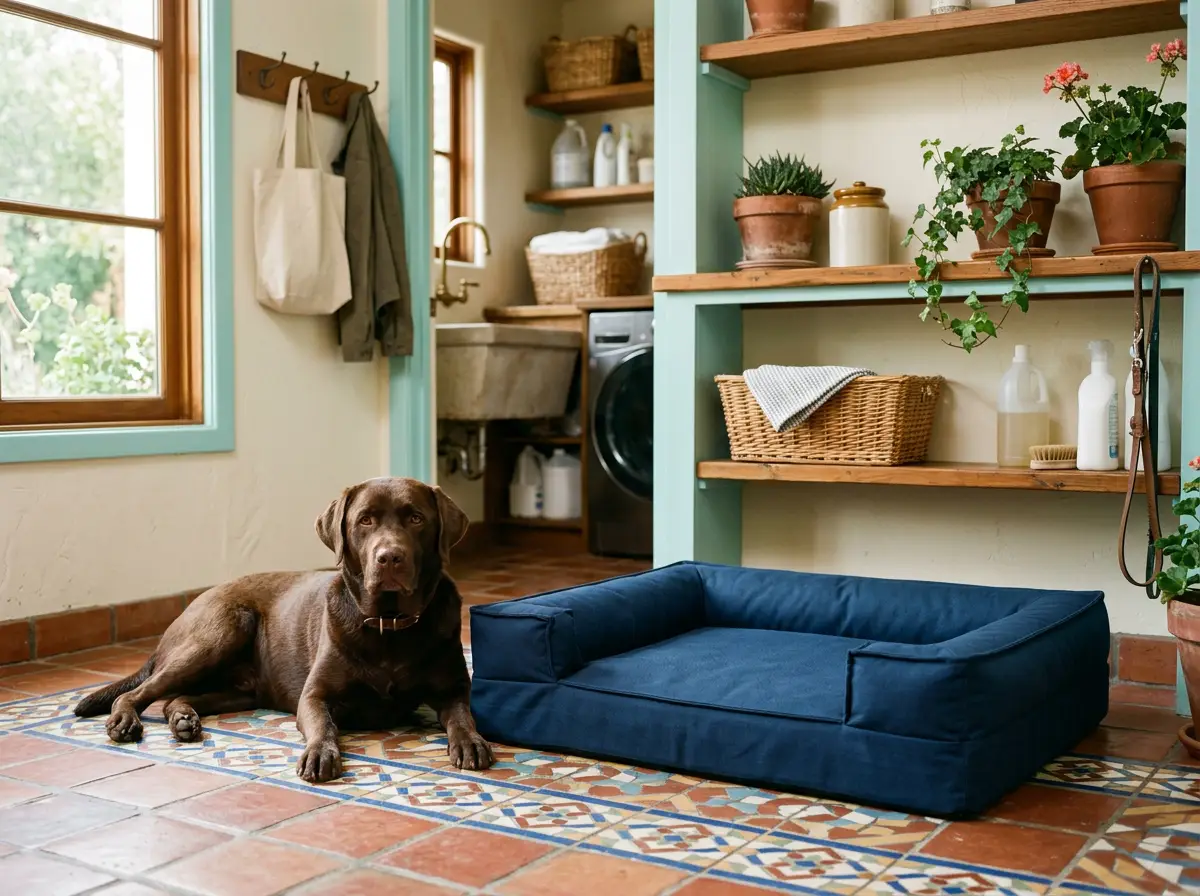
Bed-style illustration. Check the retailer photos for the exact product.
EHEYCIGA Orthopedic XL Bed
Consider for: Dogs that enjoy bolsters and owners who want a removable cover.
The linked EHEYCIGA bed has foam cushioning and three raised sides. The listing distinguishes its protected sleeping surface from its sides, which are not waterproof.
Remove the foam before washing the cover and follow the listing's care directions. This is a cushioning and cleanup option; the removable cover is not proof that it will withstand an aggressive chewer.
Useful features
- Bolstered shape for dogs that lean or curl up
- Cover can be removed for washing
Limits to check
- Keep the foam out of the washing machine
- Waterproof protection does not cover the sides

Bed-style illustration. Check the retailer photos for the exact product.
K9 Ballistics Tough Ripstop Bolster Ortho Bed
Consider for: Scratching, digging, and occasional mouthing; avoid for heavy or constant chewing.
The listing describes a ripstop cover, foam mattress, and bolster walls. It specifically cautions that this model is not chew proof and is not recommended for heavy or constant chewing.
Consider it for scratching and occasional rough use. Compare the current price, warranty coverage, and return terms before choosing it over a simpler bed.
Useful features
- Removable cover for cleaning
- Reinforced fabric intended for rough everyday use
Limits to check
- Not recommended for heavy or constant chewing
- Compare current cost and warranty before buying

Bed-style illustration. Check the retailer photos for the exact product.
Western Home Elevated Mesh Bed
Consider for: Dogs comfortable on a raised sleeping surface, within the selected model’s weight limit.
This linked cot has a mesh sleeping surface, frame, and removable padded bolster. The raised design allows air beneath the bed and can make surface cleanup straightforward.
A raised bed still has fabric to chew. Check the selected size, load limit, and assembly instructions, then inspect the mesh and bolster during use. The lifestyle illustration does not depict the exact retailer model.
Useful features
- Raised mesh surface
- Mesh can be rinsed according to the listing
Limits to check
- A padded bolster adds another chewing target
- Some dogs prefer a cushioned floor-level bed
How to Choose the Right Durable Bed for Your Dog
Focus on your dog's behavior, not just your dog's size. If your dog mainly scratches or circles before lying down, a reinforced fabric bed may be enough. If your dog grabs corners, digs at seams, or pulls stuffing out, you may be better off with a lower-profile bed or an elevated cot-style option.
Also think about where the bed will be used. A crate bed, a living room bed, and a covered patio bed may need different levels of support, cleanup, and durability. Depending on how your dog sleeps, easy-clean fabrics, a removable cover, or an elevated frame may be worth prioritizing.
Can a More Durable Dog Bed Be Worth It?
For many dog owners, yes. If you are tired of replacing shredded beds every few weeks or months, a better-built option can be worthwhile. The value comes from durability, easier maintenance, and having a bed that is less likely to turn into stuffing across the floor.
That said, the best result usually comes from matching the bed style to your dog's habits. Some dogs do best on a tougher fabric bed, while others do better with an elevated cot that gives them less material to chew.
Final Take
If your dog destroys standard beds fast, a tougher bed can be a smart upgrade. The best pick depends on whether your dog mainly chews, digs, sprawls, overheats, or makes a mess. Compare the actual materials and the seller's cautions before buying. Several models here are intended for light chewing or everyday rest, so an aggressive chewer needs a different level of protection.
When in doubt, focus on strong materials, simple shapes, easy cleaning, and the right size for your dog.