
Menu
A good aquatic turtle habitat starts with space, clean water, safe basking, steady heat, and proper lighting. Turtles are active, messy animals, so a small starter tank usually does not stay practical for long. As a general rule, plan for about 10 gallons of water per inch of shell length. That means a turtle with a 6-inch shell needs at least a 60-gallon setup with enough room to swim, climb out, bask, and move around without feeling crowded. Bigger tanks are usually easier to keep stable because they give your turtle more space and give the filter more water volume to work with.
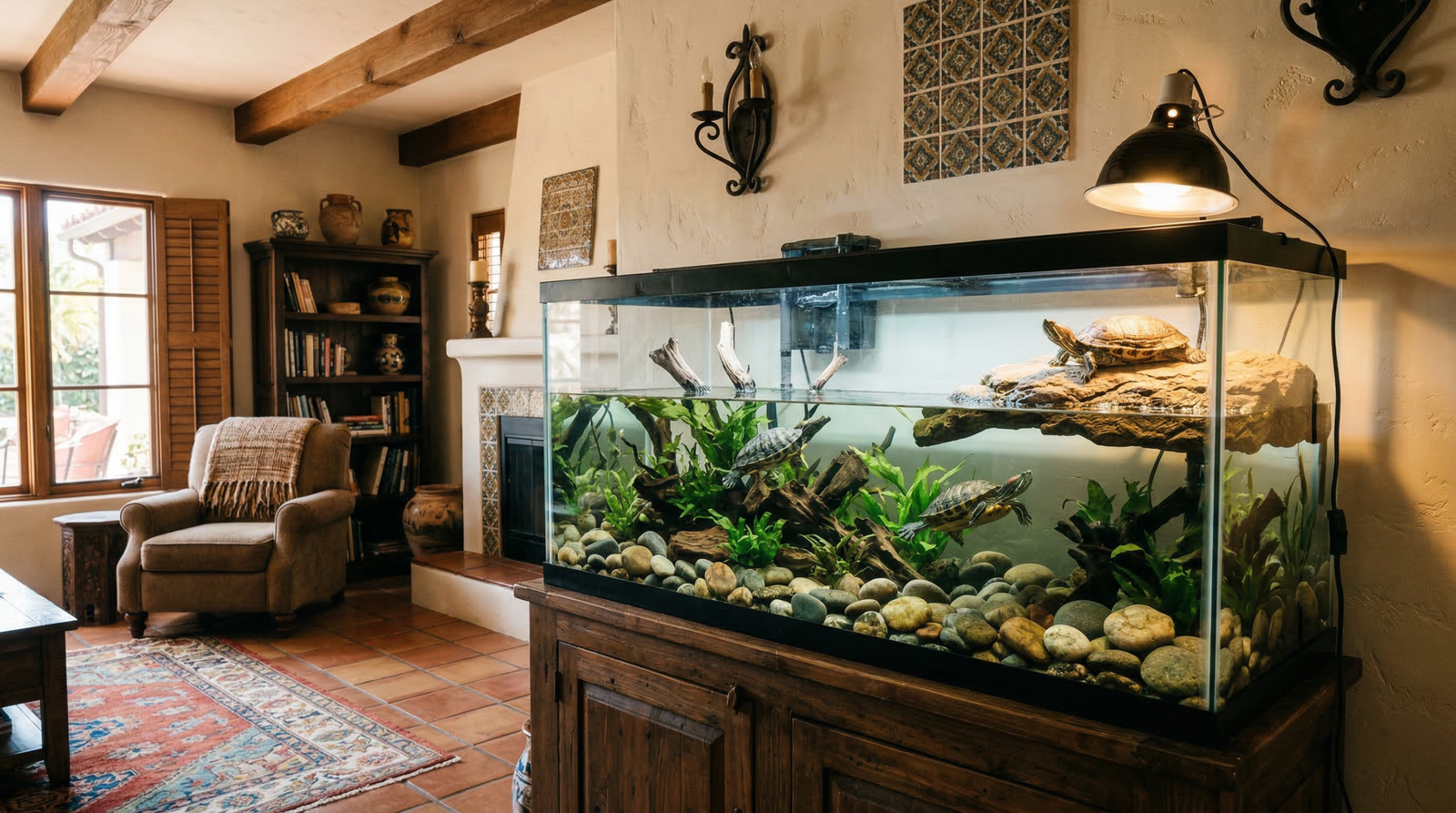
Tank size is one of the most important parts of aquatic turtle care. A small enclosure can limit swimming space, make water quality harder to control, and leave very little room for a proper basking area, filter, heater, and safe decorations. Young turtles may start small, but many common aquatic turtles grow quickly, so it is usually better to plan around the turtle's adult size instead of only its current size.
| Turtle Size | Minimum Tank Range | Best Use | Setup Note |
|---|---|---|---|
| Small hatchling | 20–40 gallons | Temporary grow-out setup | Leave room for a basking platform, shallow access areas, and gentle filtration. |
| Juvenile turtle | 40–75 gallons | Growing turtle habitat | Plan ahead because many turtles outgrow small tanks faster than new keepers expect. |
| Medium adult turtle | 75–100 gallons | Longer-term indoor setup | Use strong filtration and enough open swimming room. |
| Large adult turtle | 100–120+ gallons | Large permanent habitat | Bigger turtles need more water volume, stronger equipment, and a stable basking area. |
A turtle tank is more than just water and glass. The setup needs to support swimming, basking, digestion, shell health, and cleaner water. These are the main pieces most aquatic turtle habitats need.
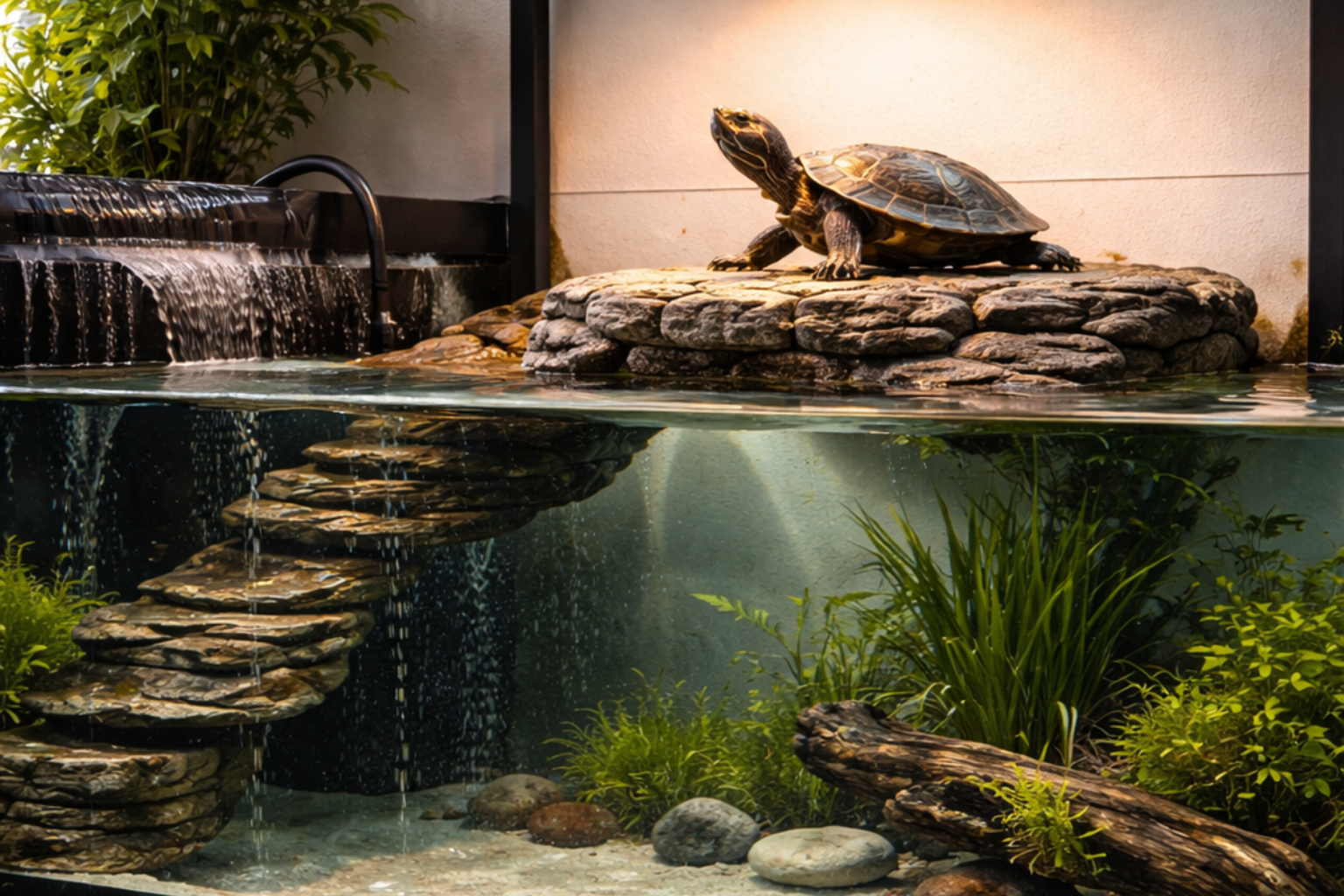
A dry platform with a heat lamp is essential. Turtles need a place where they can climb fully out of the water, warm up, and dry off.
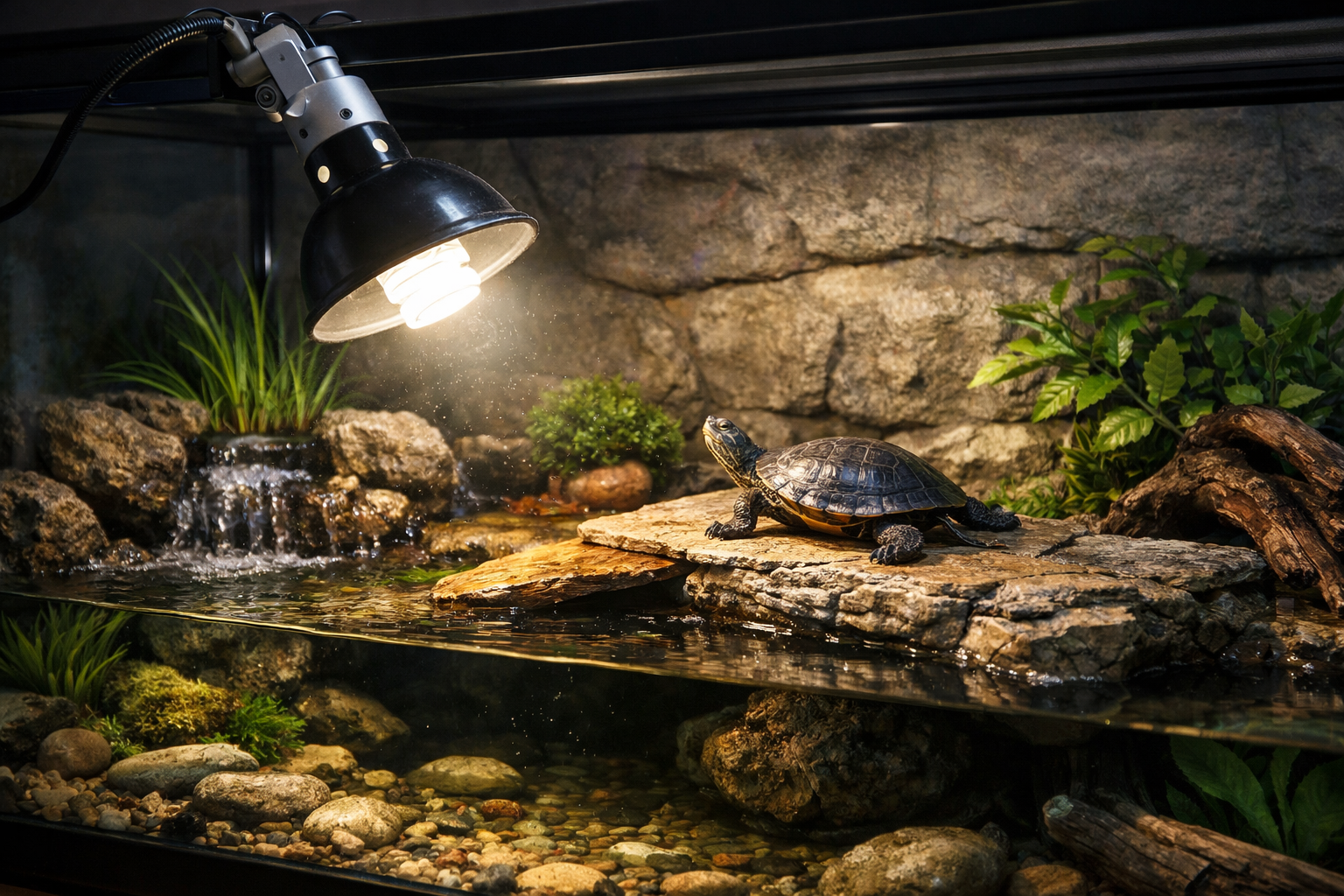
UVB lighting helps support calcium use, shell health, and bone development. Place it over the basking area so your turtle can benefit while drying off.
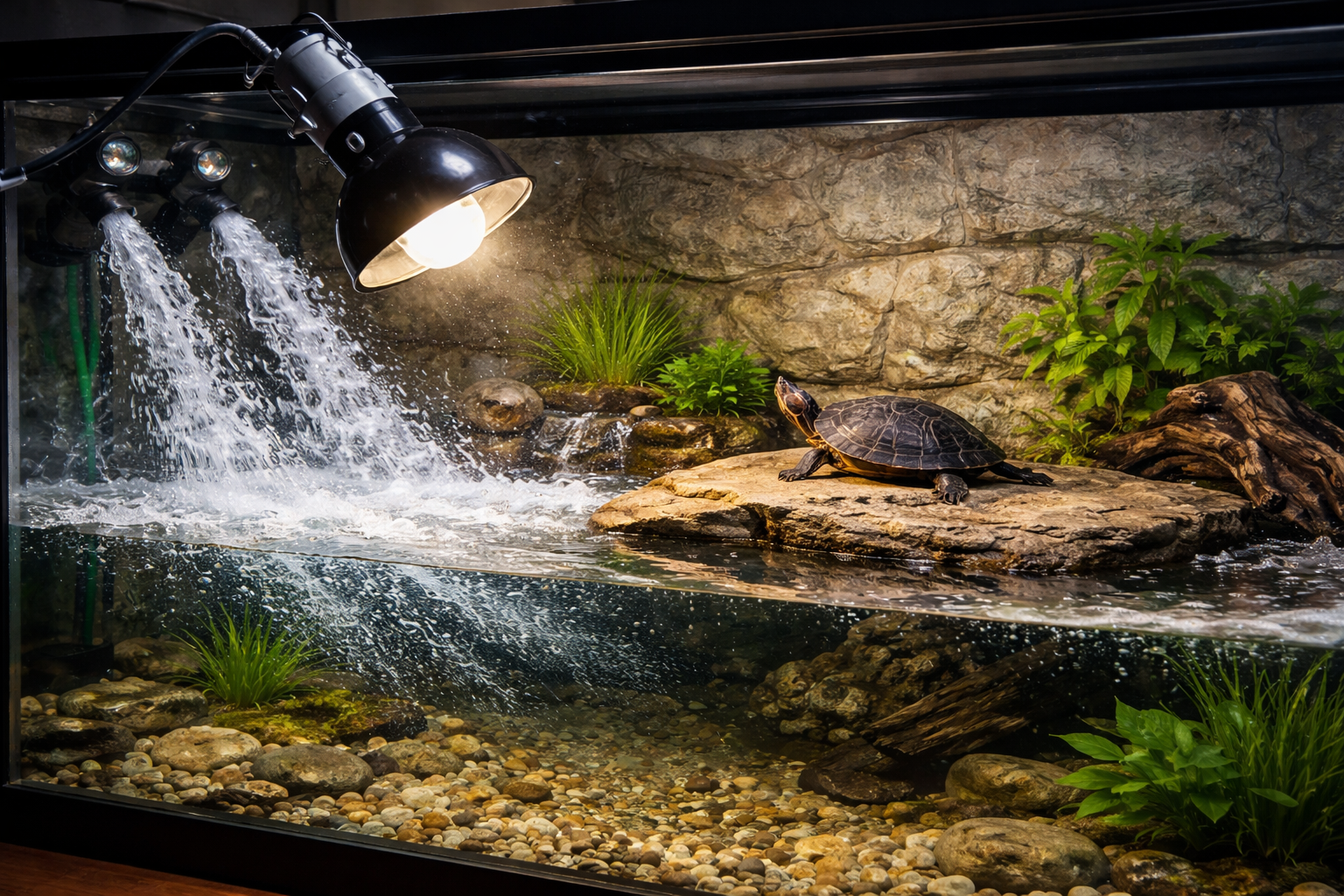
Turtles are messy. Use strong filtration and choose a filter rated above the actual water volume to help manage waste, leftover food, and cloudy water.
The best layout is the one your turtle can actually use safely. Keep open water for swimming, make the basking ramp easy to reach, and avoid crowding the tank with decorations that trap waste or block movement.
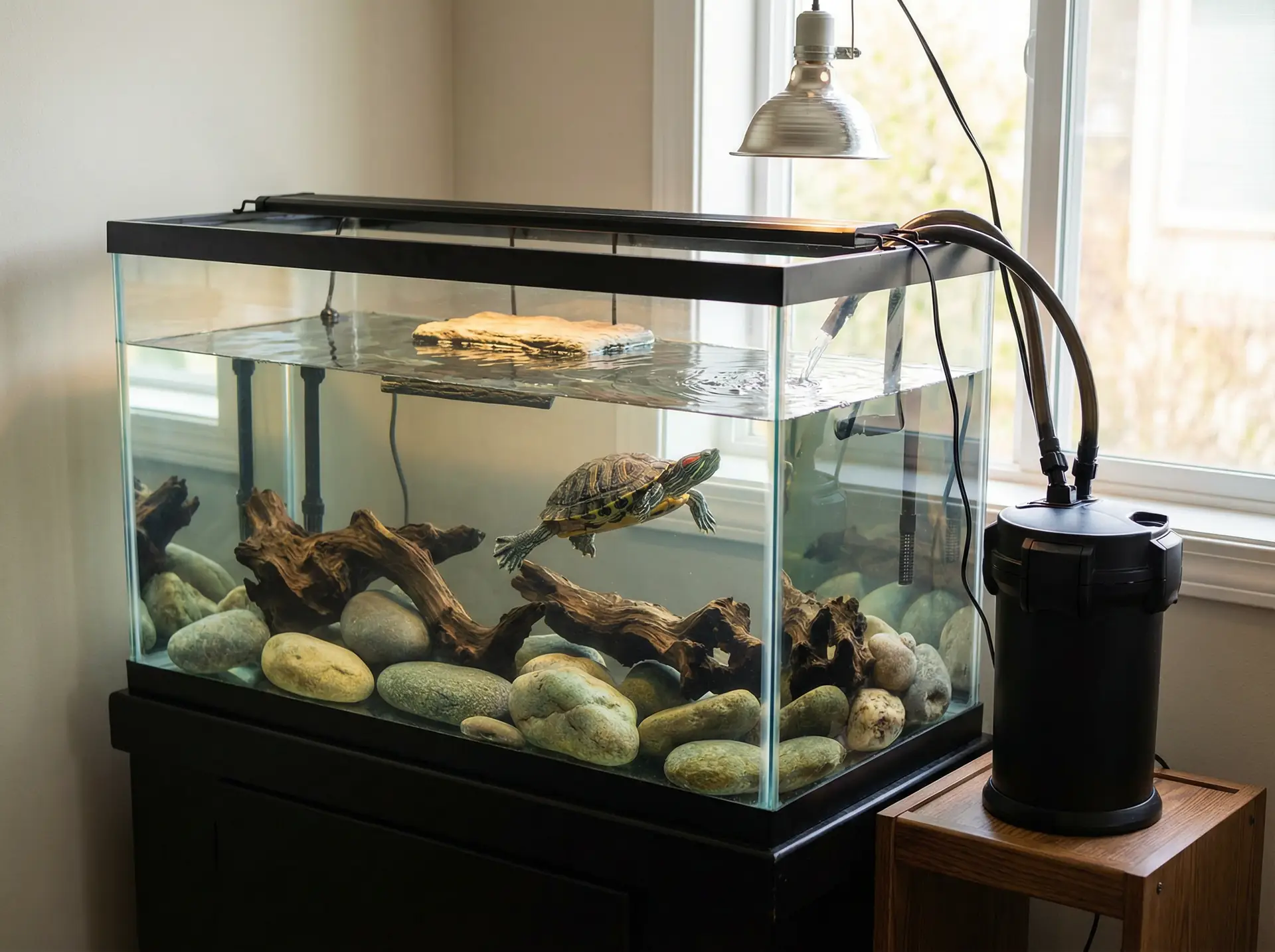
Rocks, driftwood, and plants can create a more natural-looking enclosure while giving turtles places to explore. Keep decorations secure so they do not shift or trap your turtle.
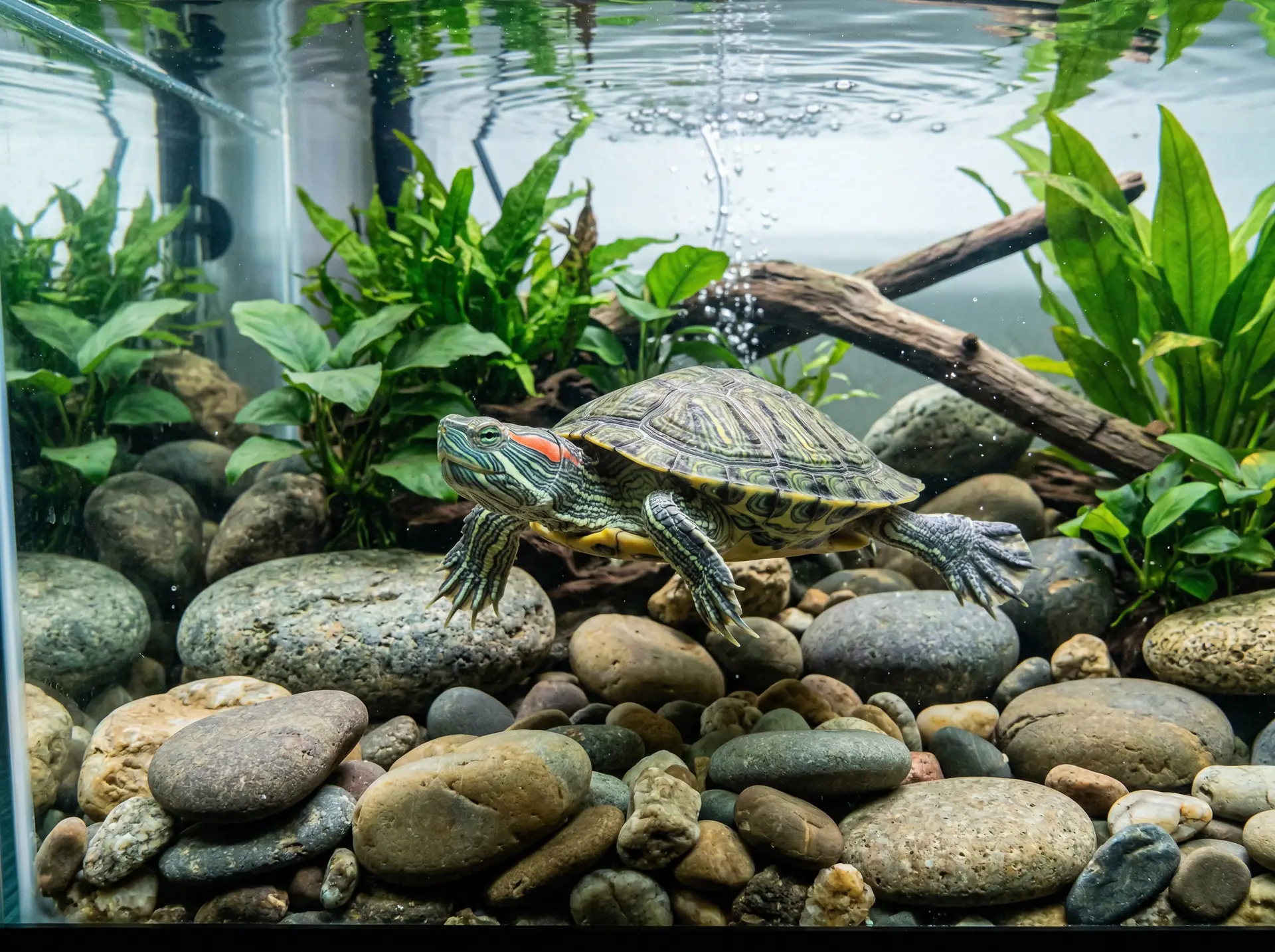
Minimal setups are easier to clean and often better for beginners. They leave more open swimming room and make it easier to remove waste during water changes.
Before bringing a turtle home or upgrading a small setup, make sure the habitat has the basics covered. A tank that is large enough but missing heat, UVB, or filtration is still incomplete.
Tiny tanks get dirty fast and are quickly outgrown. It is usually smarter to plan around the turtle's adult size instead of buying the smallest starter setup.
Aquatic turtles still need a dry place to climb out, warm up, and rest. A floating or raised basking platform should be stable, easy to access, and large enough for the turtle.
Turtle tanks usually need stronger filtration than fish tanks of the same size. Leftover food, waste, and stirred-up debris can overwhelm small filters.
A common starting rule is about 10 gallons of water per inch of shell length. Larger turtles, multiple turtles, or messy setups may need more space and stronger filtration.
Yes. Aquatic turtles need a dry platform where they can climb out of the water, warm up, and rest under proper heat and UVB lighting.
A small tank may only work temporarily for a very young turtle. Most aquatic turtles grow, create heavy waste, and need more room than a small starter kit can provide long term.
Turtles produce more waste than many aquarium pets. Strong filtration helps remove debris, support better water quality, and reduce how quickly the tank becomes cloudy or dirty.
Both can work. A simple setup is easier to clean, while a natural layout can look better and offer enrichment. The best choice is safe, easy to maintain, and still leaves plenty of open swimming space.
A good aquatic turtle setup starts with the right tank size, but it does not stop there. Your turtle also needs clean water, a dry basking area, proper UVB, steady heat, safe equipment placement, and enough open space to swim naturally. Starting with a larger, stronger setup can make daily care easier and give your turtle a better long-term habitat.
Browse Recommended Tank Setups