
Menu
Aquatic turtles need steady water temperatures to stay active, digest food properly, and avoid unnecessary stress. A good turtle tank heater should match the tank size, stay safely submerged, and hold a consistent temperature without being easy for the turtle to bump, bite, or damage.
This guide keeps things simple with three heater options: a dependable everyday pick, a budget-friendly choice, and a stronger option for larger turtle tanks.
Most adult aquatic turtles are commonly kept with water in the mid-to-upper 70s Fahrenheit, while hatchlings and younger turtles may need slightly warmer water. Always check the correct range for your exact turtle species, because different turtles and life stages can have different needs.
A heater helps stabilize the water, but it should not be the only thing you rely on. Use a separate aquarium thermometer so you can confirm the real water temperature instead of trusting only the heater dial.
Many adult aquatic turtles do well around 75–80°F, depending on species and setup.
Hatchlings and young turtles may need warmer water, often around 82–85°F.
Use a separate thermometer and check the water regularly so the tank does not run too cold or too hot.
| Pick | Best For | Why It Works | What To Check First |
|---|---|---|---|
| Best Overall Water Heater for Aquatic Turtles | Most standard turtle tanks | A balanced everyday option for keepers who want one reliable heater for a normal aquatic turtle setup. | Confirm the wattage matches your tank size and make sure the heater can stay fully submerged. |
| Best Budget Heater for Aquatic Turtles | Basic starter tanks | A simple lower-cost option for keepers who need steady heating without overcomplicating the setup. | Check the temperature range, tank size rating, and whether you need a heater guard. |
| Best Heavy-Duty Heater for Large Turtle Tanks | Larger turtle tanks | A stronger choice for bigger water volume, active turtles, and more permanent enclosures. | Look at wattage, durability, placement, and whether one heater is enough for the full tank. |
This is the best starting point for many turtle keepers who want a dependable heater for a standard aquatic setup. The right overall heater should be easy to place, strong enough for the tank size, and steady enough to avoid major temperature swings.
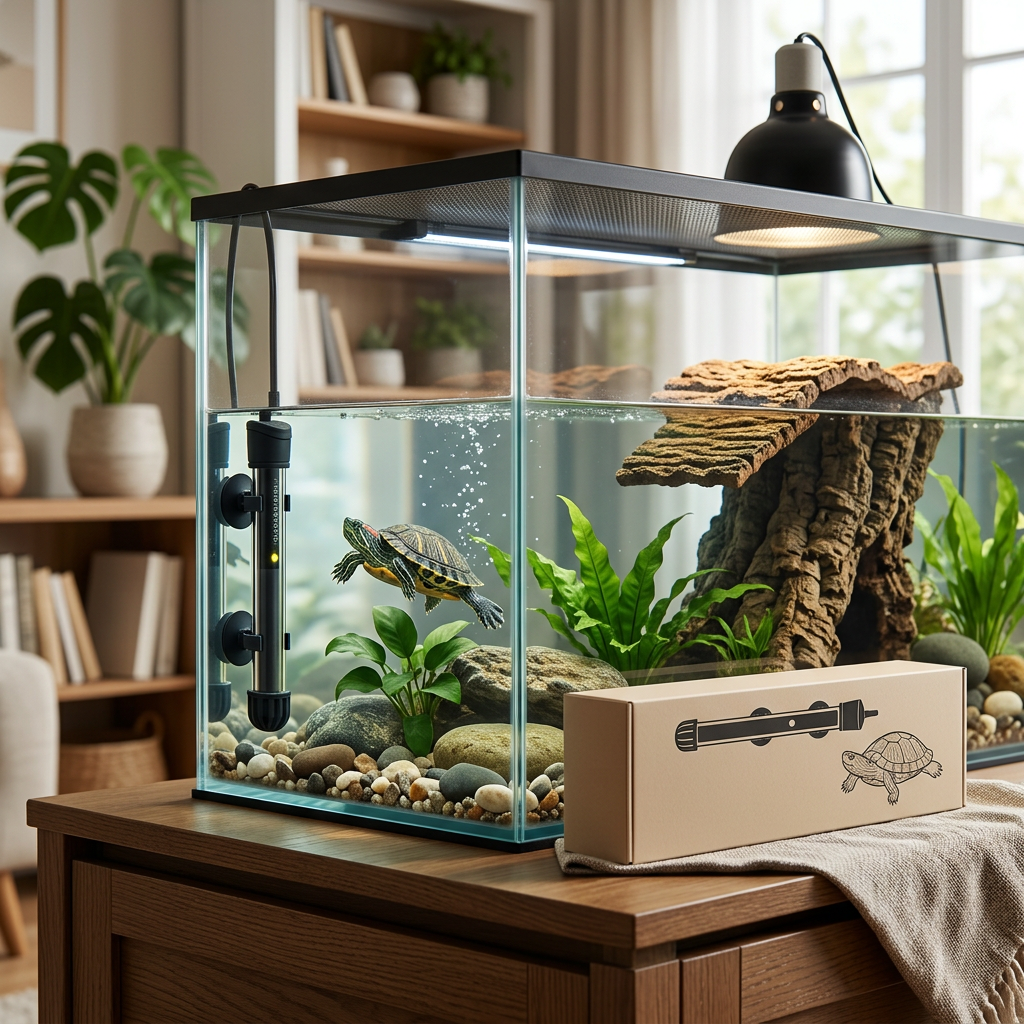
Best for: Keepers who want one dependable heater for a normal aquatic turtle setup.
hygger Multi-Wattage Submersible Heater — Check Price on AmazonA budget heater can make sense for a simple turtle tank, backup setup, or new keeper who is still building out the habitat. The key is not just finding the cheapest heater, but making sure the wattage, temperature control, and submersible design are appropriate for the tank.
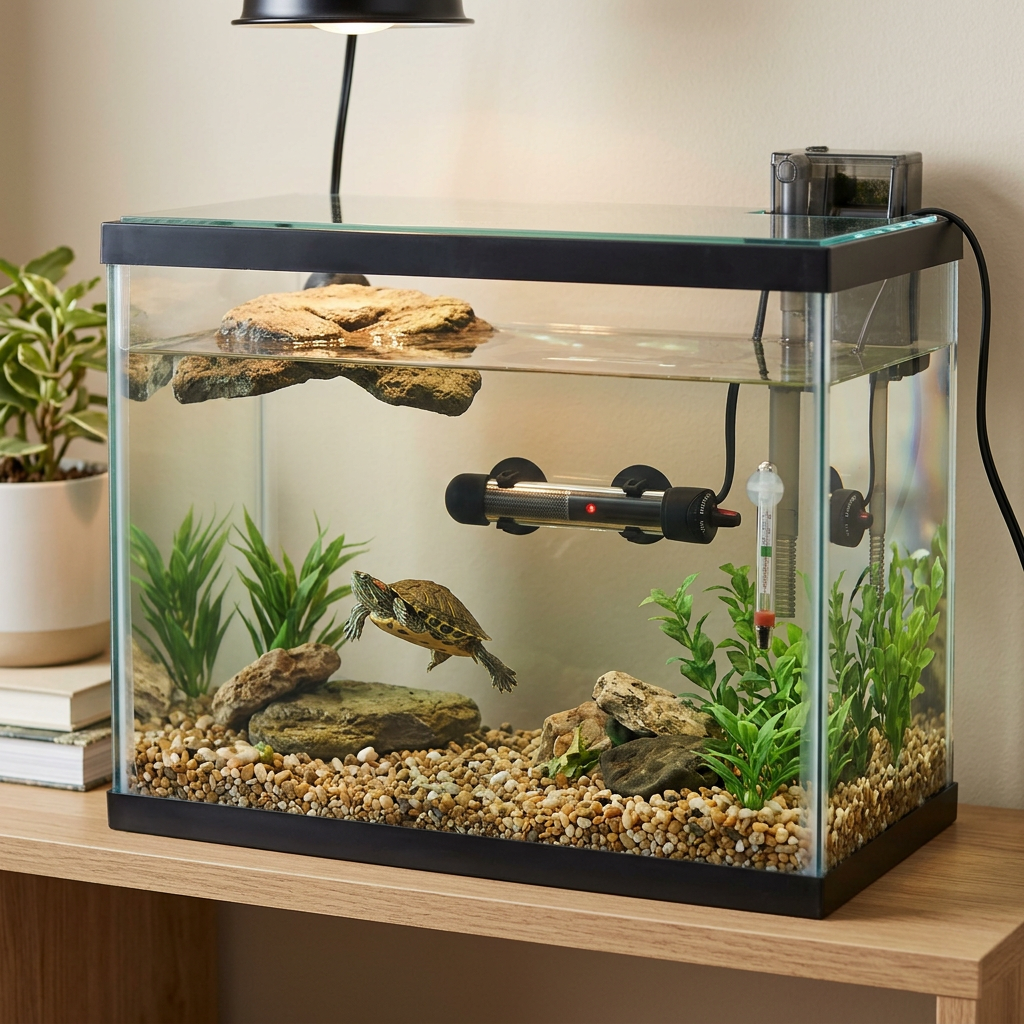
Best for: Turtle keepers who want an affordable heater for a basic turtle tank.
hygger 200W Aquarium Heater (Budget Pick) — Check Price on AmazonLarger turtle tanks usually need more heating power because there is more water to keep warm. A heavy-duty heater is a better match for bigger enclosures, active turtles, and setups where the water temperature drops too much overnight or during colder months.
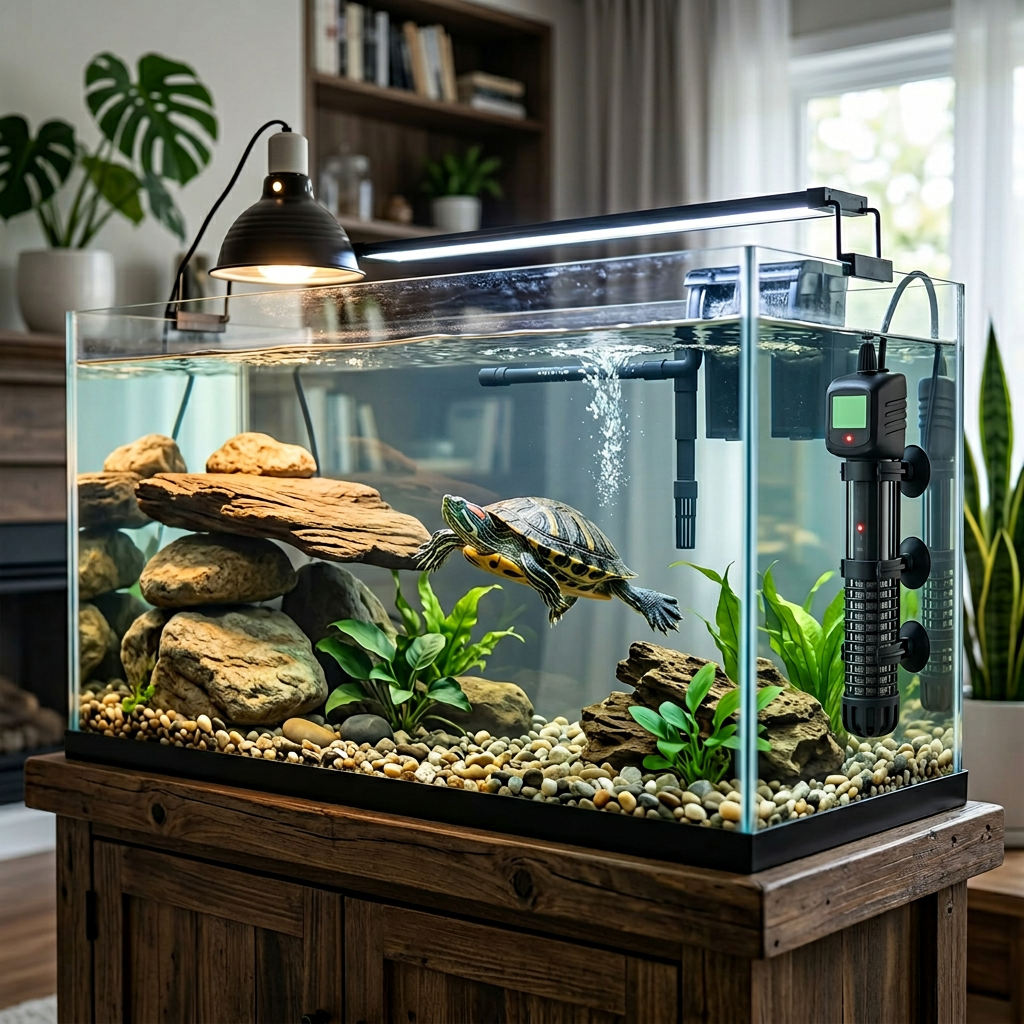
Best for: Larger aquatic turtle tanks that need more durability and stronger heating.
HiTauing Aquarium Heater (Heavy-Duty) — Check Price on AmazonAquatic turtles are stronger and messier than many fish, so heater safety matters. They may bump equipment, move decorations, or bite at cords. For many setups, a heater guard or protective cover is worth considering, especially with glass heaters.
Choose a heater with enough wattage for the actual water volume. Larger tanks usually need stronger heating than small starter tanks.
Use the heater according to the manufacturer's directions and make sure submersible heaters stay underwater while running.
Consider a heater guard if your turtle bumps equipment, bites cords, or moves objects around the tank.
Many indoor aquatic turtle tanks need a water heater because normal room temperature can be too cool or inconsistent. A heater helps keep the water stable, especially at night or during colder months.
Many adult aquatic turtles are commonly kept around 75–80°F, while hatchlings may need warmer water around 82–85°F. Always check the correct range for your turtle's exact species and age.
Yes, it can happen. Aquatic turtles may bump heaters, knock them against the glass, or bite at cords. A heater guard can help protect both the heater and the turtle.
Yes. A separate aquarium thermometer helps confirm the real water temperature. Do not rely only on the heater dial.
Submersible heaters should be used according to the manufacturer's instructions and kept properly underwater while operating. Always unplug equipment before removing water or cleaning the tank.
I focused on the heater features that matter most in aquatic turtle tanks: tank-size fit, submersible use, temperature stability, ease of placement, and basic safety around active turtles. Because turtles can bump equipment, move decor, and bite at cords, I also looked for heater picks that make sense for real turtle setups instead of only standard fish tanks.
No heater should replace regular temperature checks. For the safest setup, pair your heater with a separate thermometer and inspect the tank often to make sure the heater stays secure and fully submerged.
Pair heat and lighting so the full habitat works better.
Read GuideBuild out a proper basking area above the waterline for a more complete habitat.
Read GuideUseful next step for cleaner water and stronger filtration.
Read GuideThe best aquatic turtle water heater is the one that fits your tank size, stays safely submerged, and keeps the water temperature steady. For most keepers, the best choice is a reliable everyday heater paired with a separate thermometer. For larger turtle tanks, choose a stronger heater and consider extra protection if your turtle bumps or bites at equipment.