
Deshedding Brushes for Cats: 6 Options by Coat and Grooming Needs
Updated
As an Amazon Associate, PawsFinsAndShells earns from qualifying purchases.
Card images are general cat-grooming illustrations. Compare the tool names and details below.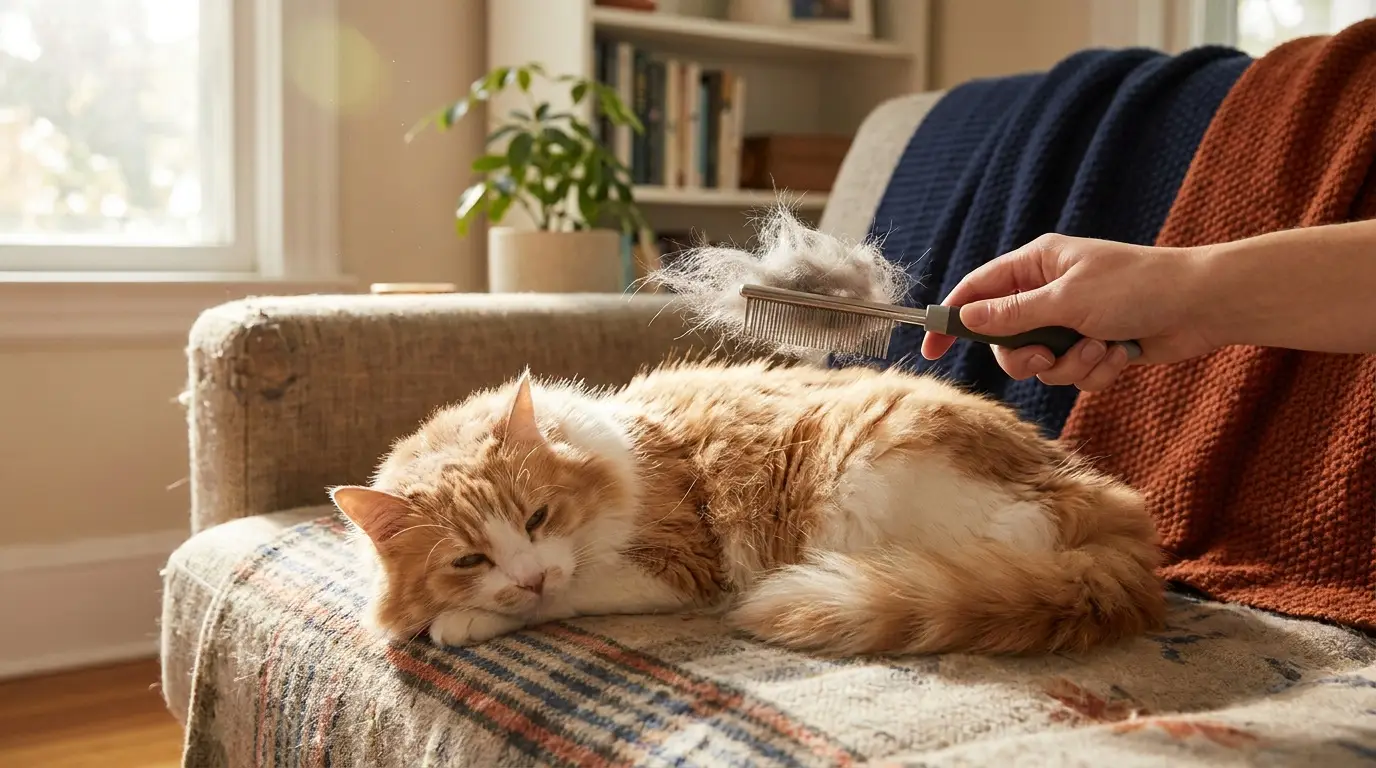
Undercoat deshedding tool
Best Overall: FURminator deShedding Tool for Cats
The category-defining product for a reason. Its stainless steel edge reaches through the topcoat to remove…
Check price on AmazonLong-hair undercoat tool
Best for Long-Haired Cats: FURminator Undercoat deShedding Tool, Long Hair
The long-hair edge is spaced and curved differently from the short-hair version specifically to get through…
Check price on AmazonShedding comb
Best for Short-Haired Cats: Poodle Pet Detangling Comb
Stainless steel teeth in two lengths, long and short, lift loose hair from the upper coat and collect it in one…
Check price on AmazonGrooming gloves
Best Glove-Style Pick: HandsOn Pet Grooming Gloves
Because it looks and feels like a hand rather than a tool, this is consistently the easiest deshedding…
Check price on AmazonSlicker brush
Best Budget Pick: Hertzko Self-Cleaning Slicker Brush
A retractable-bristle slicker that pulls hair out and releases it with one button push, at a fraction of the…
Check price on AmazonRubber brush
KONG Cat ZoomGroom
Soft rubber fingers instead of metal teeth. Stop if your cat shows discomfort.
Check price on AmazonAffiliate Disclosure: As an Amazon Associate I earn from qualifying purchases.Shedding season isn’t just a couch problem – loose undercoat that isn’t brushed out gets swallowed during self-grooming, which is one of the biggest contributors to hairballs. A good deshedding tool pulls out the loose undercoat before your cat ingests it. If your cat is grooming far past what normal maintenance would explain, like bald patches or raw skin, that’s a different issue worth reading about in why does my cat overgroom before you reach for a brush.How We Picked These
We compare six grooming tools by coat type, format, handling and care needs. Check each tool’s instructions, use a light touch and stop if your cat shows discomfort; ask a groomer or vet about mats, skin changes or difficult handling.Best Overall: FURminator deShedding Tool for Cats
The category-defining product for a reason. Its stainless steel edge reaches through the topcoat to remove loose undercoat when used gently on a suitable coat according to the manufacturer’s instructions, and the FURejector button clears collected hair with one push. Pros: removes loose undercoat during grooming, durable edge. Cons: not intended for daily use, can feel intense for coat-sensitive cats until they adjust.Check price on AmazonBest for Long-Haired Cats: FURminator Undercoat deShedding Tool, Long Hair
The long-hair edge is spaced and curved differently from the short-hair version specifically to get through a thicker topcoat to the undercoat underneath. Pros: reaches loose undercoat in a long coat. Brush gently and follow the tool instructions. Cons: takes longer per session on very dense coats.Check price on AmazonBest for Short-Haired Cats: Poodle Pet Detangling Comb
Stainless steel teeth in two lengths, long and short, lift loose hair from the upper coat and collect it in one pass, without the intensity of a full deshedding blade. Pros: gentle enough for daily use, inexpensive. Cons: less effective than the FURminator on cats with genuine dense undercoats.Check price on AmazonBest Glove-Style Pick: HandsOn Pet Grooming Gloves
Because it looks and feels like a hand rather than a tool, this is consistently the easiest deshedding option to introduce to a nervous or brush-averse cat. The silicone nodules pull loose fur while doubling as a massage. Pros: a glove format to introduce gradually if your cat dislikes a conventional brush, doubles as a bathing tool. Cons: less effective than a blade-style tool on heavy undercoat.Check price on AmazonBest Budget Pick: Hertzko Self-Cleaning Slicker Brush
A retractable-bristle slicker that pulls hair out and releases it with one button push, at a fraction of the cost of premium deshedding tools. Pros: genuinely effective for the price, works on both long and short coats. Cons: fine wire bristles need a lighter touch than a rounded comb on thin-skinned cats.Check price on AmazonBest for Sensitive-Skin Cats: KONG Cat ZoomGroom
Soft, flexible rubber fingers replace metal teeth entirely, functioning more like a massage than a brushing session, while still collecting a meaningful amount of loose fur. Pros: soft rubber contact instead of metal teeth; stop if your cat shows discomfort. Cons: pulls noticeably less undercoat than a blade tool.Check price on AmazonBuying Criteria
Match the tool to your cat’s coat and follow its instructions. If your cat has irritated skin, skin disease or painful mats, ask your veterinarian before grooming that area. Deshedding tools and everyday brushes have different uses; avoid repeated blade strokes over the same spot.FAQ
How often should I use a deshedding tool? Follow the exact tool’s instructions and your cat’s tolerance. For example, FURminator recommends its undercoat tool one or two times a week; that schedule does not apply to every brush. Long, silky or curly coats may need daily gentle brushing or combing to prevent tangles. See VCA’s coat-care guidance for the distinction.My cat hates being brushed. What should I try first? Start with a glove-style tool or a rubber brush like the ZoomGroom, both feel more like petting than grooming.Related Cat Care and Gear GuidesFor the full cat section, use the cat care and gear guide or start with the cat gear by life stage guide. Grooming also connects with everyday setup choices like the cat food guide, cat toy guide, and cat scratching posts and pads.If your cat is licking, chewing, or grooming far beyond normal shedding, read why cats overgroom and ask your vet if the behavior is sudden, severe, or paired with irritated skin.Can grooming help reduce hairballs? Regular brushing removes loose hair before your cat swallows it and may help reduce hairballs. Choose a tool suited to the coat and follow its instructions. Contact your veterinarian for frequent vomiting rather than assuming every episode is a hairball.Shop our picks
Undercoat deshedding tool
Best Overall: FURminator deShedding Tool for Cats
Check price on AmazonLong-hair undercoat tool
Best for Long-Haired Cats: FURminator Undercoat deShedding Tool, Long Hair
Check price on AmazonShedding comb
Best for Short-Haired Cats: Poodle Pet Detangling Comb
Check price on AmazonGrooming gloves
Best Glove-Style Pick: HandsOn Pet Grooming Gloves
Check price on AmazonSlicker brush
Best Budget Pick: Hertzko Self-Cleaning Slicker Brush
Check price on AmazonRubber brush
KONG Cat ZoomGroom
Check price on Amazon