
Best Cat Water Fountains
Compare fountain designs, cleaning needs, replacement filters, and the features that suit your cat.
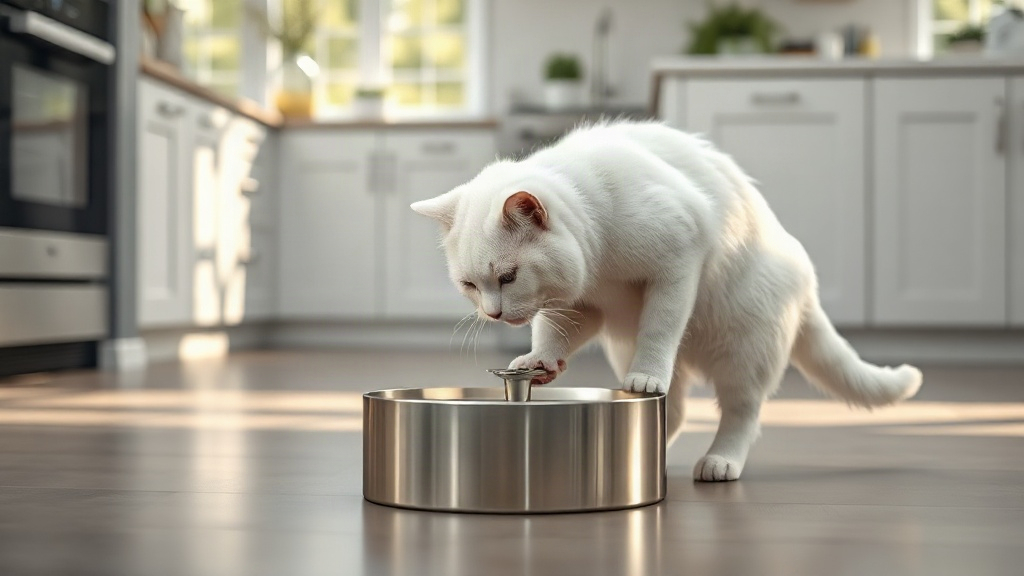
Illustration of a cat exploring a fountain. Individual preferences vary; keep familiar water sources available.
A fountain offers another way to provide drinking water. Cats differ in their preferences, and controlled studies have not found an overall increase in intake from circulating or free-falling water. Introduce the fountain gradually, keep fresh water available, and follow its cleaning instructions. See International Cat Care’s guide to encouraging drinking.
Quick Picks
Veken C1
Veken C1 · 3.2 L / 108 oz
Veken C1 is listed at 3.2 L / 108 oz with stainless-steel water-contact parts. Check water daily and confirm its pump-cleaning and filter-replacement instructions. Capacity does not remove the need to refresh and clean the water supply.
Check Price on AmazonFEELNEEDY
FEELNEEDY · 2.8 L
The linked FEELNEEDY fountain lists a 2.8 L capacity, stainless steel and a flower-style outlet. Check pump-care instructions and replacement filters. Its listed features do not establish an independent quietest-model ranking.
Check Price on AmazonNautyPaws
NautyPaws · 2.2 L / 74 oz ceramic basin
NautyPaws is listed at 2.2 L / 74 oz with a ceramic basin and replaceable charcoal and foam filters. Check replacement-filter availability and cleaning instructions. Ceramic describes the basin, not necessarily every component.
Check Price on AmazonComparison Table
| Model | Listed capacity and material | Features to compare | Care and limits |
|---|---|---|---|
| Veken C1 | 3.2 L / 108 oz; stainless-steel water-contact parts | Suspended pump; replaceable filter and prefilter | Listing calls for weekly pump/fountain cleaning and two-week filter changes; dishwasher permission applies only to specified parts |
| FEELNEEDY | 2.8 L; stainless steel | Flower-style water outlet; replaceable filters | Confirm the manual for pump cleaning and dishwasher limits; no independent noise or price ranking established |
| NautyPaws | 2.2 L / 74 oz; ceramic basin | Replaceable charcoal and foam filters | Ceramic basin does not mean the whole unit is plastic-free; follow the model’s cleaning instructions |
Veken C1 3.2 L Stainless-Steel Fountain
The linked Veken C1 has a listed 3.2 L / 108 oz capacity and stainless-steel water-contact parts. Its listing calls for cleaning the fountain and pump weekly and replacing the filter and prefilter sponge every two weeks. Only put specifically approved parts in the dishwasher; follow separate pump-care instructions. Check the water daily and keep familiar bowls available.
Check Price on AmazonFEELNEEDY 2.8 L Stainless-Steel Fountain
The linked FEELNEEDY model lists a 2.8 L capacity and a flower-style outlet. Confirm cleaning instructions for the pump and other parts, and compare replacement-filter costs. Introduce it gradually while keeping the cat’s familiar water bowl available.
Check Price on AmazonNautyPaws 2.2 L Ceramic Fountain
The linked NautyPaws fountain has a 2.2 L / 74 oz ceramic basin with charcoal and foam filters. Check the pump and other component materials, replacement-filter costs and cleaning requirements before buying, and watch whether your cat chooses to use it.
Check Price on AmazonHow to Choose a Cat Water Fountain
Not every fountain fits every cat or household. Here’s what actually matters when you’re comparing options:
- Material: Check the exact model’s basin and water-contact materials. Follow its cleaning instructions regardless of whether the reservoir is steel, ceramic or plastic.
- Pump noise: Compare the exact model’s documented pump and flow features. Placement, water level and maintenance can affect sound; observe how your cat responds while keeping familiar water sources available.
- Filter replacement: Check the schedule for the exact model and whether its replacement filters are available. A filter does not replace cleaning the reservoir and pump.
- Capacity: Compare the actual reservoir size and drinking access with the household. Check the water daily and keep separate fresh water sources available; a larger reservoir does not guarantee enough drinking or safe unattended operation.
- Ease of cleaning: Check whether the reservoir and pump are easy to disassemble. Follow the manufacturer’s directions for each part, including any dishwasher restrictions.
Frequently Asked Questions
Some individual cats prefer a fountain, but studies have not found that fountains reliably increase drinking across healthy cats. Offer several fresh water sources and watch what your cat actually uses.
Disassemble and clean the fountain and change its filters according to the exact manufacturer’s instructions. Check water freshness and the unit regularly; a filter does not replace cleaning.
Compare the exact materials, cleaning access and manufacturer’s directions. Steel and ceramic options can be useful, but no material removes the need for regular cleaning, and this guide does not establish that one will prevent chin acne or bacterial buildup.
Individual responses vary. Introduce the fountain gradually, observe whether your cat chooses to use it and keep familiar water sources available. A noise claim alone does not establish that a cat will prefer the fountain.
More Cat Guides
Final Take
Choose a fountain your cat will use and that you can clean consistently. Compare the exact model’s capacity, replacement-filter costs, materials and care instructions, and keep familiar water sources available. View the Veken C1 listing on Amazon