
Why Are My Fish Gasping at the Surface? Checks and Next Steps
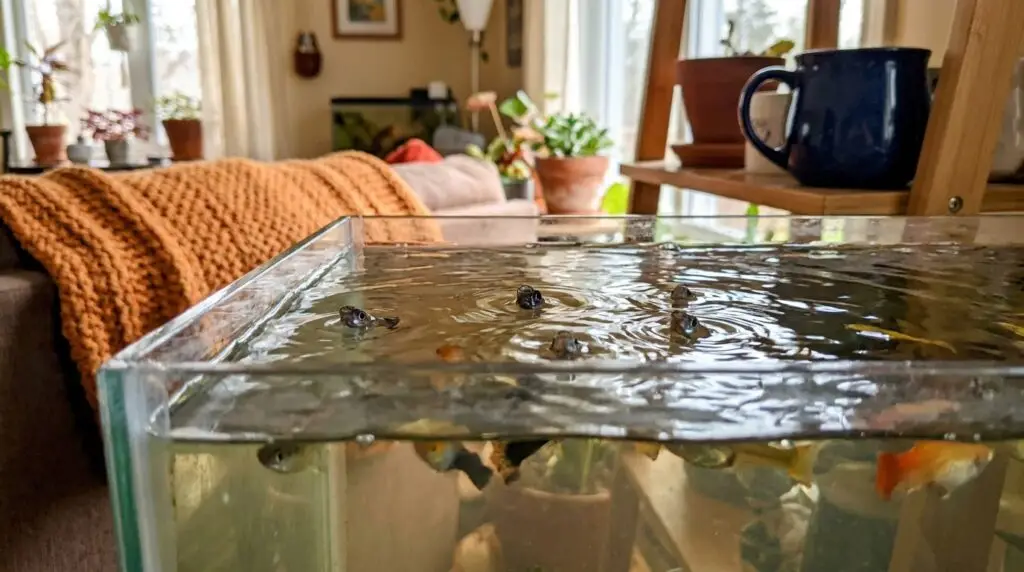
Repeated surface gasping can be urgent. Check the fish's usual behavior, water quality, temperature, and equipment promptly; this guide covers possible causes rather than a diagnosis.

Check water quality and equipment promptly. Surface agitation can support oxygen exchange, but an air pump does not identify or resolve every cause of gasping.
First: Is This Actually Normal for Your Fish?
Compare this behavior with what is usual for the species and the individual fish:
- Bettas and gouramis may surface to breathe air. A change in breathing, activity, or feeding still needs investigation.
- Record when surfacing occurs, including feeding, and whether it is new or persistent.
- Persistent gasping, abnormal gill movement, or other illness signs warrant prompt checks and fish-health advice, even if only one fish is affected.
Five Possible Causes to Investigate
Low Dissolved Oxygen
Low dissolved oxygen is one possible cause. Oxygen enters the water mainly at the surface, so a tank with little surface movement — a calm, glass-smooth top — doesn't exchange gas efficiently, especially in a heavily stocked tank using it up fast.
The next step: Check the filter and aeration equipment and increase suitable surface movement while assessing water results. Compare equipment in our air pump and bubbler guide.
Ammonia or Nitrite Poisoning
Ammonia can damage gills; nitrite can impair the blood's oxygen transport — so gasping happens even when oxygen levels look fine on paper.
The next step: Test promptly and interpret ammonia with pH and temperature. Respond to abnormal results using suitable water changes and continued testing; seek aquatic-veterinary advice for distressed fish. Our guide to sudden fish deaths covers related checks.
Water That's Too Warm
Check for overheating, thermostat faults, and recent temperature changes. Assess temperature and oxygen conditions against the species' needs.
The next step: Measure the temperature against the species' needs. Check faulty equipment using its safety instructions and seek advice on restoring stable conditions without an abrupt temperature change.
Overnight Oxygen Drop in Planted Tanks
Oxygen conditions can vary over the day and night. Review plants, stocking, and aeration rather than assuming that one overnight pattern establishes the cause.
The next step: Review aeration and oxygen conditions across the day and night. Do not treat an overnight pump schedule as a substitute for suitable stocking and water quality.
An Overstocked Tank
More fish means more oxygen demand and more waste — even a well-filtered tank can be pushed past what its surface area and filtration can support if it's carrying too many fish for its size.
The next step: Review stocking against adult size, behavior, filtration, and water results. Tank volume alone does not determine compatibility; our starter kit guide covers setup features to consider.
Treat This as an Emergency If...
Do not wait for multiple fish to become affected or for a water change to fail. Persistent gasping or other distress needs prompt water testing, equipment checks, and aquatic-veterinary advice.
Check Aeration and Water Quality
Use suitable aeration alongside water-quality checks and follow the equipment instructions. Ongoing gasping needs further assessment rather than a product-only response.
hygger Aquarium Air Pump
Check the exact pump's output, outlet connections, installation instructions, and suitability for your aquarium. Compare listed features in our air pump guide.
Check Price on AmazonFAQ
Is it normal for bettas to gulp air at the surface?
Periodic air breathing can be normal for labyrinth fish, but a new or persistent change may still indicate a problem. Check water conditions and other signs.
How fast can low oxygen kill fish?
Low oxygen can cause serious losses. Persistent gasping warrants prompt assessment; there is no safe waiting period for all fish and conditions.
Will a water change help if fish are gasping?
Water changes may help an identified water-quality problem. Use suitable conditioned replacement water and continued testing; gasping can have other causes that need assessment.
Do I need an air pump if I already have a filter?
Check whether the system provides adequate oxygen exchange for its stocking and conditions. An air pump can add surface movement, but it does not replace appropriate filtration or water-quality checks.