
Aquatic Turtle Filtration Guide: Filter Types, Fit and Maintenance
Compare canister and internal filters, media options and maintenance tasks for an aquatic turtle habitat. Start with the turtle’s species, enclosure, water depth and waste load; then check the exact filter instructions and monitor water conditions. A filter does not replace cleaning or water changes.
If your tank still smells even with equipment running, you may want to read our guide to why your turtle tank smells even with a filter.
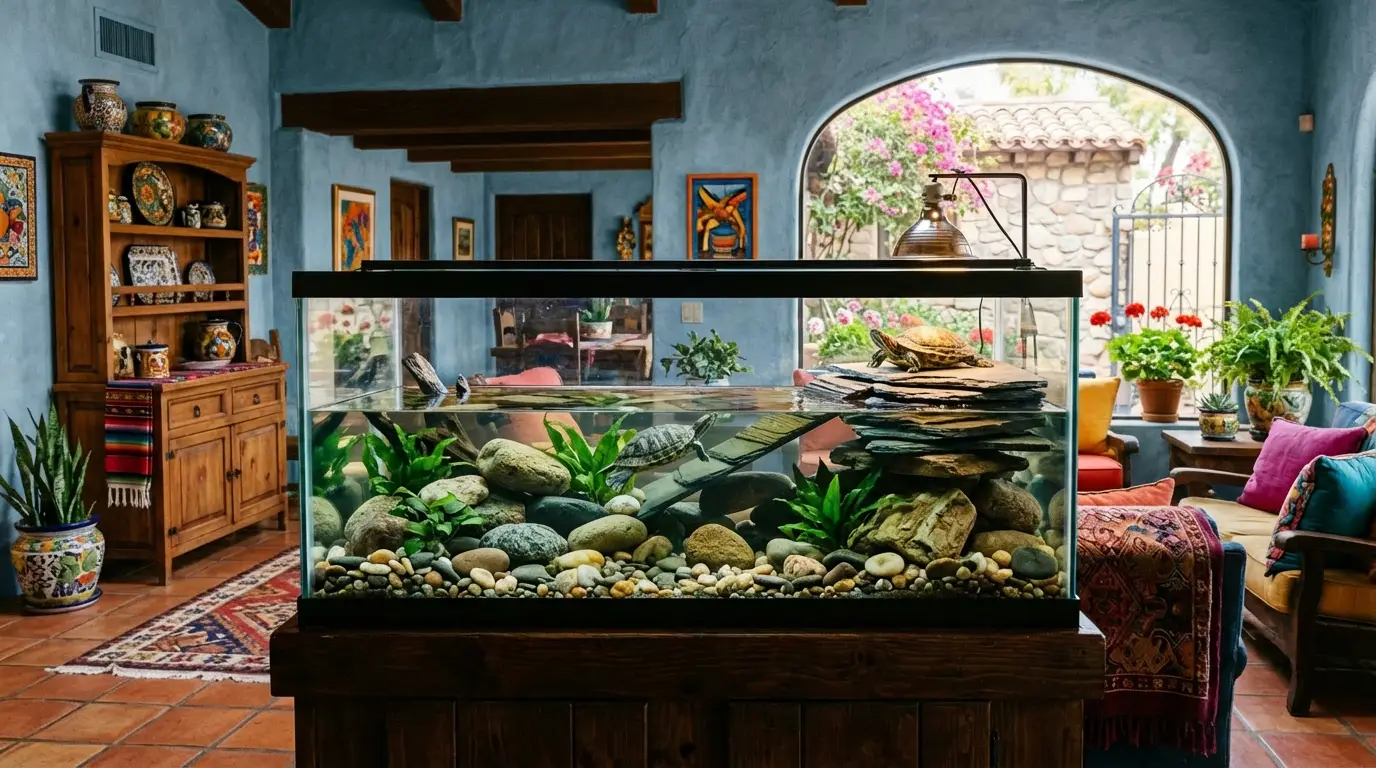
The linked options below cover external canisters, internal filters and maintenance accessories. Compare current model instructions, installation needs and running costs before choosing.
Need a full canister comparison?
Compare Turtle Canister FiltersQuick Comparison: Three Canister Filters
Compare canister models and maintenance needs
Review model dimensions, installation limits, media access and maintenance before choosing.
Open the Canister Comparison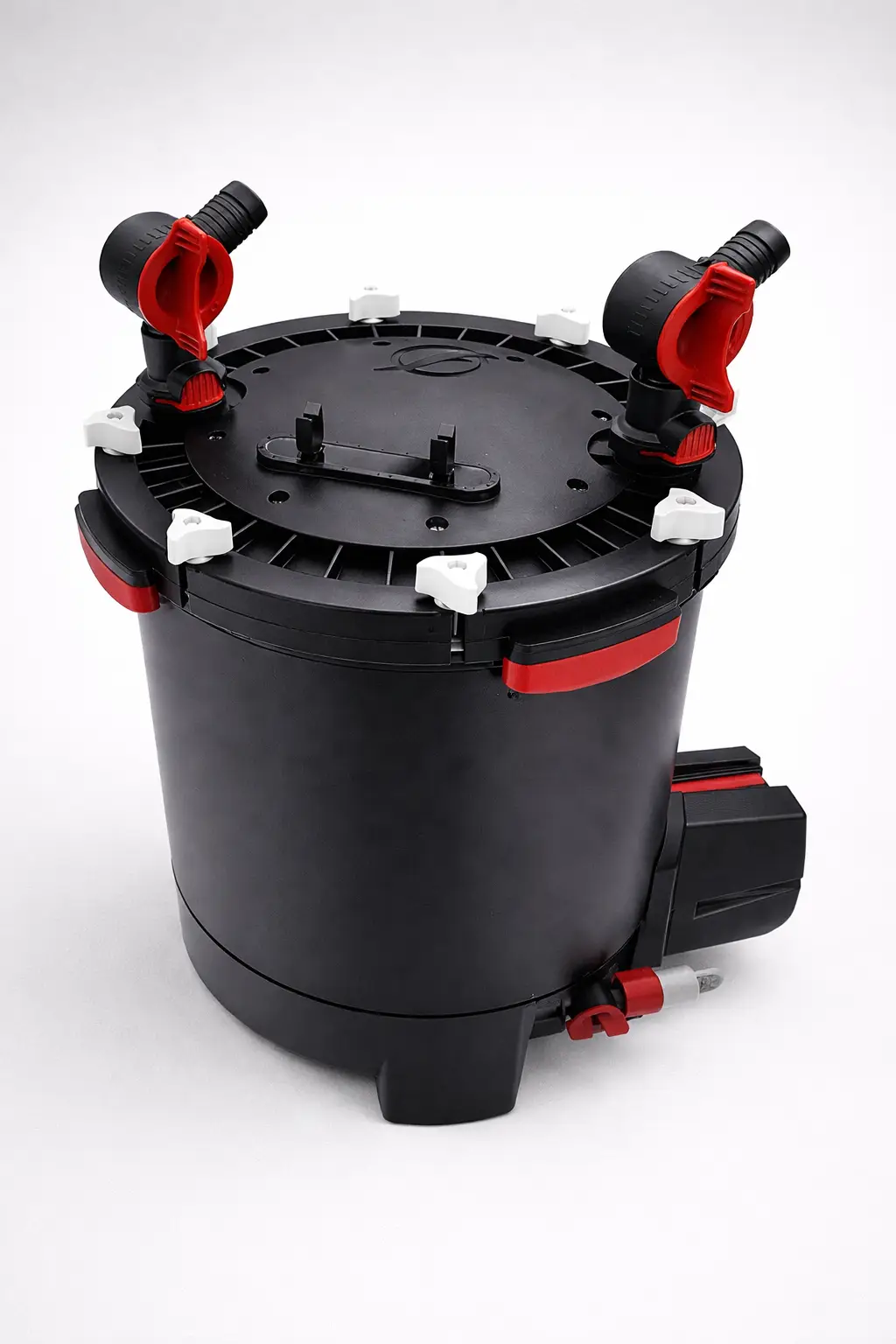
Illustration of a canister-shaped device; it does not depict or test the linked Fluval FX6.
Fluval FX6External canister filter
Compare cabinet space, hose routing and media access
Fluval FX6 High Performance Canister Filter — Check Current Price on AmazonIllustration of a canister-shaped device; it does not depict or test the linked Fluval 407.
Fluval 407External canister filter
Check installation height and flow instructions
Fluval 407 Performance Canister Filter — Check Current Price on Amazon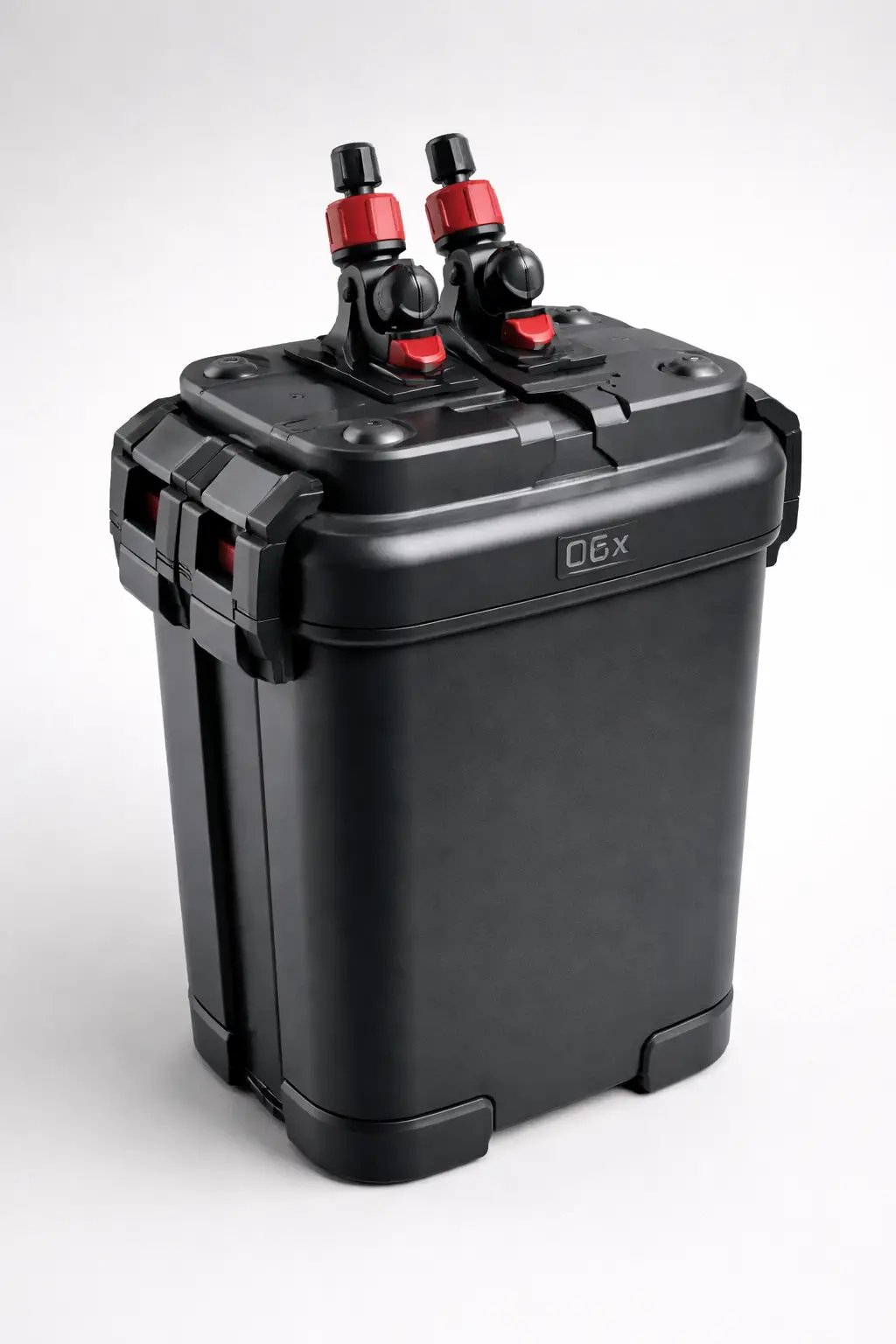
Illustration of a canister-shaped device; it does not depict or test the linked Fluval 207.
Fluval 207External canister filter
Compare its capacity and maintenance with your enclosure
Fluval 207 Performance Canister Filter — Check Current Price on AmazonFast tip: Compare the actual installation requirements, media access and flow controls. Confirm that intakes and returns suit the water depth and allow unobstructed swimming and basking access.
Turtle Tank Filter Type Comparison
Use this table to compare installation and service requirements. The category alone does not establish capacity or suitability for your turtle’s enclosure.
| Filter Type | Compare | Function / Design | Watch Out For |
|---|---|---|---|
| Canister Filters | External installation, hose routing and service access | Media held in an external filter body | Follow model-specific priming and cleaning instructions |
| Large Tank Filters | Rated capacity, actual water volume and waste load | Filter sizes and media arrangements vary | Check current and unobstructed basking access |
| Internal Filters | Approved water depth, mounting and intake access | The unit operates inside the aquarium | Verify the selected unit’s installation and maintenance limits |
| Biological Support | Established media, water readings and media instructions | Suitable surfaces can support nitrifying bacteria | More media alone does not establish water quality |
How to Choose the Right Turtle Tank Filter
Choose filtration alongside the turtle’s enclosure and care needs. Compare actual water volume, debris removal, media arrangement and cleaning access. Check water conditions rather than judging filtration by visible clarity alone.
Tank Size
Check actual water volume, tank dimensions, operating water depth and the filter’s installation limits. An aquarium gallon rating is one comparison point, not a turtle stocking recommendation.
Waste Load
Review the number and size of turtles, feeding and debris buildup alongside water readings. Check the filter’s media arrangement and service needs for that enclosure.
Maintenance Needs
Compare access to baskets, hoses, seals and replacement parts. Follow the model’s service instructions and observed condition when planning maintenance.
Filter Comparison Criteria
Check the selected filter’s allowed water depth, mounting or hose arrangement, intake protection and media access. The label “aquarium filter” does not establish compatibility with every turtle habitat.
Compare stated flow specifications, media layout, parts availability and service access. Installed flow depends on the model and setup; assess water conditions and maintenance rather than assuming that a higher rating guarantees clearer water.
Use the linked listings to identify the current model and obtain its instructions. Then compare the installation and care requirements with your actual enclosure.
Canister Filters
Canister filters place the filter body outside the aquarium and route water through hoses and media. Compare installation height, media access and service instructions; a canister is not automatically the right choice for every turtle enclosure.
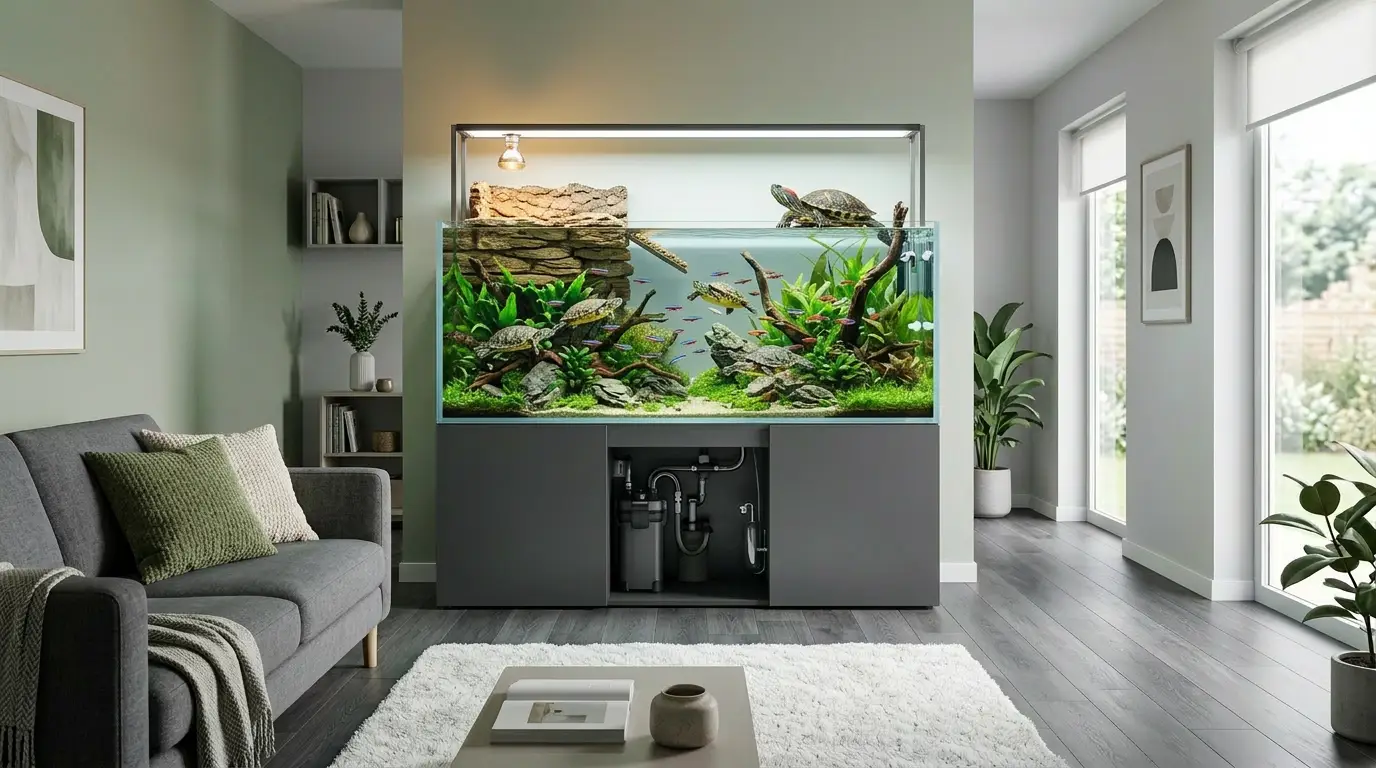
Fluval FX6 Canister
- Check body dimensions and cabinet space
- Review hose and installation requirements
- Compare media access and service instructions
Fluval 407 Canister
- Confirm permitted installation and water level
- Compare media layout and service access
- Review flow controls for your enclosure
EHEIM Classic 2213
- Check installation space and hose routing
- Review priming and media-service instructions
- Assess noise in the actual installed setup
Large Tank Filters
For a larger enclosure, compare actual water volume, waste load, filter dimensions and maintenance access. Review the exact operating and flow requirements; size alone does not determine the best filter or number of units.
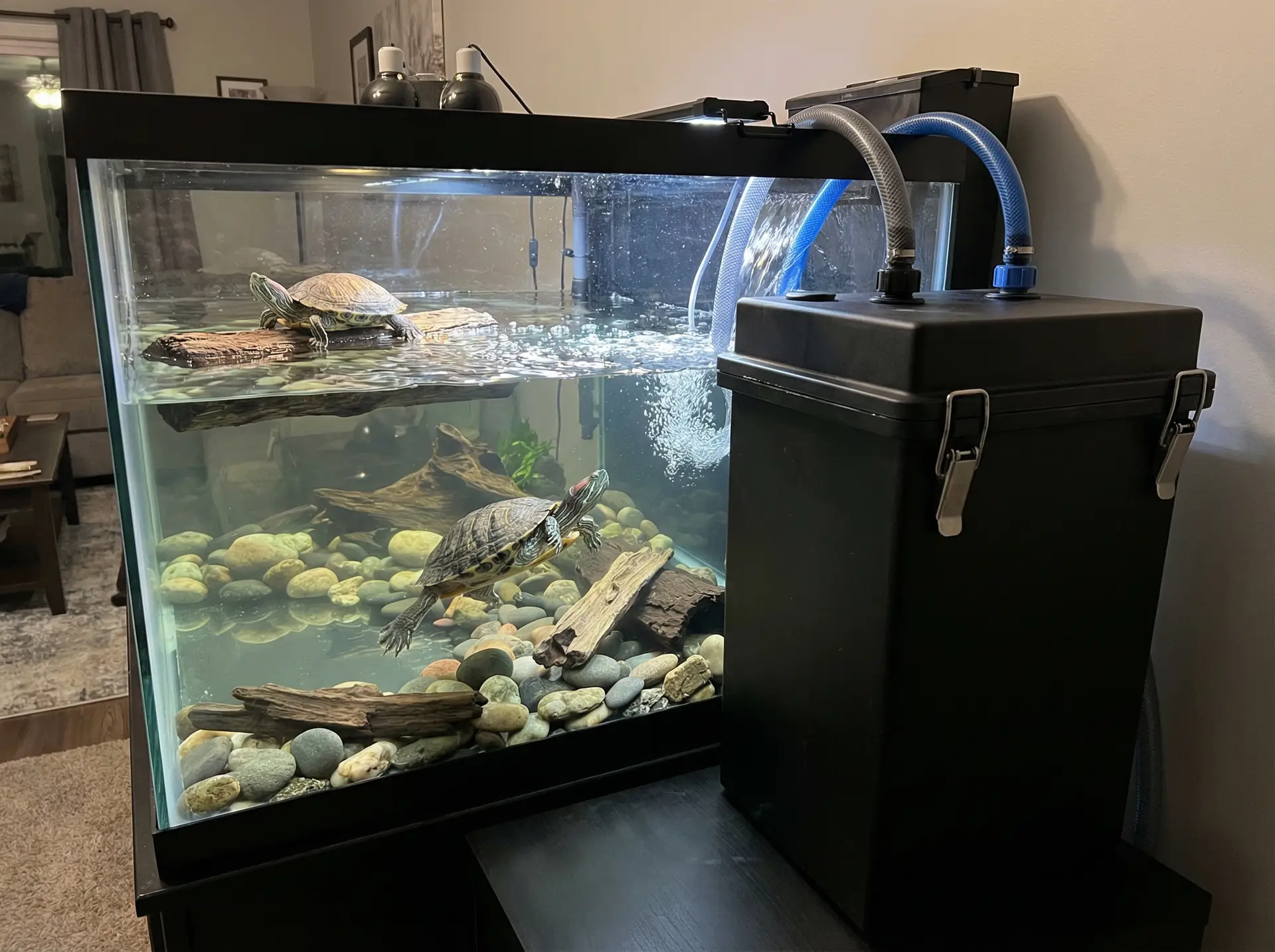
Penn-Plax Cascade 1200
- Compare the stated aquarium capacity with actual water volume
- Check body size and service clearance
- Review hose, intake and maintenance instructions
Fluval FX4 Canister
- Compare it with the other canister models
- Plan installation and hose routing
- Check maintenance needs before adding another unit
Fluval FX2 Canister
- Review flow and installation specifications
- Check media arrangement and service access
- Keep swimming and basking access unobstructed
Internal Filters
An internal filter operates inside the aquarium. Compare approved water depth, mounting, intake access and service needs with the actual enclosure. A smaller unit or a UV feature does not establish sufficient filtration or an appropriate treatment.
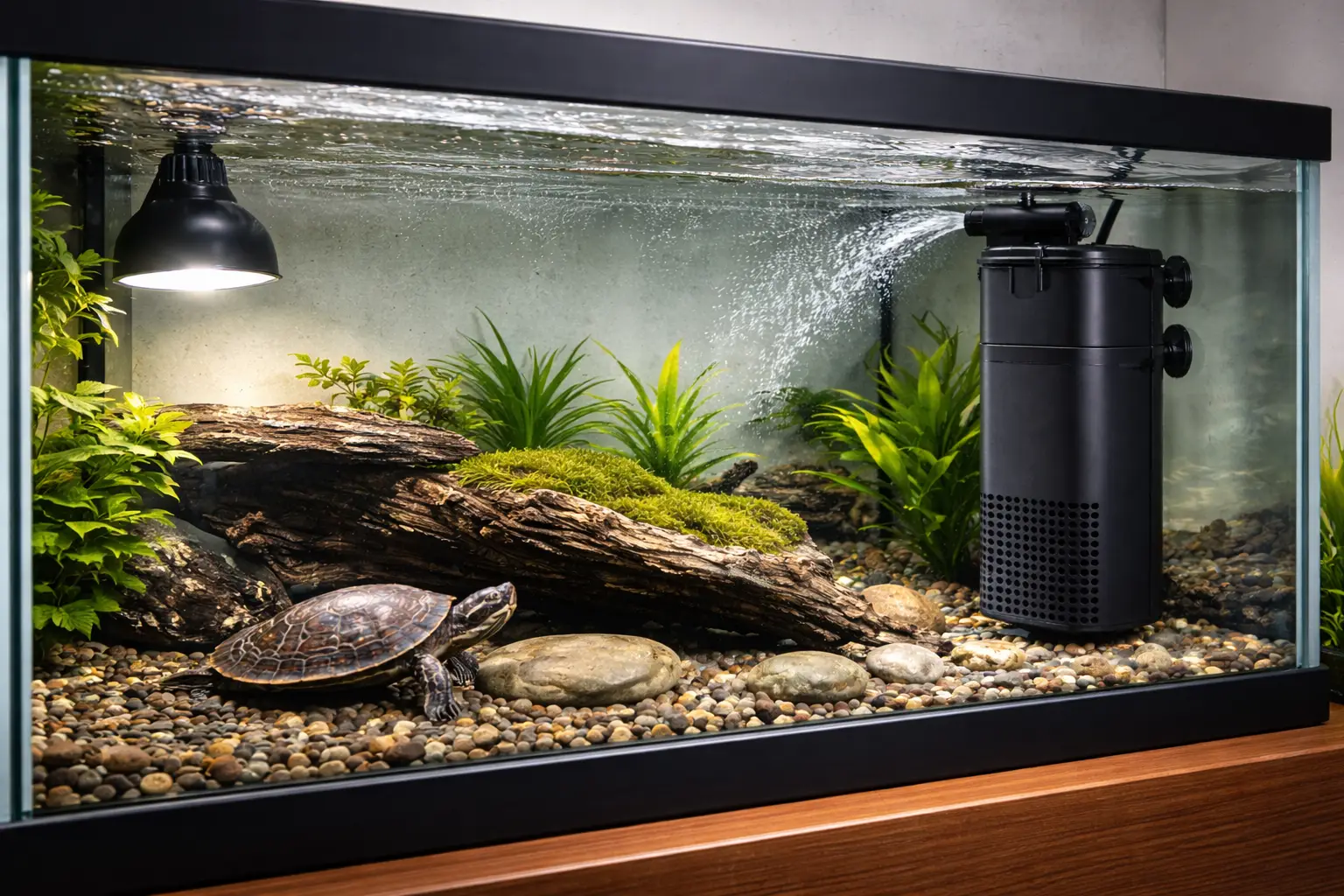
AquaMiracle Internal UV Filter
- Check minimum operating water depth
- Review mounting, cleaning and UV instructions
- Confirm the current model’s installation limits
TARARIUM 4-in-1 Internal Filter
- Review allowed flow adjustments
- Check water depth and mounting instructions
- Inspect intake and media access
Internal UV Filter with Spray Bar
- Confirm the included outlet and its instructions
- Check approved water depth and mounting
- Review UV use and filter maintenance separately
Maintenance & Cleanup
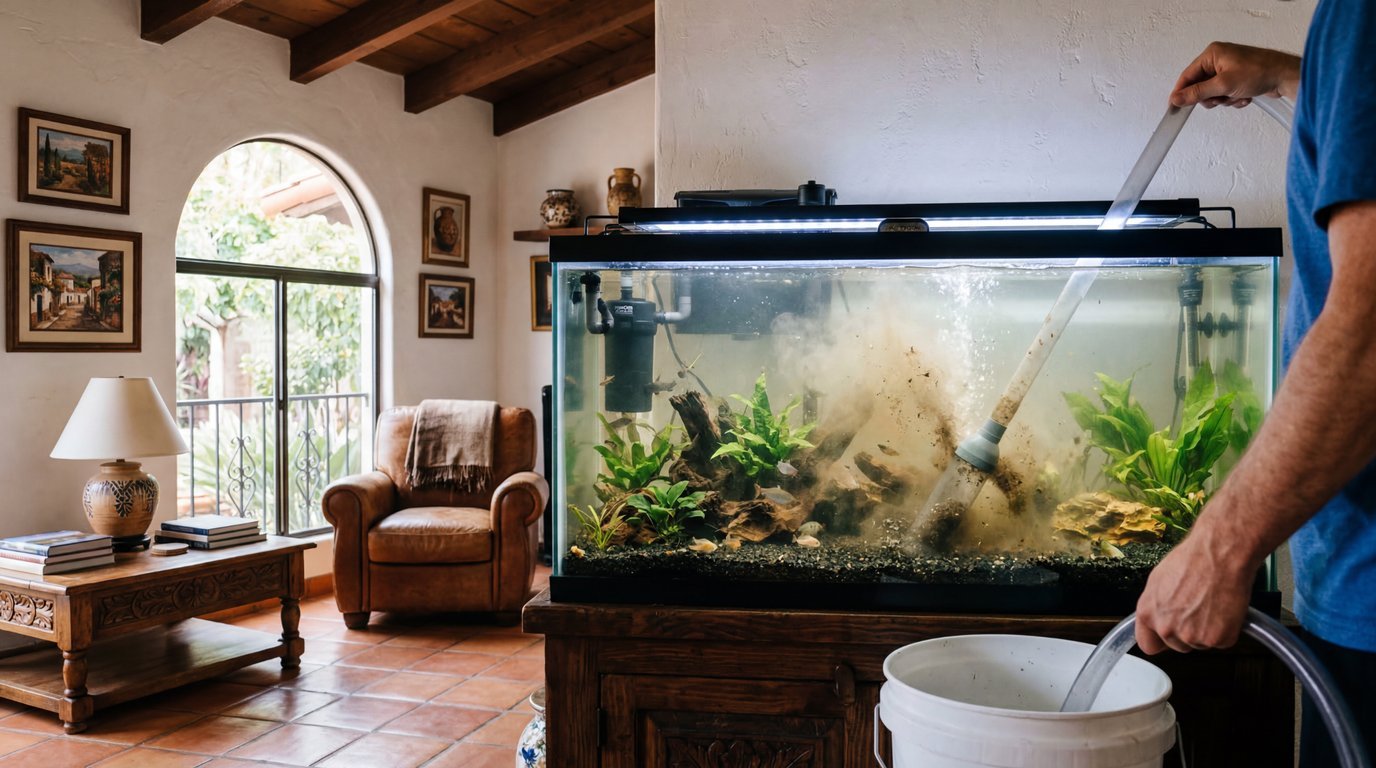
A filter does not remove the need to inspect equipment, remove debris and maintain water conditions. Compare the turtle tank cleaning supplies with the surfaces and tasks in your enclosure, and follow each filter or tool’s instructions.
AQUANEAT Pre-Filter Sponge
- Match sponge and intake dimensions
- Check that fitting does not restrict required flow
- Inspect and clean as instructed
Gravel Vacuum Water Changer
- Check faucet and hose compatibility
- Control the siphon and water level
- Use the tool only on suitable surfaces
Fluval FX6 Service Kit
- Match parts to the exact FX6 model
- Check which components the kit contains
- Follow the manufacturer’s service procedure
Biological Support
Biological media provide surfaces for established bacteria involved in processing nitrogenous waste. Media choice, water movement and maintenance affect the system; adding more media does not automatically establish a cycled tank or stable water readings.
Ceramic Media Basket
- Use media approved for the filter
- Follow the required media order
- Check water readings after changes
Bio Sponge Chamber
- Confirm the sponge fits the media chamber
- Follow that media’s cleaning instructions
- Avoid assuming every sponge has the same replacement needs
Media Arrangement Review
- Check the filter’s permitted media layout
- Preserve required water flow
- Compare condition and water readings before changing media
Juvenile Turtle Filters
For a juvenile turtle, confirm species-appropriate water depth, swimming and basking access, and the filter’s minimum operating depth. Check intake access and current in the actual enclosure. An oversized or adjustable model alone does not establish a suitable setup.
Compact Canister Option
Compare operating depth, hose installation and maintenance access.
Adjustable Internal Filter
Check the model’s approved flow adjustment and mounting instructions.
Pre-Filter Fit Check
Check intake and sponge dimensions, then monitor flow as the sponge collects debris.
Flow Around the Basking Area
Place equipment so it does not obstruct swimming or access to the basking platform. Use only compatible returns or flow adjustments, following the filter instructions and checking the turtle’s access in the completed enclosure.
Return Position
Check the permitted outlet position and keep basking access clear.
Spray Bar Output
Check that a spray bar is compatible, then follow its placement instructions.
Flow Control Attachment
Use only flow-control parts and adjustments approved for the exact filter.
Filter Maintenance Tips
Inspect media, intakes, tubing and seals according to the model’s instructions and observed condition. If flow or noise changes, check the manufacturer’s troubleshooting steps rather than assuming cleaning or an impeller kit will resolve it.
Check Mechanical Media
Follow the media’s cleaning or replacement instructions and inspect for restricted flow.
Check the Intake and Tubing
Inspect for debris, kinks, damage or loose connections as directed.
Check Impeller Service Instructions
Use the exact model’s procedure and parts; cleaning is not a guaranteed noise or flow repair.
Compare canister models before choosing
Our dedicated comparison brings together canister models and maintenance considerations. Check each model’s installation limits against your enclosure; a 40-gallon threshold alone does not determine the right filter.
See the Canister Filter GuideHelpful Aquatic Turtle Articles
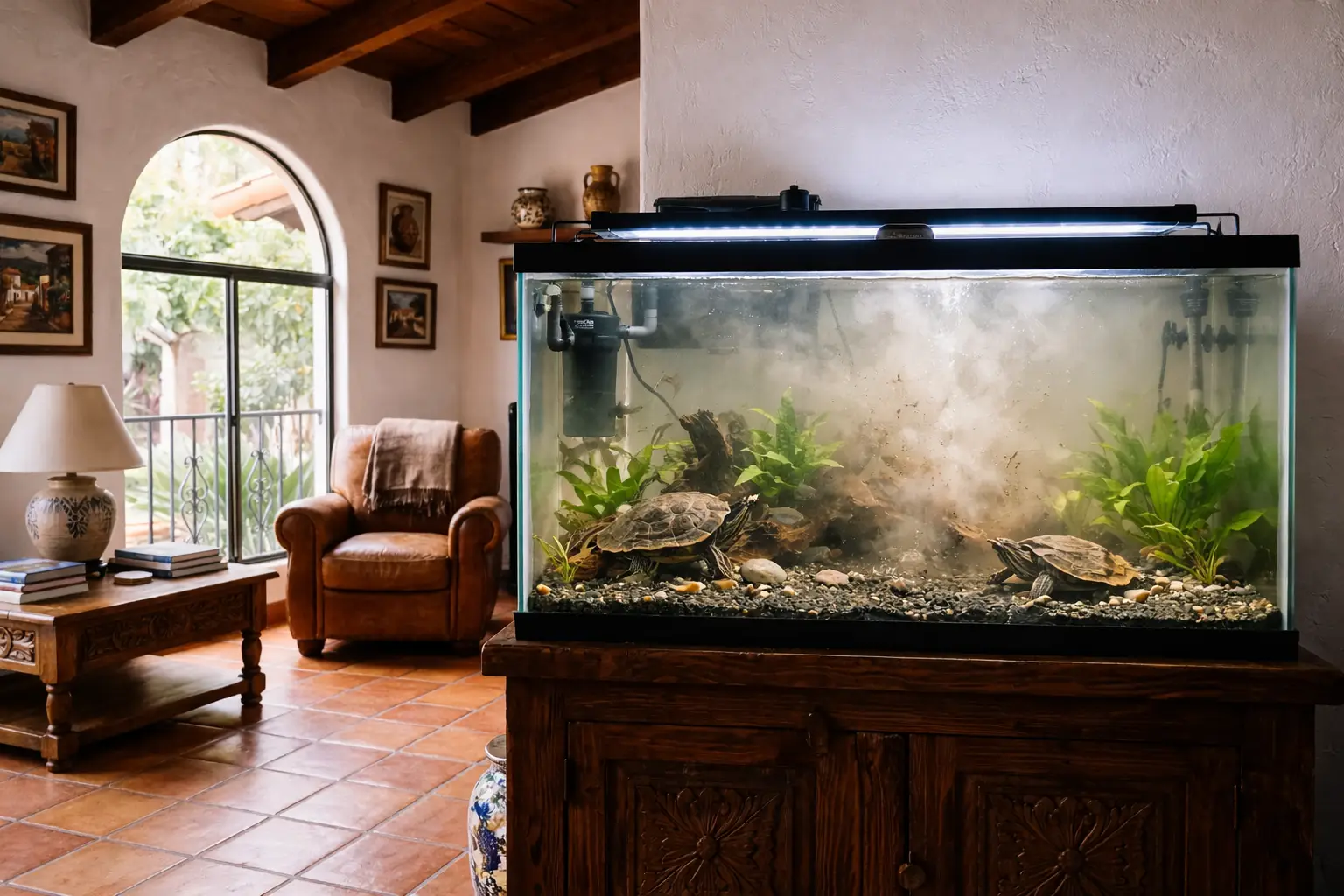
Why Your Turtle Tank Smells Even With a Filter
A turtle tank can still smell bad even when a filter is running if waste is overwhelming the system, media is dirty, or maintenance habits are not keeping up with the turtle's bioload.
Read the Smelly Turtle Tank Guide →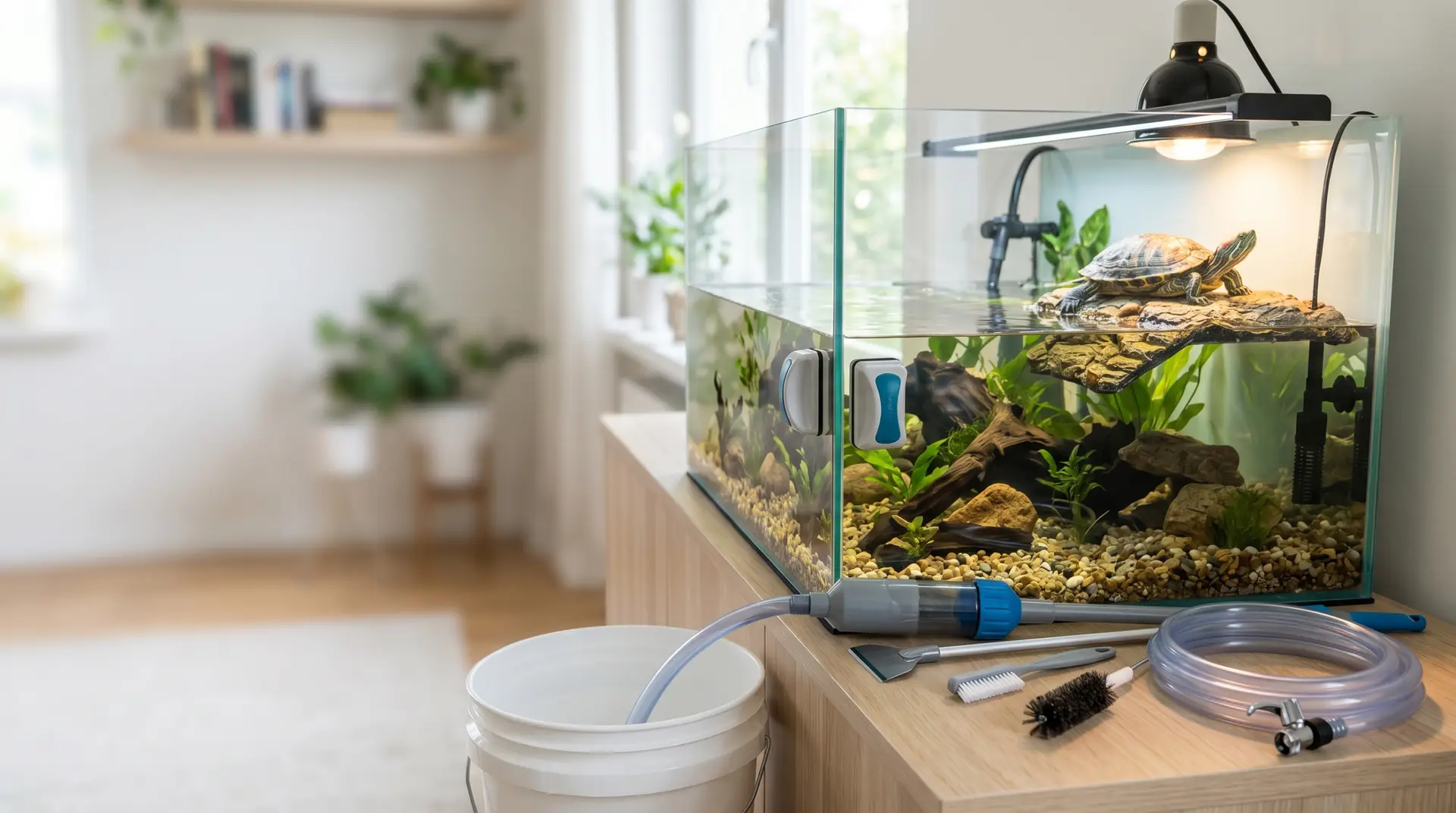
Turtle Tank Cleaning Supplies
Compare tools for water changes, glass cleaning and debris removal, with attention to tank material and each tool’s instructions.
Read the Cleaning Supplies Guide →Filter Safety
Choose filtration with the actual enclosure, waste load and operating requirements in mind. Check water conditions alongside visible debris; appearance or odor alone does not establish that the system is adequate.
Inspect intakes, tubing, seals, and media regularly. Make sure the turtle cannot dislodge equipment easily or get stuck around poorly protected intake areas.
- Check the model requirements: Compare actual water volume, operating depth and installation limits.
- Check intake access: Use compatible protection and ensure the turtle cannot become trapped around equipment.
- Inspect media condition: Follow cleaning instructions and check for restricted flow.
- Secure hoses and returns: Follow mounting instructions and check for loose or damaged connections.
- Watch for leaks and flow changes: Investigate problems using the exact filter’s troubleshooting instructions.
Need a full canister comparison?
Compare canister dimensions, installation requirements and maintenance tasks before choosing.
Open the Canister Filter Buying Guide