
Aquarium Fish Filters: Types, Fit and Maintenance
Compare filter types by installation, media space, intake design, water movement and cleaning access. Match the selected model to your aquarium and livestock, and use water-test results alongside routine maintenance; clear water alone does not establish suitable conditions.
If your tank looks hazy after maintenance, you may want to read our guide to why your fish tank gets cloudy after cleaning.
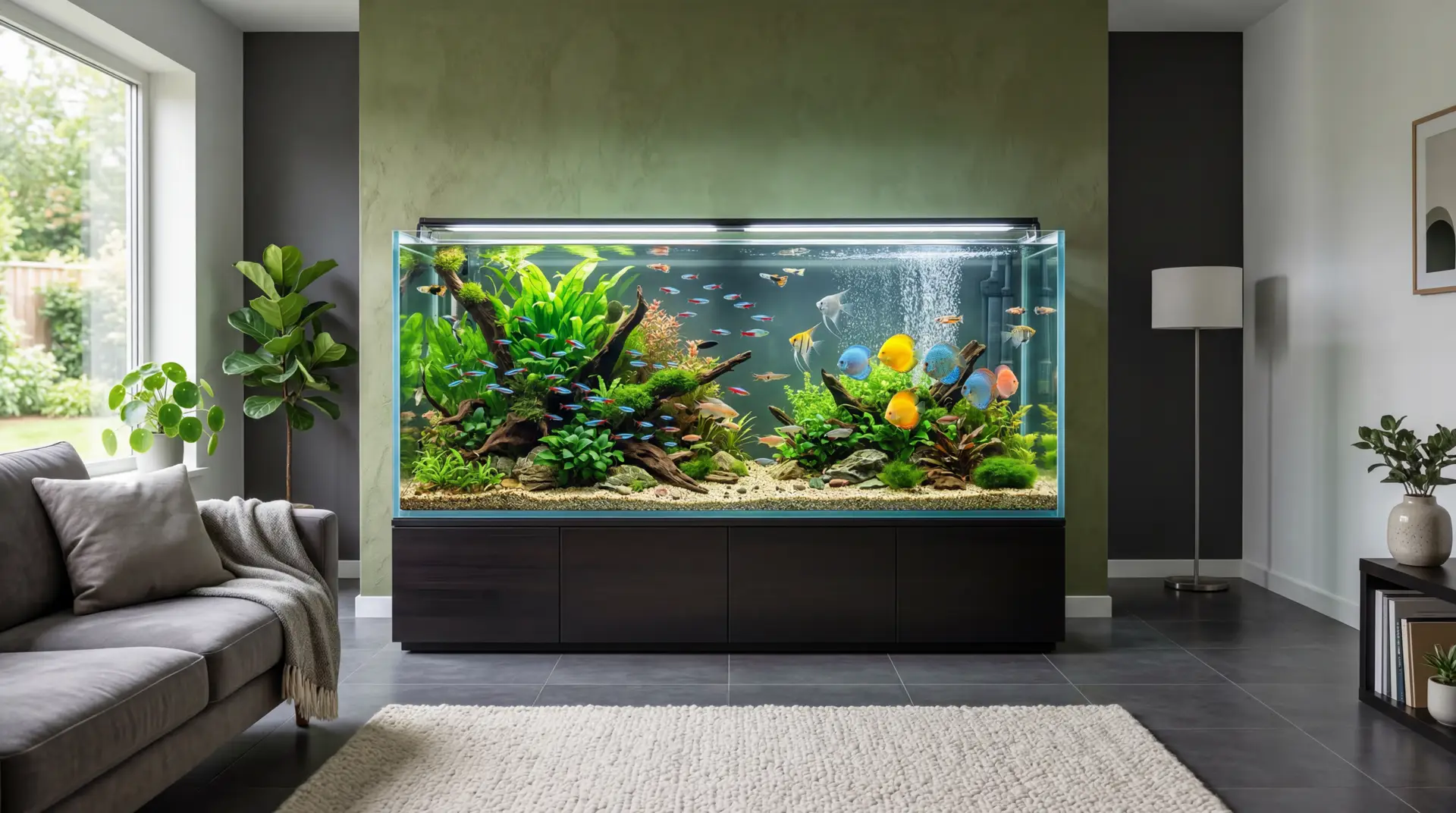
Illustrative aquarium scene; it does not establish tank size, measured water quality or exact product identity.
Start with these four linked options, then compare the type and maintenance checks below. Confirm the selected listing’s model, size, accessories and instructions before buying.
Four Linked Filter Options
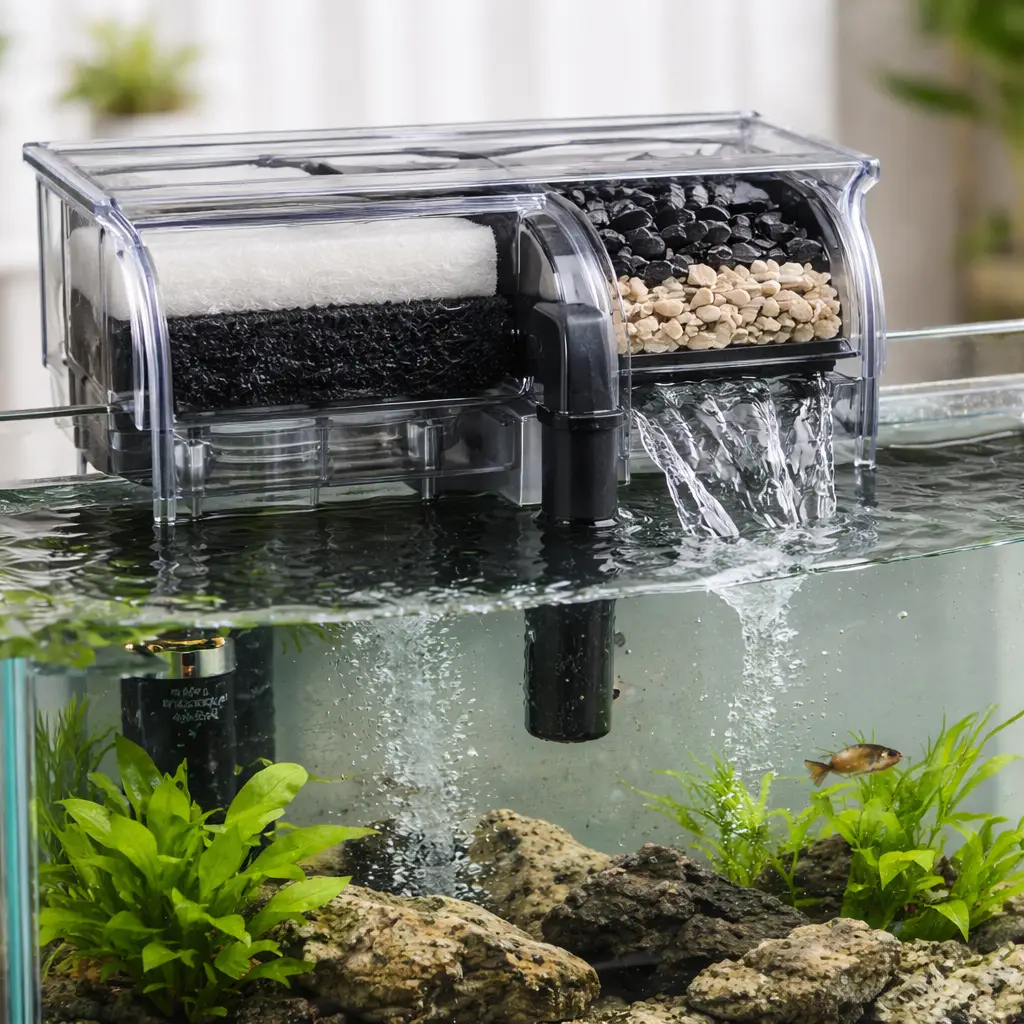
Illustrative filter style; confirm the linked model, dimensions and instructions.
Hang-on-back typeMarineland Penguin 200 GPH
Check tank fit, intake and media access
Check price on Amazon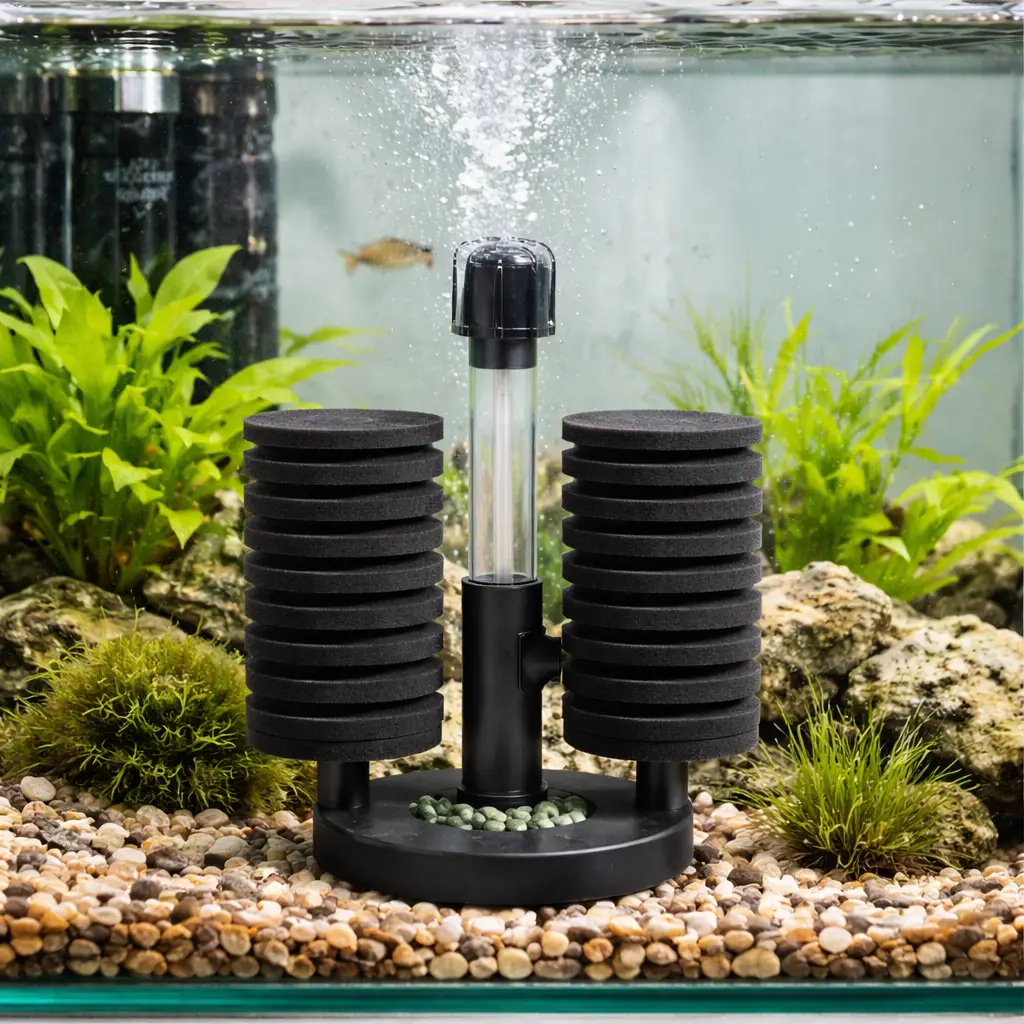
Illustrative filter style; confirm the linked model, dimensions and instructions.
Sponge-filter typeAQUANEAT Bio Sponge Filter
Check airflow, intake fit and livestock needs
Check price on Amazon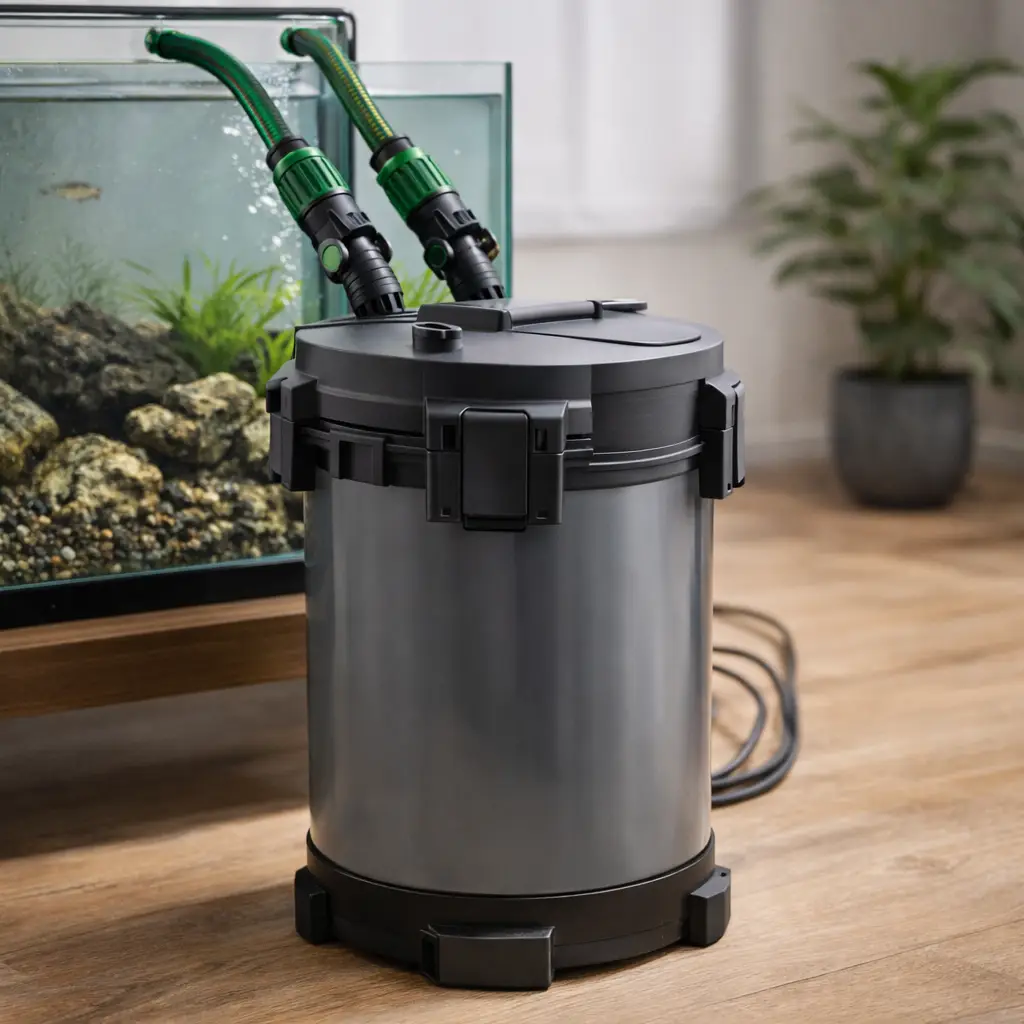
Illustrative filter style; confirm the linked model, dimensions and instructions.
External canisterFluval 107 Canister Filter
Rated for 10–30 US gallons; match actual load and flow needs
Check price on Amazon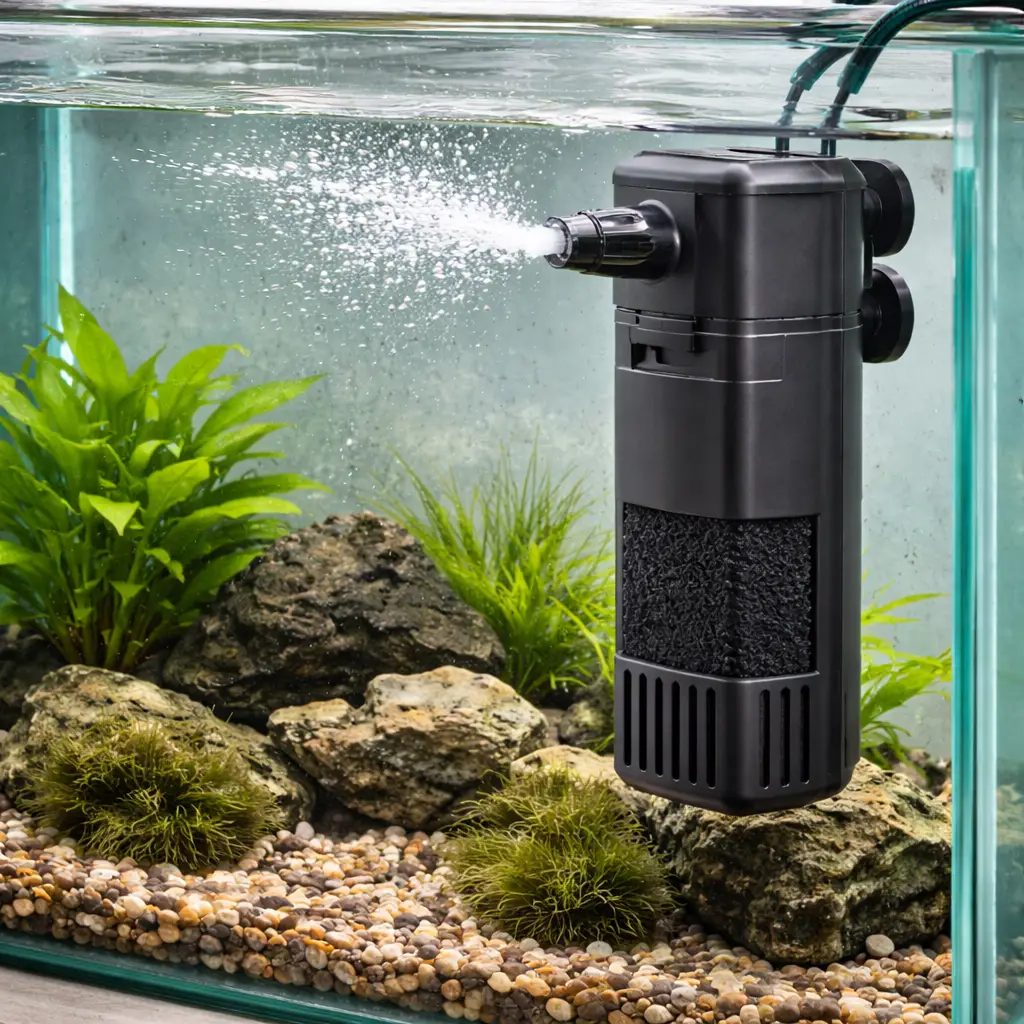
Illustrative filter style; confirm the linked model, dimensions and instructions.
Internal-filter typeTetra Whisper 200 GPH Internal
Check dimensions and required water level
Check price on AmazonBefore choosing: Compare actual tank volume, livestock needs, intake openings, output adjustment, media space and cleaning access. A filter type or flow-rate label alone does not establish suitability.
Aquarium Filter Type Comparison
Use this quick table to match the filter style to the tank instead of choosing by price alone.
| Filter Type | Fit / installation checks | Design / maintenance checks | Watch Out For |
|---|---|---|---|
| HOB Filter | Check rim clearance, tank volume and intake fit | Inspect media access, priming and water-level instructions | Compare output and intake openings with the actual livestock |
| Sponge Filter | Match sponge, airflow and intake design to the livestock | Check the required pump, media and cleaning directions | Confirm required accessories; sponge type alone is not an intake-risk guarantee |
| Canister Filter | Check the selected capacity, cabinet space and hose routing | Compare actual basket volume and media compatibility | Allow access for valves, hoses, leak checks and cleaning |
| Internal Filter | Check in-tank space, mounting and required water depth | Compare output direction and cleaning access | Takes up display space inside the aquarium |
| Nano Filter | Check actual dimensions, capacity and flow adjustment | Compare the selected model’s media space and mounting | A nano label does not establish tank or livestock suitability |
How to Choose the Right Aquarium Filter
Compare measured tank volume, stocking, output, media space and maintenance access with the selected model’s instructions. Leave room to install and service the filter, then check its actual output in the aquarium.
Check species and life-stage needs, especially intake openings and water movement around small livestock. A higher printed flow rate is not automatically a better match; consider the complete setup and measured water conditions.
What to Check Before Buying
Compare the actual model’s dimensions, capacity guidance, intake and output, media compatibility and maintenance instructions. Check how it will fit your tank and where you can reach it for cleaning.
Ask whether the intake and output suit your livestock, which accessories are required, and how the manufacturer instructs you to clean or replace each type of media.
Keep water testing and habitat care alongside the equipment comparison. A filter or a clearer-looking tank does not replace checks of measured water conditions.
Tank volume: Compare measured water volume, stocking and the selected model’s capacity guidance.
Output: Check adjustment and outlet placement against species needs and the actual water movement in your aquarium.
Media space: Compare the selected filter’s actual basket or chamber dimensions and compatible media.
Browse by Filter Type
Tap a button to jump to that filter type. Each section includes quick picks and what to look for.
Illustrative filter style; confirm the linked model, dimensions and instructions.
HOB Filters
Check rim mounting, media access and water level.
Jump to HOBIllustrative filter style; confirm the linked model, dimensions and instructions.
Sponge Filters
Check required airflow, intake fit and cleaning access.
Jump to SpongeIllustrative filter style; confirm the linked model, dimensions and instructions.
Canister Filters
Compare basket space, hose routing and leak-check access.
Jump to CanisterIllustrative filter style; confirm the linked model, dimensions and instructions.
Internal Filters
Check in-tank dimensions, mounting and output.
Jump to Internal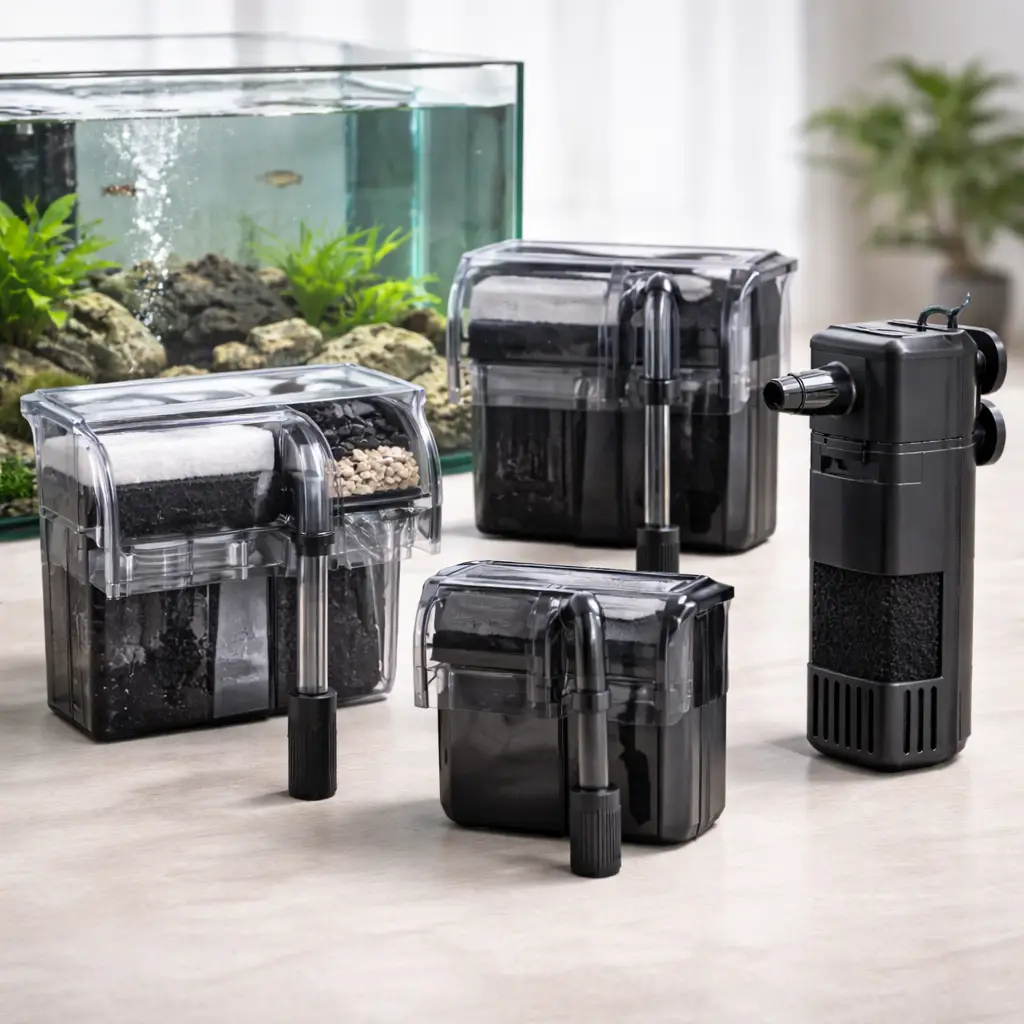
Illustrative filter style; confirm the linked model, dimensions and instructions.
Power Filters
Motor-driven models; compare actual output and instructions.
Jump to Power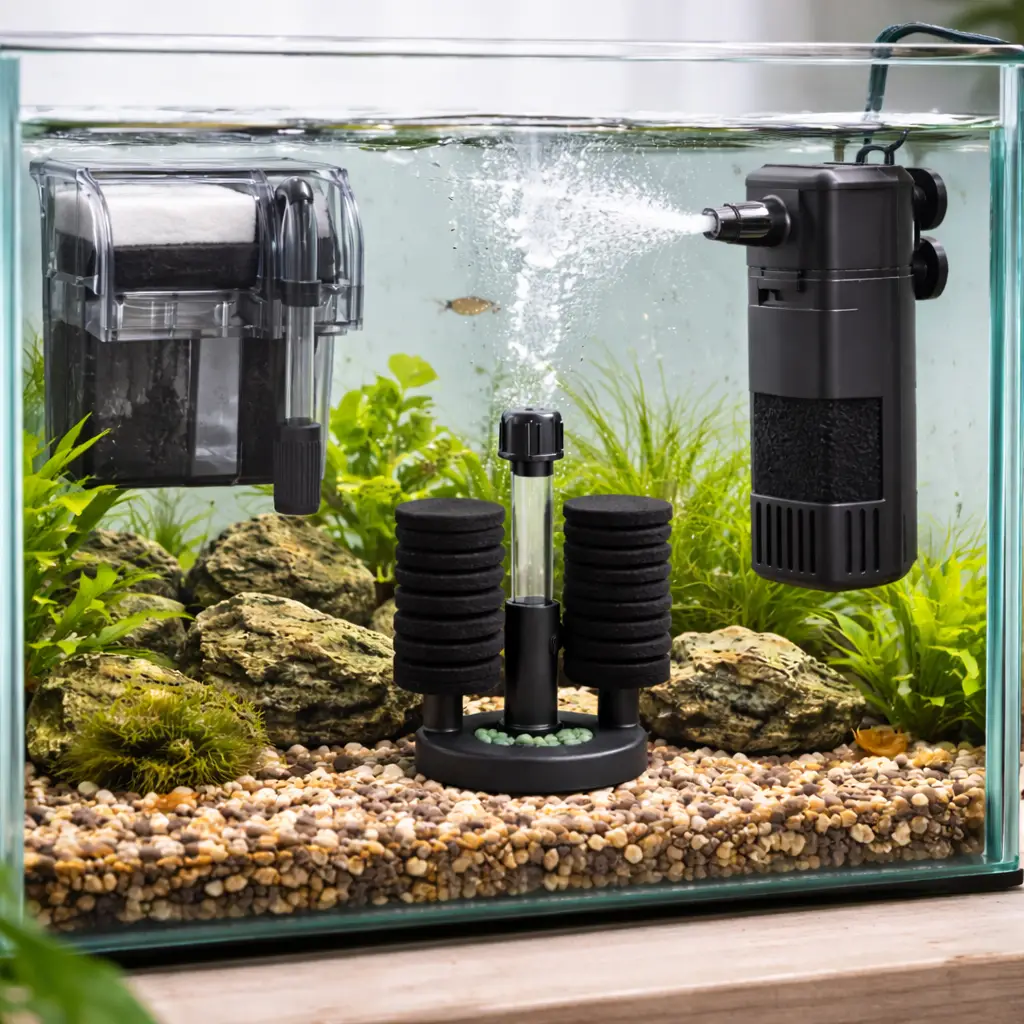
Illustrative filter style; confirm the linked model, dimensions and instructions.
Nano Tank Filters
Compare dimensions, media space and capacity guidance.
Jump to NanoHOB Filters
Hang-on-back filters mount at the aquarium rim. Compare the selected model’s rim clearance, water-level requirement, priming directions, intake and media access before buying.
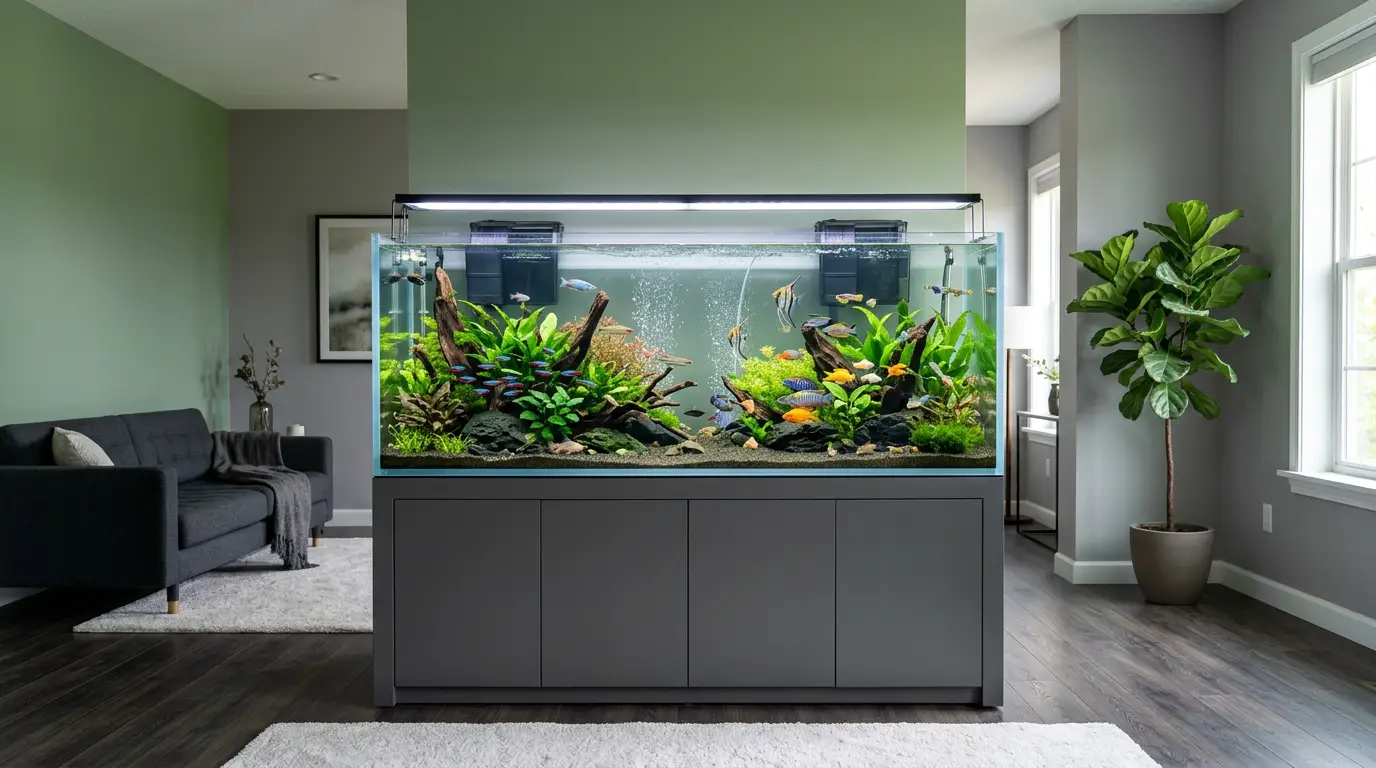
Illustrative aquarium scene; it does not establish tank size, measured water quality or exact product identity.
Marineland Bio-Wheel Penguin 200 GPH Power Filter
- Check selected tank-volume guidance
- Review BIO-Wheel and cartridge instructions
- Allow access for cleaning
AquaClear 30 Power Filter
- Maker describes adjustable output
- Check intake and livestock fit
- Follow media-care instructions
Marineland Bio-Wheel Penguin 375 GPH Power Filter
- Confirm current model and printed output
- Compare media space and required water level
- Review priming and cleaning directions
Sponge Filters
For a sponge-filter setup, confirm the required pump or air supply, dimensions, mounting and cleaning instructions. Check the actual intake and airflow against the needs of the livestock; a sponge label does not guarantee that every opening or flow setting is appropriate.
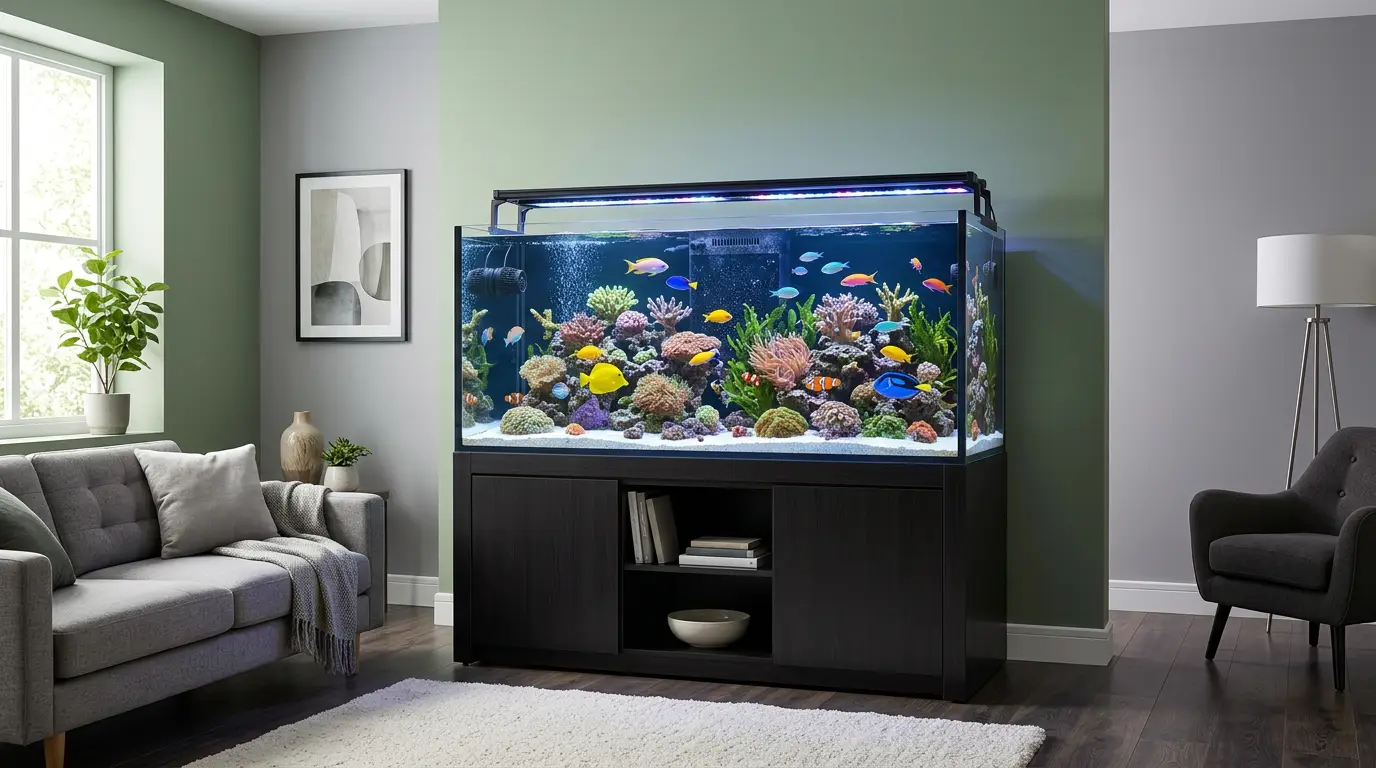
Illustrative aquarium scene; it does not establish tank size, measured water quality or exact product identity.
AQUANEAT Aquarium Bio Sponge Filter
- Confirm required air supply
- Check actual intake and livestock fit
- Review sponge-cleaning instructions
hygger Aquarium Double Sponge Filter
- Check dimensions and included media
- Confirm required pump or air supply
- Allow access to clean the sponges
hygger Sponge Filter with 4 Bio Media Packs
- Confirm what the selected package includes
- Check tank and intake fit
- Follow the actual media instructions
Canister Filters
External canister filters require space for the body and hose routing. Compare the actual media baskets, valves, priming directions and maintenance access; check connections for leaks as instructed.
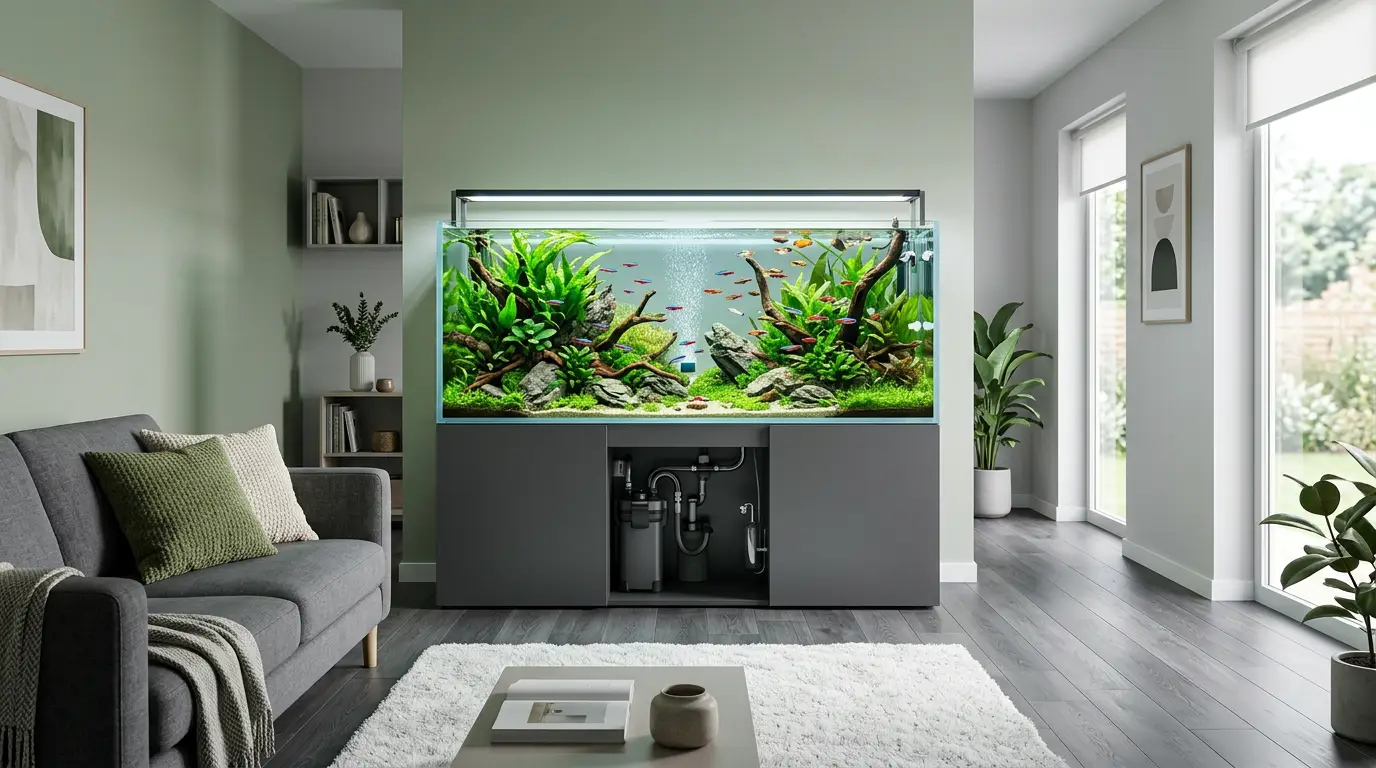
Illustrative aquarium scene; it does not establish tank size, measured water quality or exact product identity.
Fluval 107 Performance Canister Filter
- Maker rates this model for 10–30 US gallons
- Compare actual load and output needs
- Allow access to baskets and hoses
Fluval 307 Performance Canister Filter
- Maker rates this model for 40–70 US gallons
- Compare actual load and output needs
- Check cabinet and hose clearance
Fluval FX4 High Performance Canister Filter
- Compare the selected capacity and basket space
- Check hose routing and valve access
- Follow cleaning and leak-check directions
Internal Filters
Internal filters occupy space inside the aquarium. Check dimensions, mounting, water-depth requirements and outlet placement against the selected model’s instructions and your livestock’s needs.
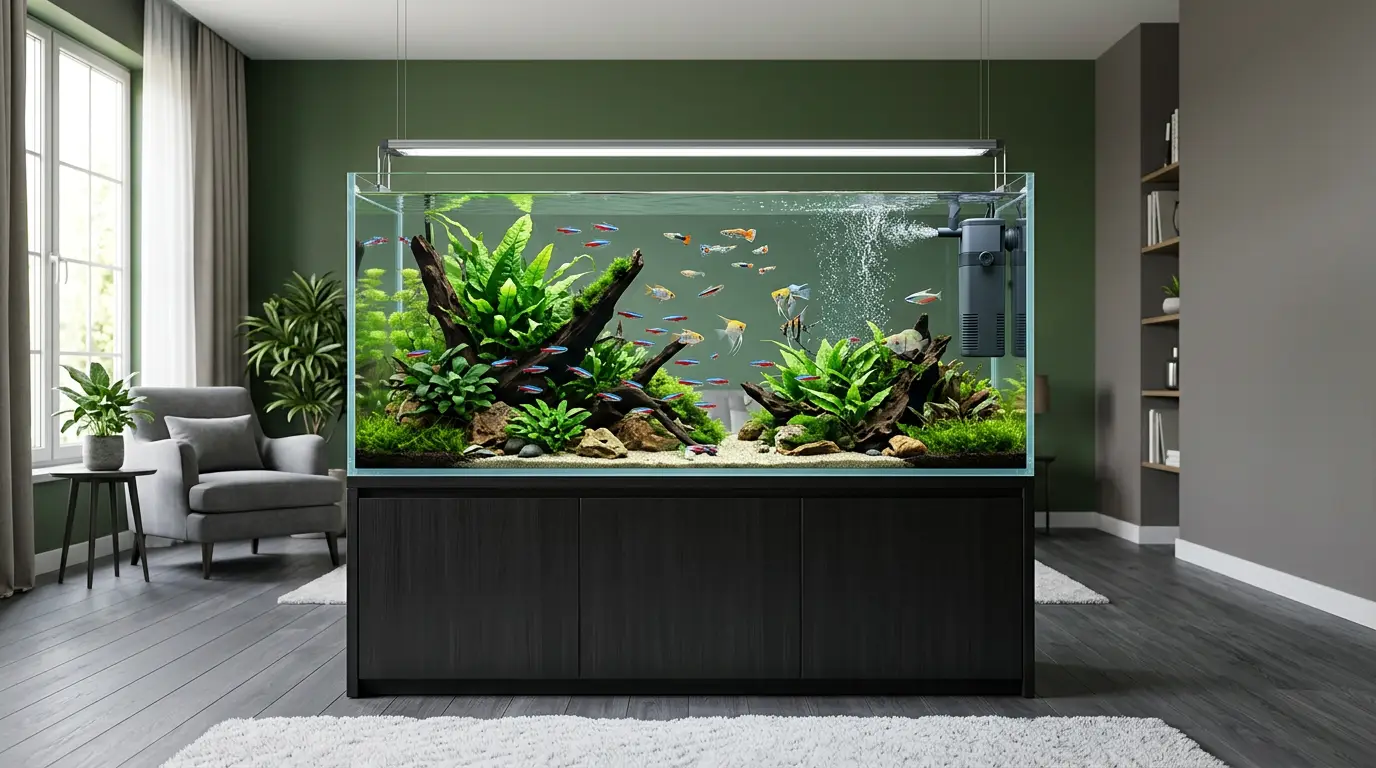
Illustrative aquarium scene; it does not establish tank size, measured water quality or exact product identity.
Tetra Whisper 200 GPH Internal Power Filter
- Check selected tank-volume guidance
- Confirm mounting and required water level
- Allow access for maintenance
FEDOUR 165 GPH Adjustable Internal Filter
- Confirm the selected model’s output control
- Check dimensions, mounting and water depth
- Review cleaning instructions
Oase EcoFlow 100 Internal Aquarium Filter
- Confirm the current model and accessories
- Check mounting and outlet placement
- Allow access for cleaning
Power Filters
Power filters use a motor to move water and may include hang-on-back or internal designs. Compare the actual output, intake, media and maintenance requirements; the term does not establish stronger debris removal or a need for faster turnover.
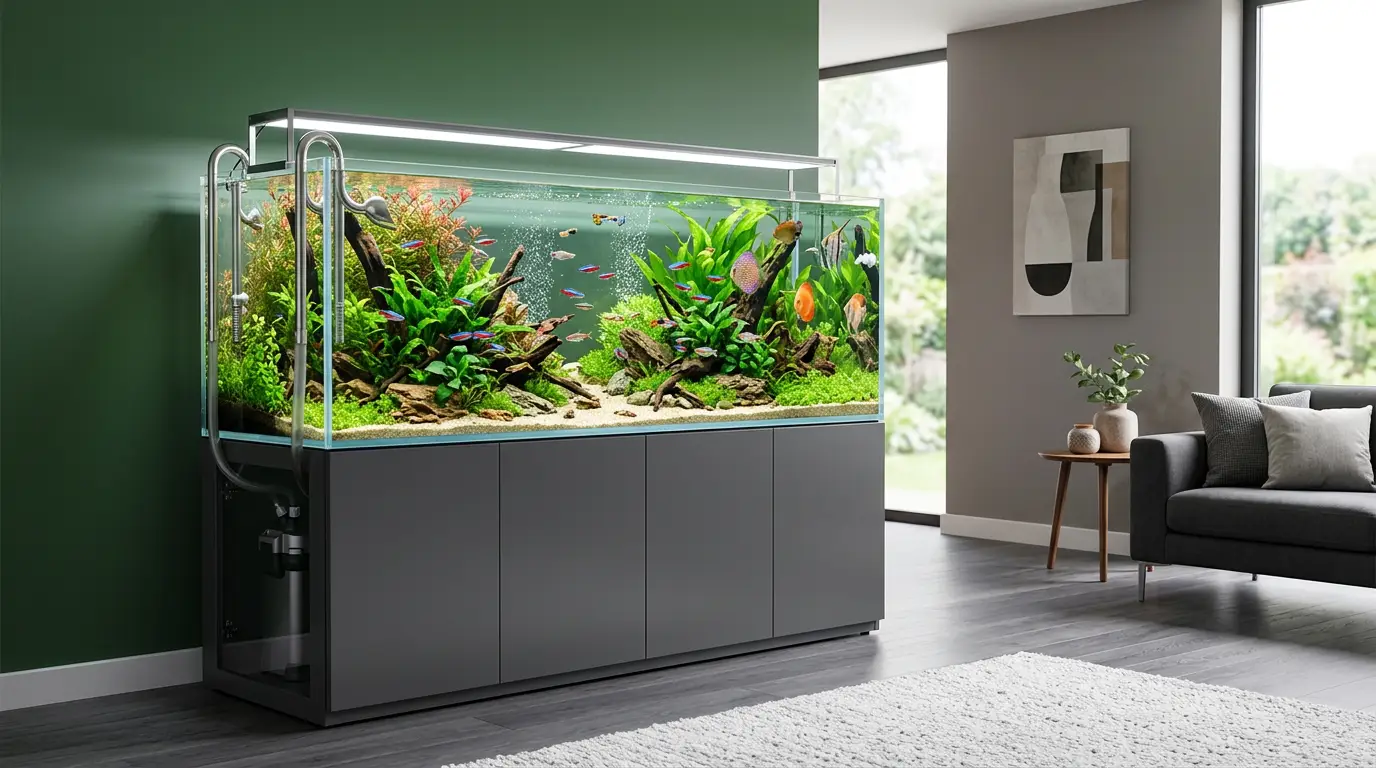
Illustrative aquarium scene; it does not establish tank size, measured water quality or exact product identity.
Fluval AC50 Power Filter
- Confirm the selected model and capacity guidance
- Check rim fit and water-level requirements
- Review media and impeller care
Tetra Whisper EX 70 Power Filter
- Check the selected capacity guidance
- Confirm cartridge and water-level requirements
- Allow access for cleaning
Tetra Whisper IQ 215 GPH Power Filter
- Tetra describes a SoundShield motor barrier
- Confirm model, output and water-level requirements
- Installation and maintenance affect noise
Nano Tank Filters
A nano label describes a small-scale option, not an assurance that it fits a particular aquarium. Compare the selected model’s dimensions, media space, capacity guidance and output, and keep testing water conditions.
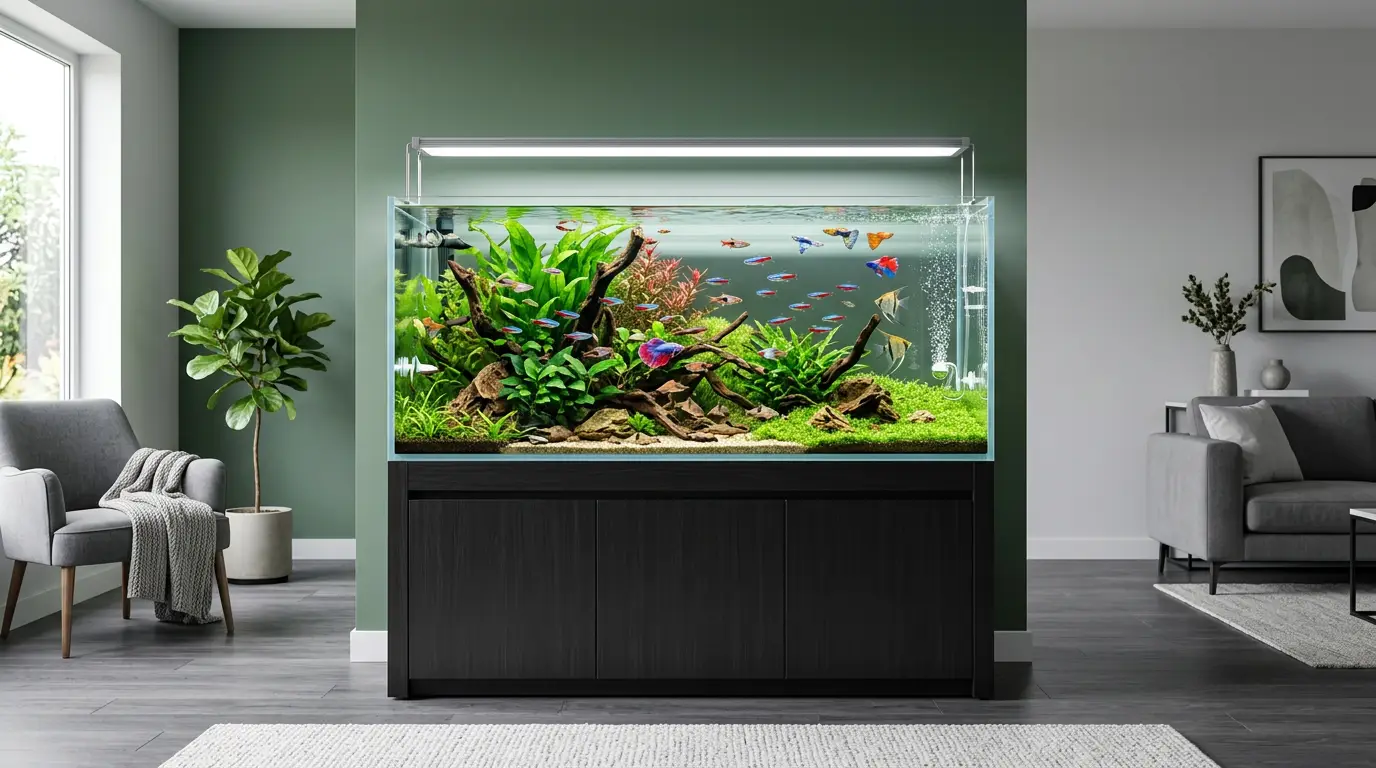
Illustrative aquarium scene; it does not establish tank size, measured water quality or exact product identity.
NICREW Slim Aquarium Filter (Up to 5 Gal.)
- Confirm actual dimensions and capacity guidance
- Check intake, output and livestock fit
- Review cleaning access
AQUANEAT Bio Sponge Filter for Nano Tanks
- Confirm required air supply
- Check intake and livestock fit
- Compare dimensions and cleaning needs
Sicce Shark Pro Nano 250 Internal Filter
- Confirm selected dimensions and capacity
- Check mounting and outlet placement
- Review maintenance access
Betta / Low Flow Filters
Review species-specific water-movement needs, then check the selected filter’s adjustment range and outlet placement. Observe the actual setup; a low-flow label alone does not establish that a model suits your fish.
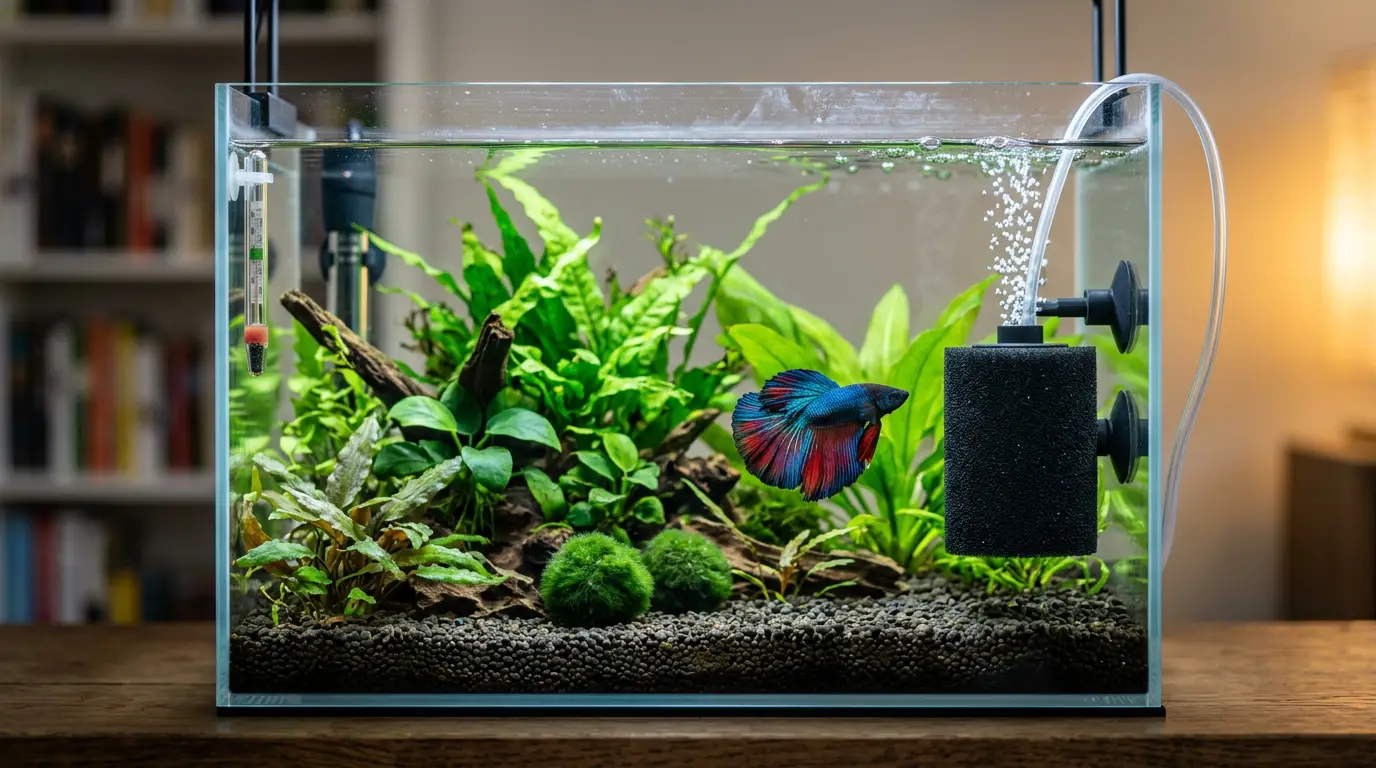
Illustrative aquarium scene; it does not establish tank size, measured water quality or exact product identity.
Sicce Shark Pro Nano 250 Internal Filter
Check the selected model’s output range and your fish’s needs.
Check price on AmazonAquaClear 30 Power Filter
Maker describes adjustable flow; check the actual setting and intake fit.
Check price on AmazonAQUANEAT Aquarium Bio Sponge Filter
Confirm required airflow, intake fit and livestock needs.
Check price on AmazonShrimp & Fry Intake Checks
For shrimp or fry, check intake openings and the fit of any manufacturer-compatible guard or pre-filter. Check output and cleaning instructions too; neither a sponge nor an added guard guarantees suitable conditions for every life stage.
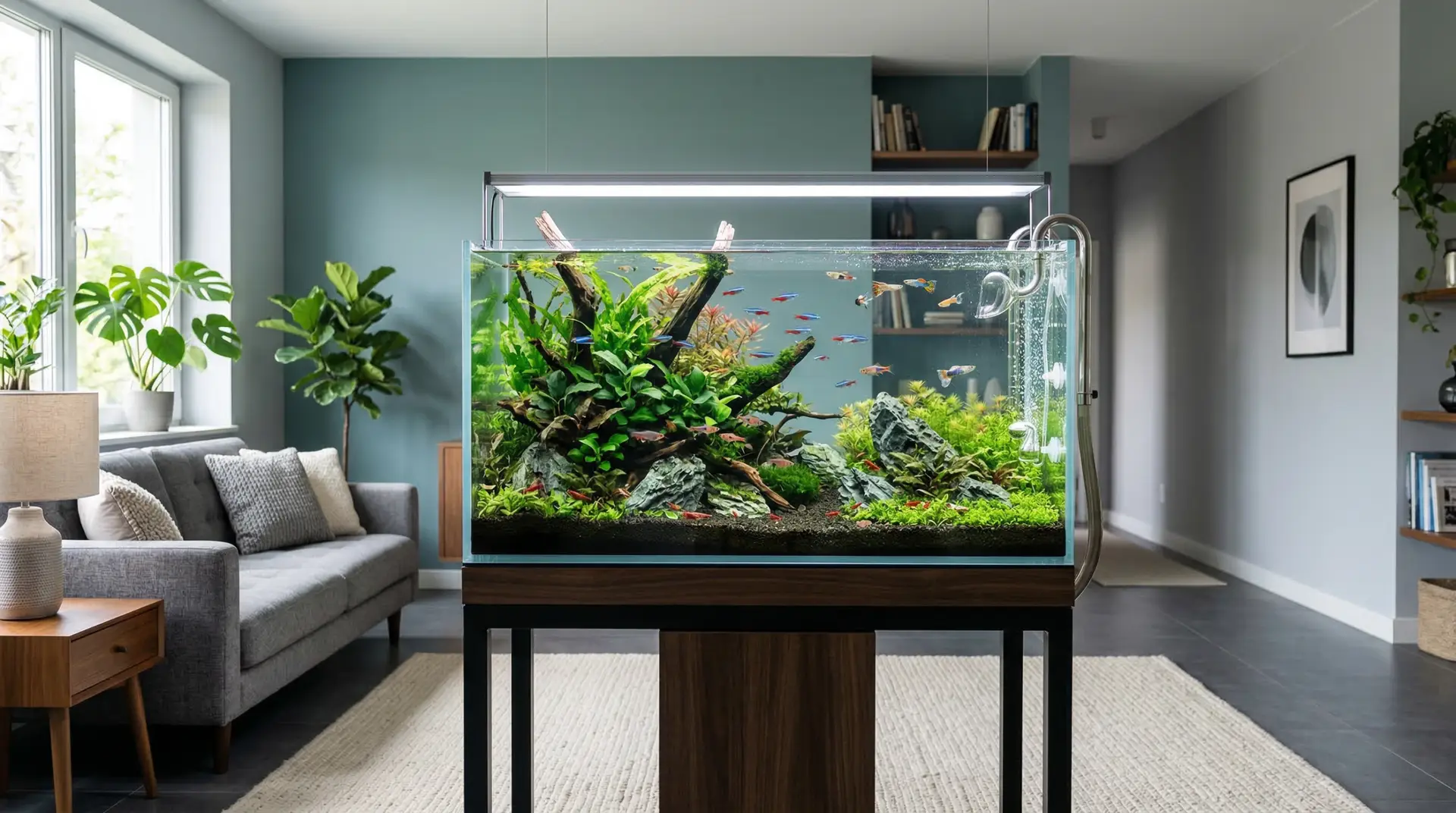
Illustrative aquarium scene; it does not establish tank size, measured water quality or exact product identity.
hygger Sponge Filter with 4 Bio Media Packs
Check actual intake openings and fit for your livestock.
Check price on AmazonAQUANEAT 6-Pack Pre-Filter Intake Sponges
Check sponge dimensions and compatibility with the actual intake.
Check price on AmazonAQUANEAT Bio Sponge Filter for Shrimp & Fry
Confirm required accessories, intake fit and cleaning instructions.
Check price on AmazonFilter Media Basics
Filter media generally falls into three broad jobs: mechanical, biological, and chemical filtration. Mechanical media traps debris, biological media supports beneficial bacteria, and chemical media can help remove certain dissolved compounds. Not every aquarium needs every type all the time, but understanding the basics helps owners build a more practical filter setup.
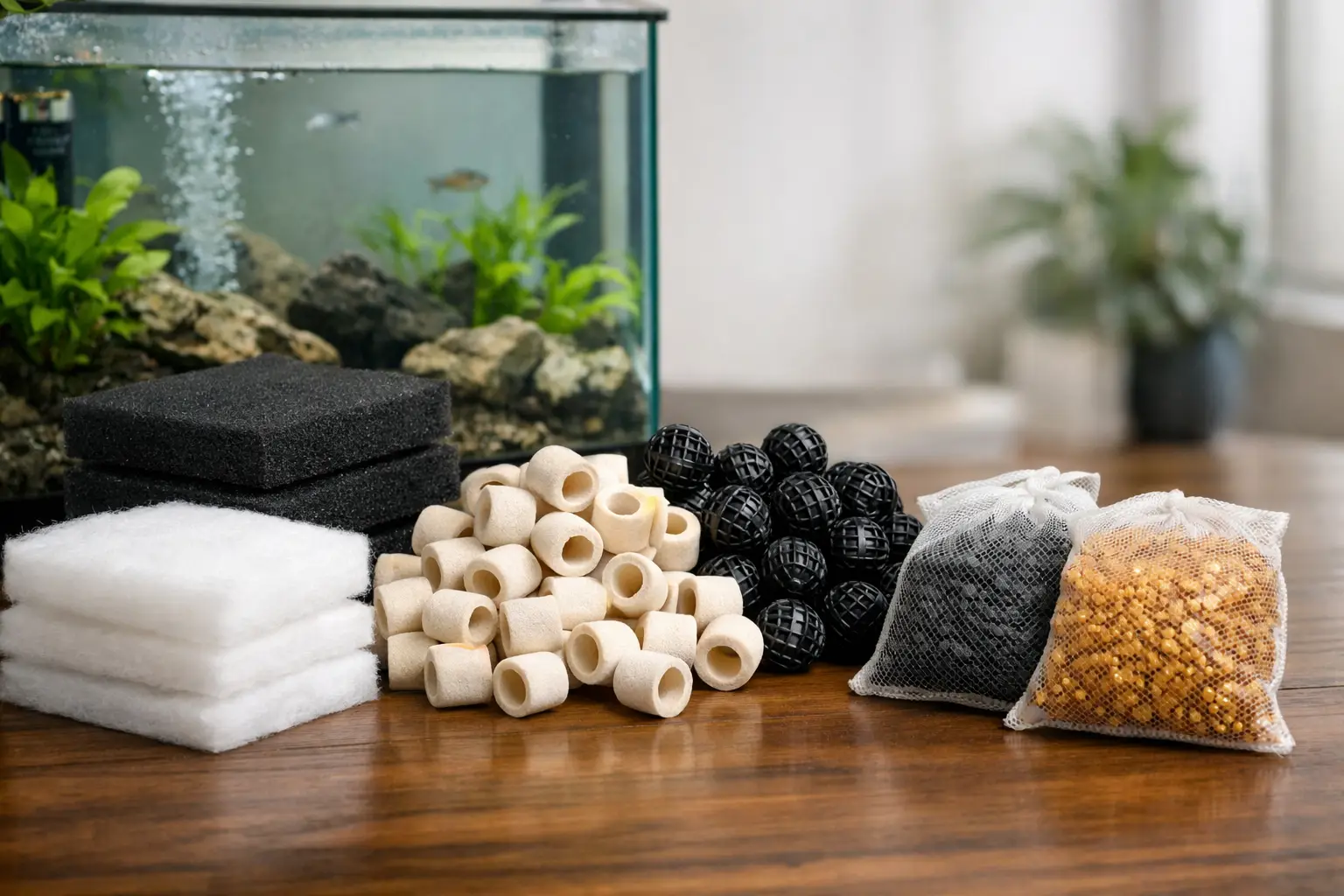
Illustrative media arrangement; use only media compatible with the actual filter and instructions.
Aquatic Experts Aquarium Filter Floss
Captures debris and improves water clarity.
Check price on AmazonSeachem Matrix Bio Media (1 Liter)
Provides surface area for beneficial bacteria.
Check price on AmazonSeachem Purigen Filtration Resin (100 mL)
Optional media for targeted water treatment needs.
Check price on AmazonHelpful Aquarium Fish Articles
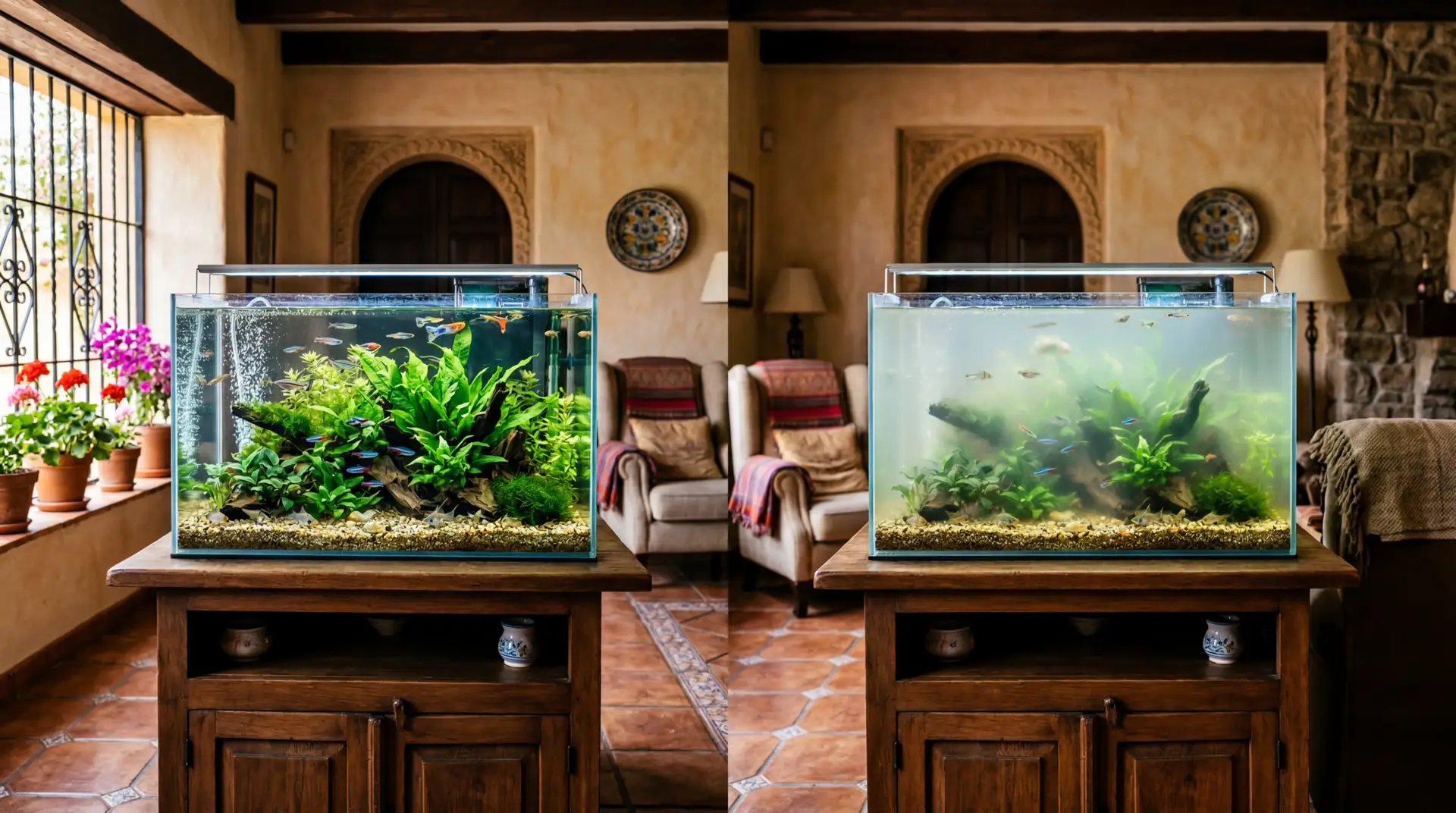
Illustrative appearance comparison; water appearance alone does not identify a cause or treatment.
Why Is Your Fish Tank Cloudy After Cleaning?
Review measured water conditions, feeding, filter media and recent maintenance. The appearance of cloudy water alone does not identify the cause or establish an appropriate treatment.
Aquarium Filter Safety Tips
Match equipment to species, life stage, actual tank volume and the selected model’s instructions. Check intake openings and the water movement around livestock after installation.
Inspect and maintain intakes, impellers and media as the manufacturer directs. Changes in fish behavior or water-test results need assessment of the complete habitat, not just a new filter.
Filter Safety (Read This)
- Don't overpower the tank: Too much current can stress fish and disrupt the setup.
- Check intake fit: Review openings and any compatible guard against the actual livestock and model instructions.
- Follow media instructions: Clean or replace each media type as directed; preserve biological filtration and monitor water conditions.
- Watch water level: Some filters become noisy or run poorly when the water drops too low.
- Allow maintenance access: Leave room to reach the intake, impeller, baskets or hoses required by your model.
About This Guide
Use this guide to compare filter designs, installation requirements and maintenance checks. Match each actual model to tank volume, livestock needs and measured water conditions.
The linked options are grouped by filter type and setup questions. Confirm the selected listing’s identity and instructions before buying; model names and a generic illustration alone do not establish fit or performance.
Learn more about the site on the About Paws Fins and Shells page.