
Cat Litter Box Guide: Types, Fit and Cleaning Checks
Compare open, covered, top-entry, high-sided, automatic and sifting designs by usable interior space, entry height and cleaning tasks. Check the actual linked model and observe whether your cat can enter, turn and exit comfortably.
Box preferences vary. Compare the opening, enclosure, usable space and maintenance access; a style label alone does not establish that a box suits your cat. Automatic models also have specific installation and cat-use restrictions.
Urgent veterinary care: Straining with little or no urine is an emergency—contact a veterinarian immediately. Pain, blood in the urine or a new change in litter-box use also needs veterinary assessment; choosing a different box cannot identify the cause.
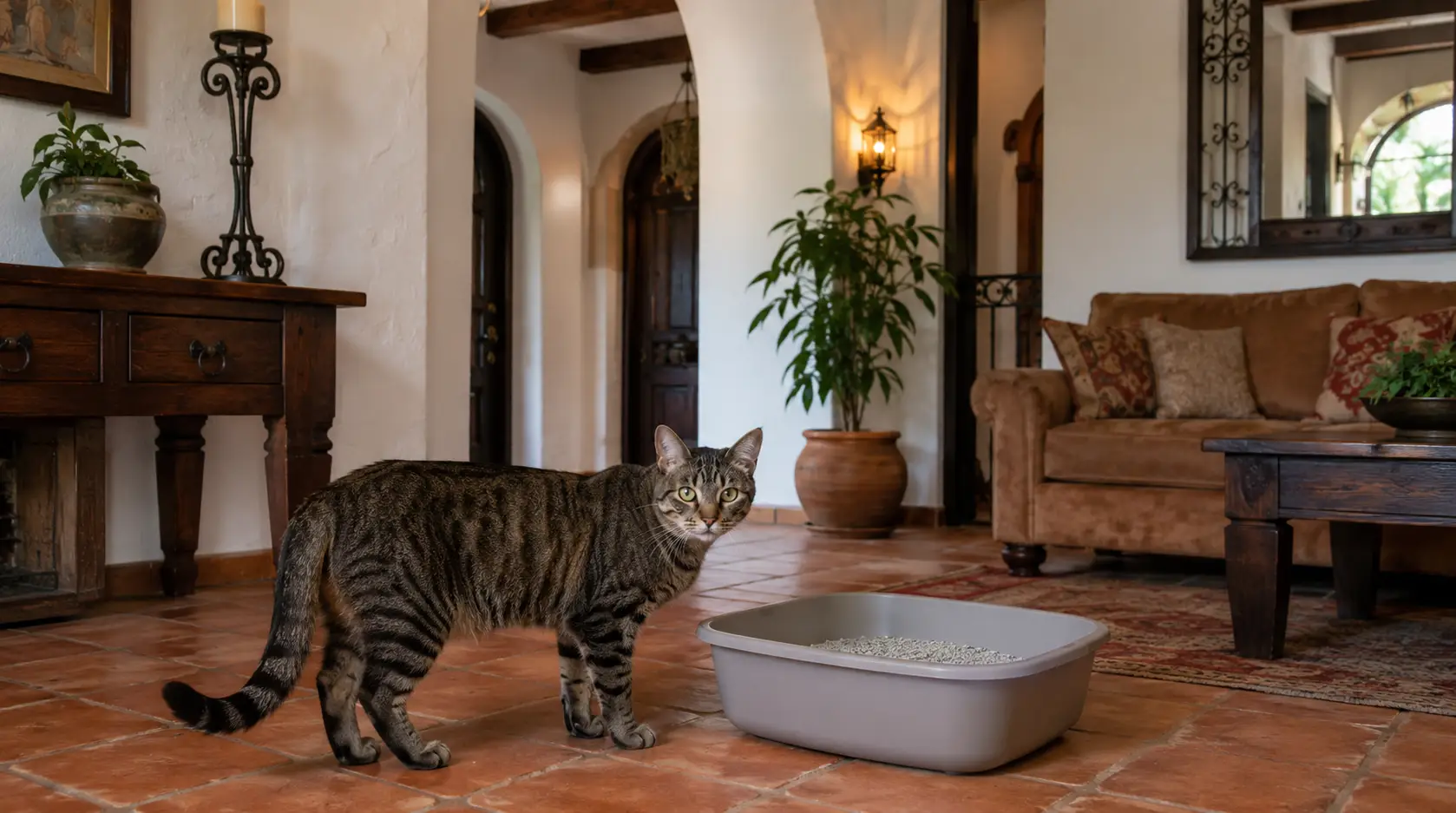
Illustrative home scene; confirm the linked model and dimensions.
Four Linked Litter Box Options
High-Sided Open Litter Box
Amazon Basics Large Litter Box with High Sides — Check current price on AmazonAutomatic Cleaning Litter Box
Neakasa M1 Plus Automatic Cat Litter Box — Check current price on AmazonTop Entry Covered Box
IRIS USA Large Top Entry Litter Box (Hooded) — Check current price on AmazonSifting Litter Box System
Arm & Hammer Sifting Litter Box with Microban — Check current price on AmazonWhat to Check Before Buying
Compare the actual box dimensions, entry height, enclosure and cleaning access. Check the selected listing’s model, included parts and instructions before buying.
Measure the usable interior and opening rather than relying on an outside size label. Check how the lid, door or tray comes apart for cleaning, and leave enough space around the box for your cat to approach and exit.
Keep a familiar, accessible box available while introducing a different design, and watch your cat’s response. A new box is not a substitute for veterinary assessment of changed bathroom habits.
Before choosing: Check interior dimensions, entry height, cleaning access and your cat’s current response. For an automatic model, read its specific cat-use and installation restrictions. Provide one box per cat plus one extra in separate accessible locations.
How to Choose the Right Cat Litter Box
Compare actual interior dimensions, the opening and cleaning access with your cat’s movement and your available space. Observe how your cat responds to an open or covered design.
Size
Check usable room for your cat to enter, turn, dig and exit. Covered boxes need enough usable space beneath the lid too; compare actual dimensions rather than relying on a large or extra-large label.
Entry Height
Check whether your cat can reach the opening and step in and out comfortably. If access has become difficult or painful, seek veterinary advice as well as reviewing the box and its location.
Cleaning Style
Compare the tasks each design still requires: removing waste, washing parts, refilling litter and checking for damage. Sifting and automatic systems need litter and maintenance compatible with their specific instructions.
Number of Boxes
Multi-cat homes usually need more than one litter box. A practical rule is to provide one box per cat, plus one extra, and place them in different accessible areas instead of grouping every box in one tight spot.
Browse by Litter Box Type
Jump to a design type below to compare its opening, interior space and maintenance checks. Confirm the actual linked model before buying.
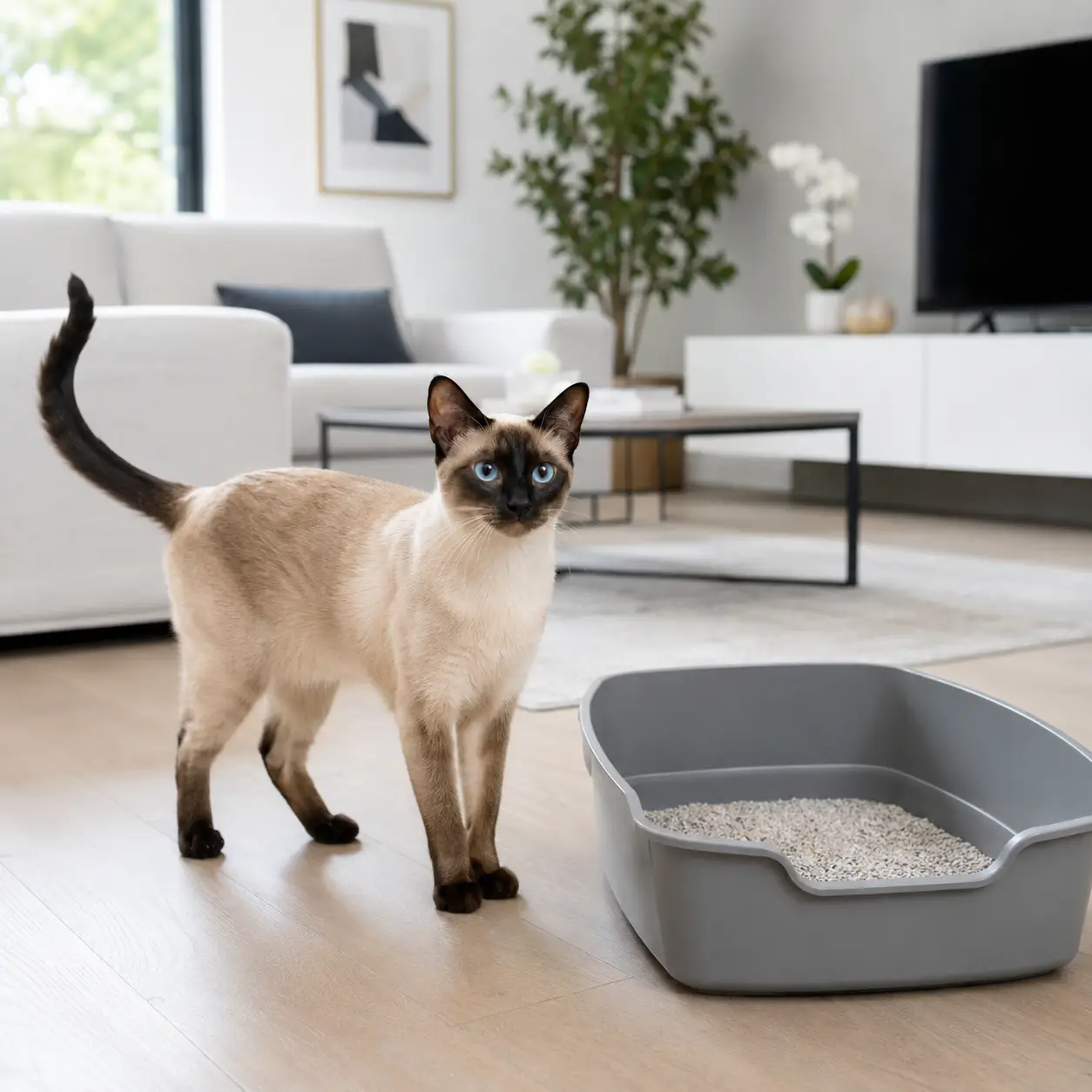
Illustrative box style; confirm the linked model and dimensions.
Open Litter Boxes
Check usable space and scooping access.
Jump to Open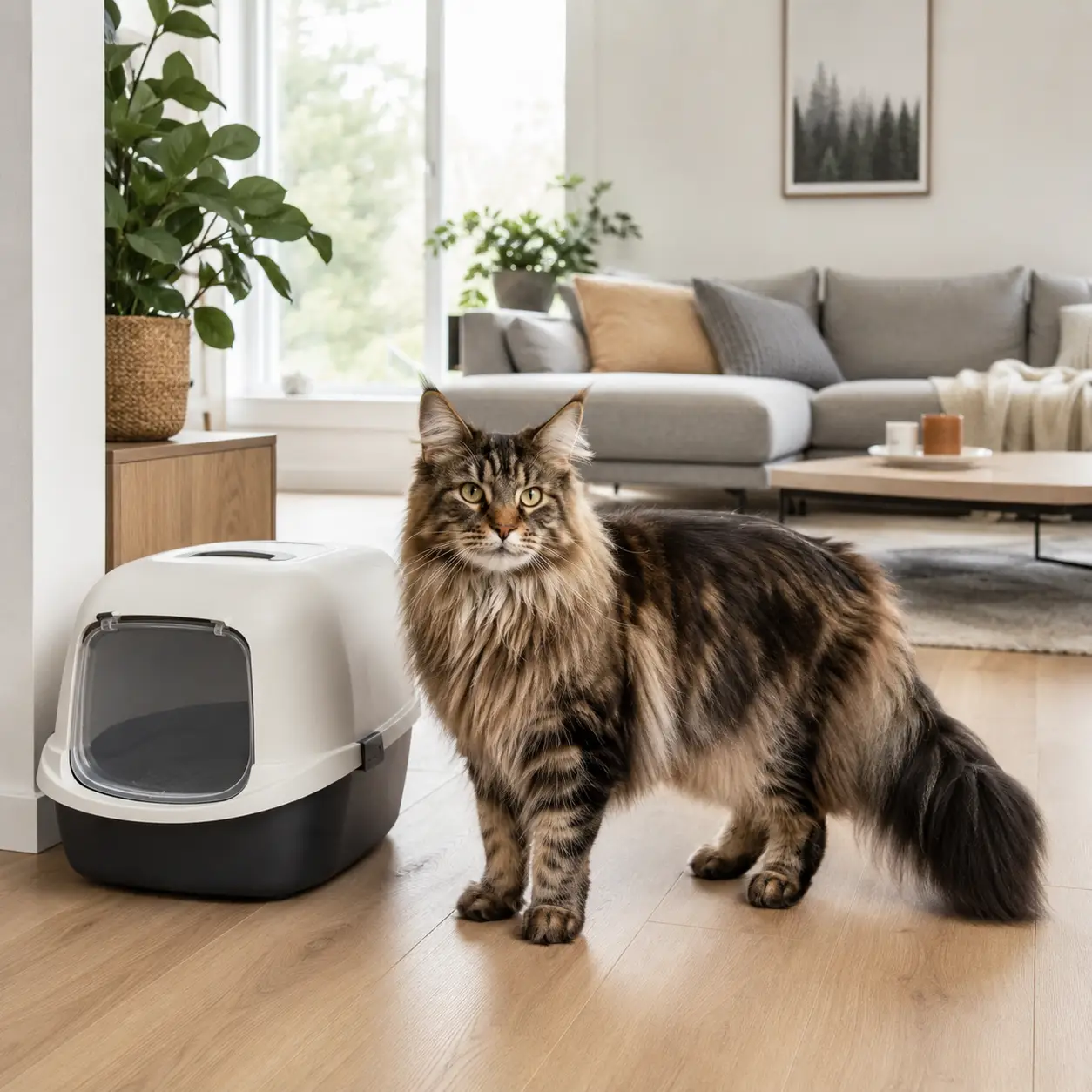
Illustrative box style; confirm the linked model and dimensions.
Covered Litter Boxes
Check enclosure, opening and cleaning access.
Jump to Covered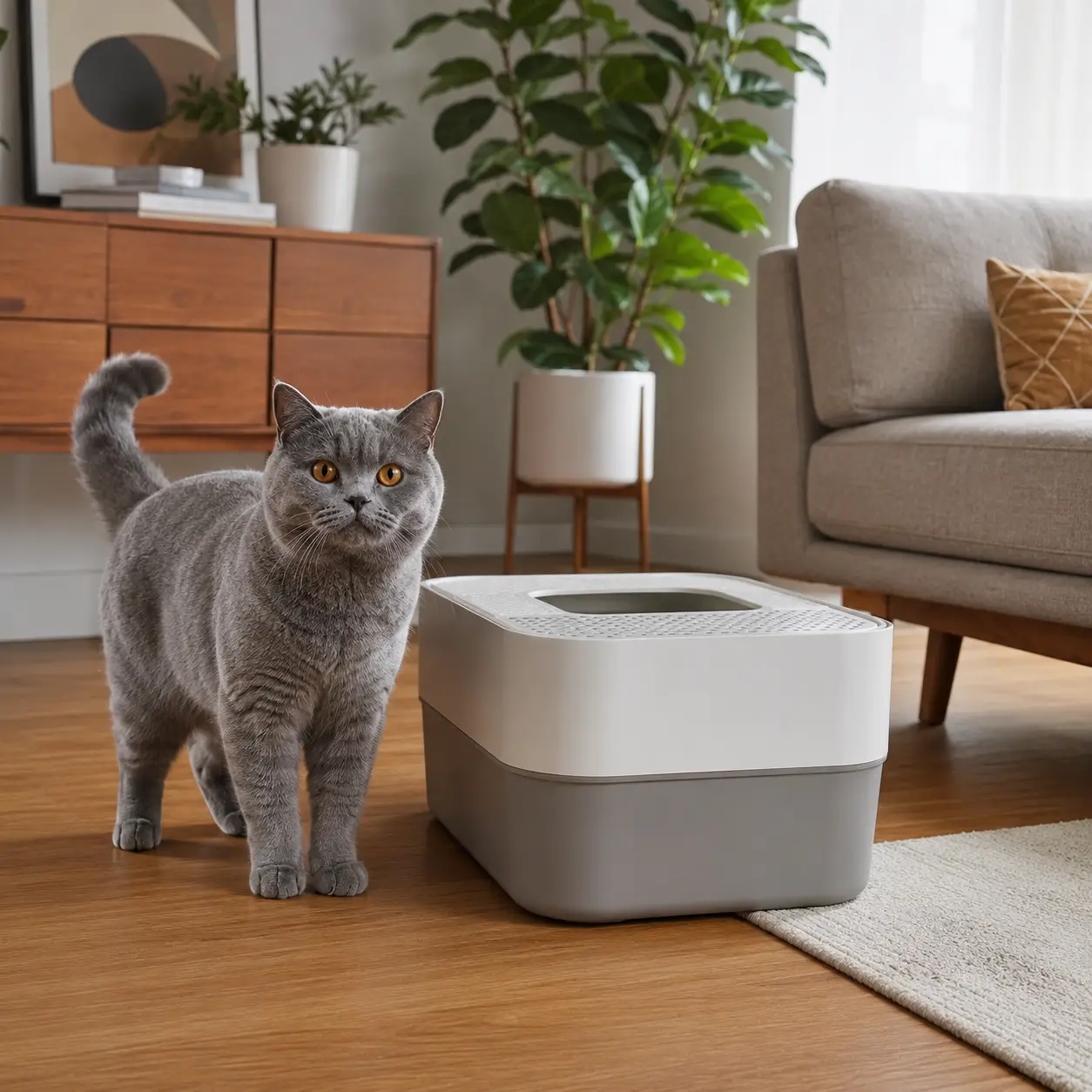
Illustrative box style; confirm the linked model and dimensions.
Top Entry Boxes
Check top-opening access and interior space.
Jump to Top Entry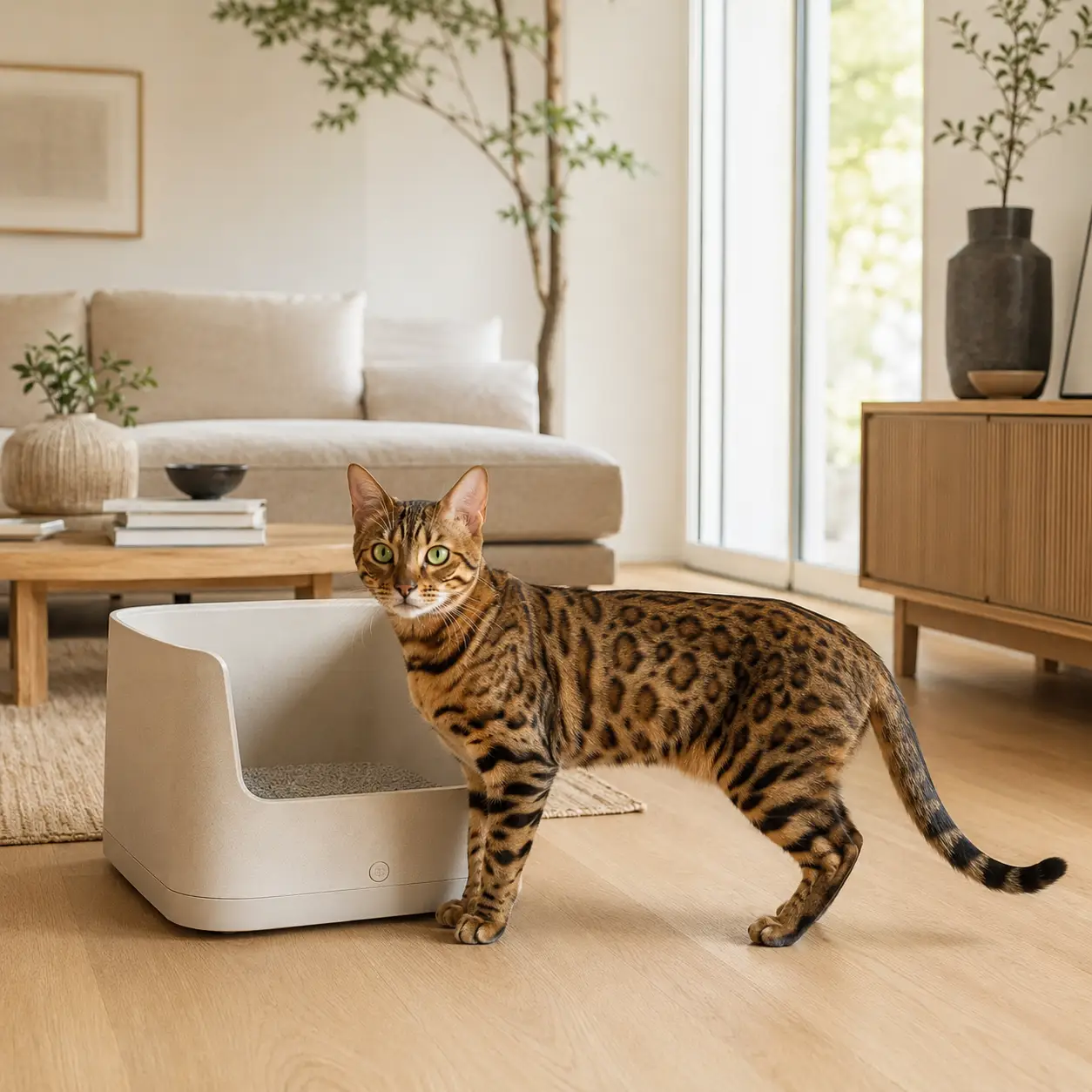
Illustrative box style; confirm the linked model and dimensions.
High-Sided Boxes
Compare wall height and entry height.
Jump to High-Sided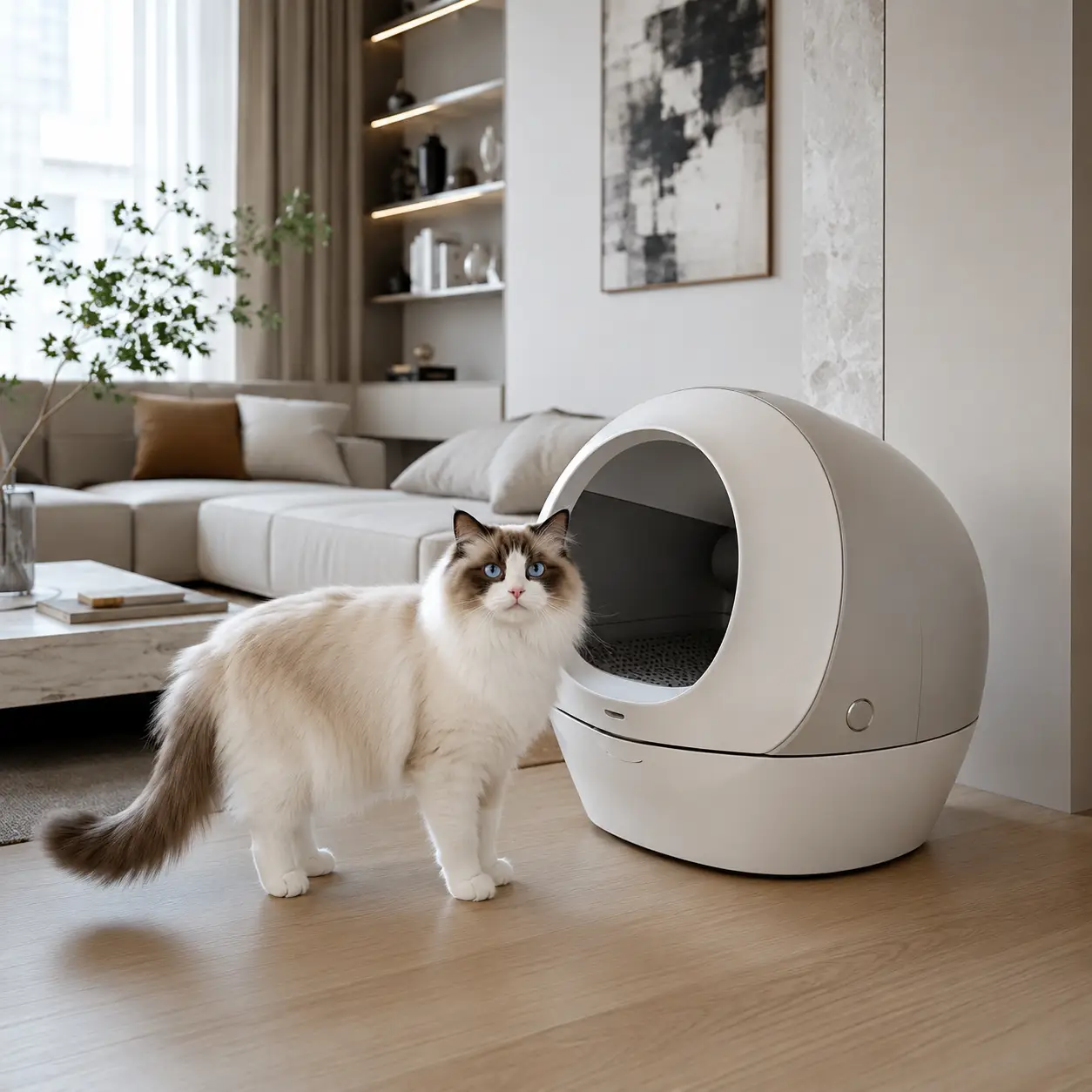
Illustrative device; follow the actual model’s cat-use and maintenance instructions.
Automatic Litter Boxes
Read model-specific use and maintenance rules.
Jump to Automatic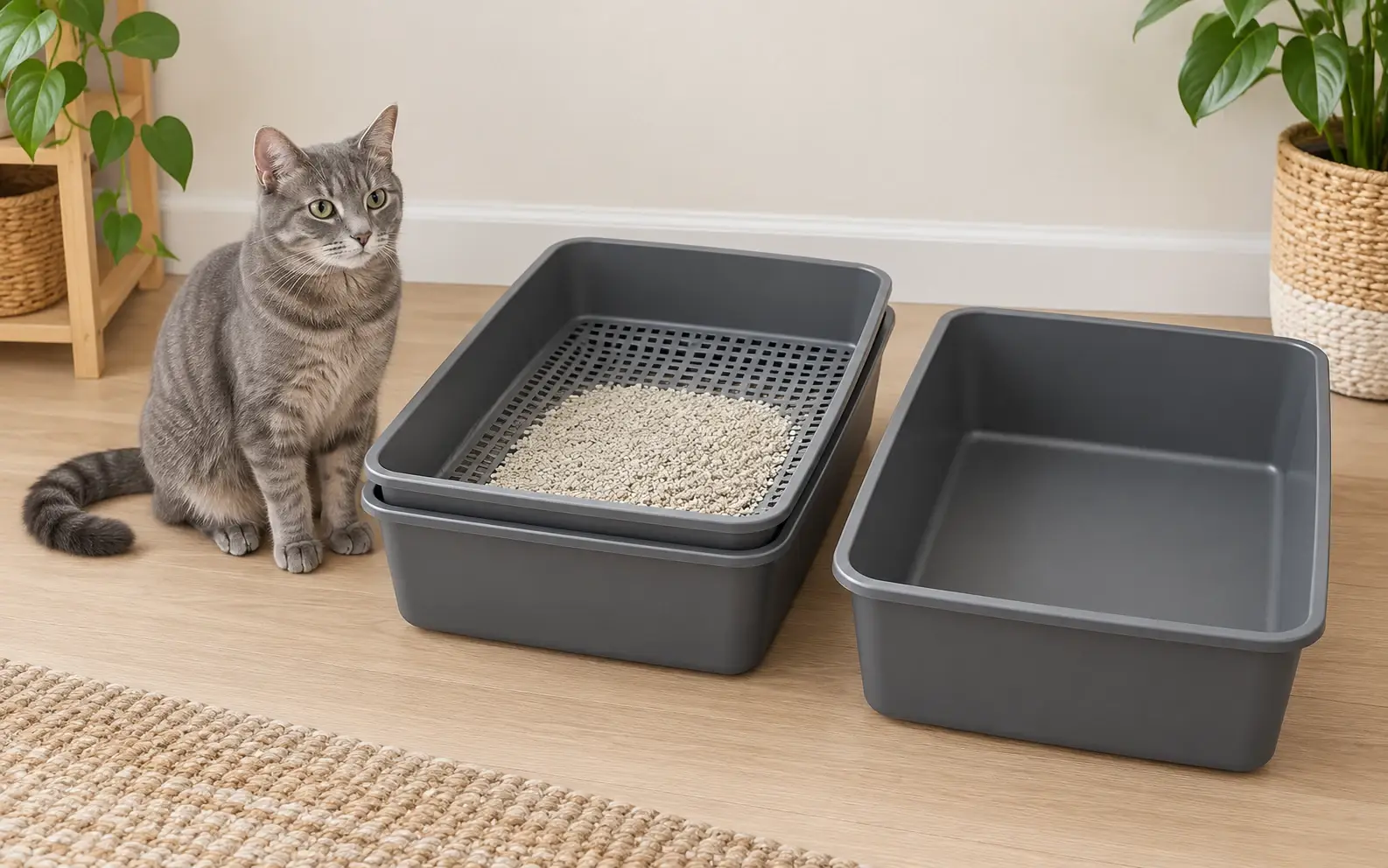
Generic sifting-tray illustration; check the linked model’s tray design and compatible litter.
Sifting Litter Boxes
Check tray assembly and litter compatibility.
Jump to SiftingOpen Litter Boxes
Open boxes have no enclosing hood. Compare usable floor space, wall and entry height, and room for scooping; observe how your cat uses the actual box.
Check access to the full pan for cleaning and inspect its condition. A basic open design does not by itself establish durability, fit or reduced mess.
Standard Open Litter Box
- Compare usable interior dimensions
- Check wall and entry height
- Allow access for daily inspection
Large Open Pan
- Confirm actual floor dimensions
- Check room to turn and exit
- Allow space for scooping
Low-Entry Open Box
- Confirm opening height
- Observe entry and exit
- Check interior room
Covered Litter Boxes
Covered boxes add an enclosure around the pan. Check the opening, usable room beneath the lid, ventilation and access for cleaning; enclosed space is not automatically more comfortable or better for odor.
Observe whether your cat enters and exits freely and continues using the box. A door or hood should be assessed with the actual cat; a change in use needs assessment rather than assuming that the enclosure is the cause.
Hooded Litter Box
- Check usable room under the hood
- Inspect opening and ventilation
- Allow access to remove and clean the lid
Covered Box with Door
- Check door opening dimensions
- Observe response to the flap
- Confirm cleaning access
Large Covered Box
- Confirm usable interior dimensions
- Check lid and opening clearance
- Observe entry and exit
Top Entry Boxes
Top-entry boxes place the opening above the pan. Compare opening dimensions, the height your cat must reach, interior room and access for cleaning.
Check whether your cat can use the actual top opening comfortably. Age or a healthy-adult label alone does not establish suitability; review movement limitations with your veterinarian and retain an accessible alternative.
Basic Top Entry Box
- Measure opening and access height
- Check usable interior room
- Observe entry and exit
Textured Lid Top Entry Box
- Inspect lid opening and texture
- Check access height and floor space
- Review lid-cleaning instructions
Large Top Entry Box
- Confirm actual interior dimensions
- Check opening and entry height
- Allow access for cleaning
High-Sided Boxes
High-sided boxes have taller walls around some or all of the pan. Compare wall height with entry height, usable floor space and scooping access; taller sides do not guarantee that all litter or urine stays inside.
A lower front opening may differ substantially from the height of the back and sides. Check the actual measurements and your cat’s entry and exit rather than relying on the high-sided label.
High-Sided Open Box
- Compare wall and entry height
- Confirm usable floor space
- Allow scooping access
Corner Space-Saver Box
- Measure the actual footprint
- Check entry and wall height
- Leave approach and exit space
Low Front / High Back Box
- Confirm front-entry height
- Compare usable floor space
- Observe entry and exit
Automatic Litter Boxes
Automatic boxes use a mechanism to move or separate waste. They still require emptying, cleaning, litter refilling and inspection. Compare the selected model’s instructions, required space and ongoing supplies.
Read the selected model’s cat-use limits, installation directions and cleaning-cycle instructions before use. Check how your cat responds, and keep a familiar box available during transition; automatic does not mean appropriate for every cat.
Self-Cleaning Automatic Box
- Read model-specific cat-use limits
- Confirm installation and cycle instructions
- Plan for emptying and washing
Open Style Automatic Box
- Check the actual opening
- Read cat-use and cycle restrictions
- Keep a familiar box during transition
Large Capacity Automatic Box
- Confirm interior and waste-tray dimensions
- Read model-specific cat-use limits
- Empty and clean as instructed
Sifting Litter Boxes
Sifting systems separate litter through a tray or screen. Check the selected system’s assembly and litter compatibility, and compare how you will remove waste, clean the trays and refill it.
Inspect how the actual trays fit together and come apart. Follow the model’s permitted litter types and cleaning directions; a sifting label does not establish the same compatibility or cleaning workload across products.
Basic Sifting Pan System
- Confirm permitted litter types
- Check how the trays assemble
- Compare emptying and washing tasks
Lift-and-Sift Box
- Confirm litter compatibility
- Check tray-lifting and cleaning access
- Follow assembly directions
Sifting Box with High Sides
- Compare wall and entry height
- Check tray and litter compatibility
- Allow room for cleaning
Litter Box Access Checks for Kittens
Check that a kitten can reach the opening and use the interior comfortably. If considering an automatic model, follow its specific age, weight and operating restrictions rather than assuming kitten suitability.
Litter Box Access Checks for Senior Cats
Check your older cat’s actual entry, turning and exit. Review new difficulty or discomfort with a veterinarian, and consider accessible placement and the box opening as part of that review.
Cat Litter Box Tips
Check the actual dimensions, entry and placement against your cat’s movement and response. New or persistent avoidance needs assessment; box size or enclosure alone does not identify the cause.
Scoop the litter box daily when possible, especially with clumping litter. Regular scooping keeps the box more inviting and helps you notice changes in your cat's bathroom habits sooner.
Follow the box and litter cleaning instructions, and inspect for cracks, damage and residue that cannot be removed. Replace damaged parts or the box when needed rather than assuming every worn surface has the same effect.
Keep the litter box in a quiet, accessible location and avoid placing it where the cat may feel trapped, disturbed, or rushed while using it. If you introduce a new litter box style, do it gradually and keep the old box available during the transition.
Litter Box Tips (Read This)
- Choose the right size: Your cat should be able to enter, turn around, dig, and exit comfortably.
- Use enough boxes: A practical rule is one litter box per cat, plus one extra, especially in multi-cat homes.
- Scoop daily: Removing clumps and waste every day helps keep the box more inviting.
- Inspect condition: Follow cleaning instructions and replace damaged parts or boxes when needed.
- Check entry: Observe whether your cat can enter and exit comfortably.
- Place it wisely: Quiet, low-stress locations usually work best.
- Observe response: Compare actual opening, interior room and continued use.
Cat Litter Box FAQ
How many litter boxes should I have?
A practical rule is one litter box per cat, plus one extra. This is especially helpful in multi-cat homes because it gives cats more choices and can reduce conflict around one shared box.
Are covered litter boxes better than open boxes?
Neither design is automatically better. Compare actual interior space, opening and cleaning access, then observe your cat’s response. A hood is not a guarantee of odor control or comfortable use.
Are top-entry litter boxes good for all cats?
No. Check the actual opening and whether your cat can enter and exit comfortably. Keep an accessible alternative and seek advice about movement difficulties; a healthy-adult label alone is not a suitability check.
How often should I scoop a litter box?
Daily scooping is best for most households, especially when using clumping litter. Regular cleaning helps reduce odor and keeps the box more appealing to your cat.
What is the best litter box for a messy cat?
Compare usable space, entry height and wall height, and observe where litter or urine leaves the actual box. A high wall or top opening is not a guarantee of containment; new changes in use need veterinary assessment.
Where should I put a cat litter box?
Place the litter box somewhere quiet, easy to reach, and low-stress. Avoid trapping the box in a noisy or hard-to-access area where your cat may feel rushed or cornered.