
Menu
Aquatic turtles are messy pets. They eat in the water, drag food around, shed skin, kick up debris, and produce more waste than many beginner filters are built to handle. That is why a weak filter usually leads to cloudy water, odor, and constant cleanups.
A good canister filter gives a turtle tank more mechanical waste trapping, more room for biological media, and stronger water movement than most basic filters. The goal is not to avoid maintenance completely. The goal is to make the tank easier to manage and keep the water more stable between cleanings.
The best canister filter depends on tank size, turtle size, waste load, and how much room you have beside or under the aquarium. For turtles, it is usually smarter to choose more filter capacity than the bare minimum.
| Best Pick | Filter Type | Best For | Main Strength | Main Tradeoff |
|---|---|---|---|---|
| Best Compact | Compact Turtle Canister Filter | Small to mid turtle tanks | Cleaner setup than most basic hang-on-back filters | More setup and maintenance than simpler filters |
| Best Mid-Size | Cylindrical Turtle Canister Filter | 40–75 gallon turtle tanks | Strong balance of flow, media space, and footprint | Higher upfront cost than HOB units |
| Best for Long Tanks | Rectangular Turtle Canister Filter | Long turtle tanks | Tray-style media layout and steady circulation | Bulkier footprint and longer setup |
| Best Large-Tank Option | Drum-Style Turtle Canister Filter | 55–125+ gallon turtle tanks | High media volume plus stronger turnover | Heavy and takes more room |
| Best Heavy-Duty Pick | High-Capacity Drum Canister Filter | Adult turtles and heavy waste loads | Maximum media space and strongest heavy-load performance | Highest size and cost commitment |
Turtle filtration is different from fish filtration. With fish, you can often size a filter close to the aquarium volume. With turtles, the waste load is heavier, so the better move is to give yourself extra filtration capacity from the start.
Bigger media baskets or trays give you more room for sponges, pads, ceramic rings, and other biological media. That matters because turtle tanks need both solid waste trapping and stable biological filtration.
A powerful filter is only useful if you can realistically maintain it. Choose a style you can lift, open, rinse, and restart without turning every cleaning into a project.
Turtles grow, and their waste load grows with them. If you are between two sizes, the stronger option usually gives you more breathing room and cleaner water between service days.
For most turtle setups, choose a filter rated above the actual water volume in the tank. Turtle tanks are often filled below the top, but the animal still produces a heavy bio-load. A filter with extra flow and media capacity gives the tank a better safety margin.
Hang-on-back filters can work for smaller or temporary turtle setups, but they usually have less media space and can clog quickly when the turtle is messy. Canister filters are better for long-term turtle tanks because they hold more media, sit outside the tank, and usually handle heavier waste more effectively.
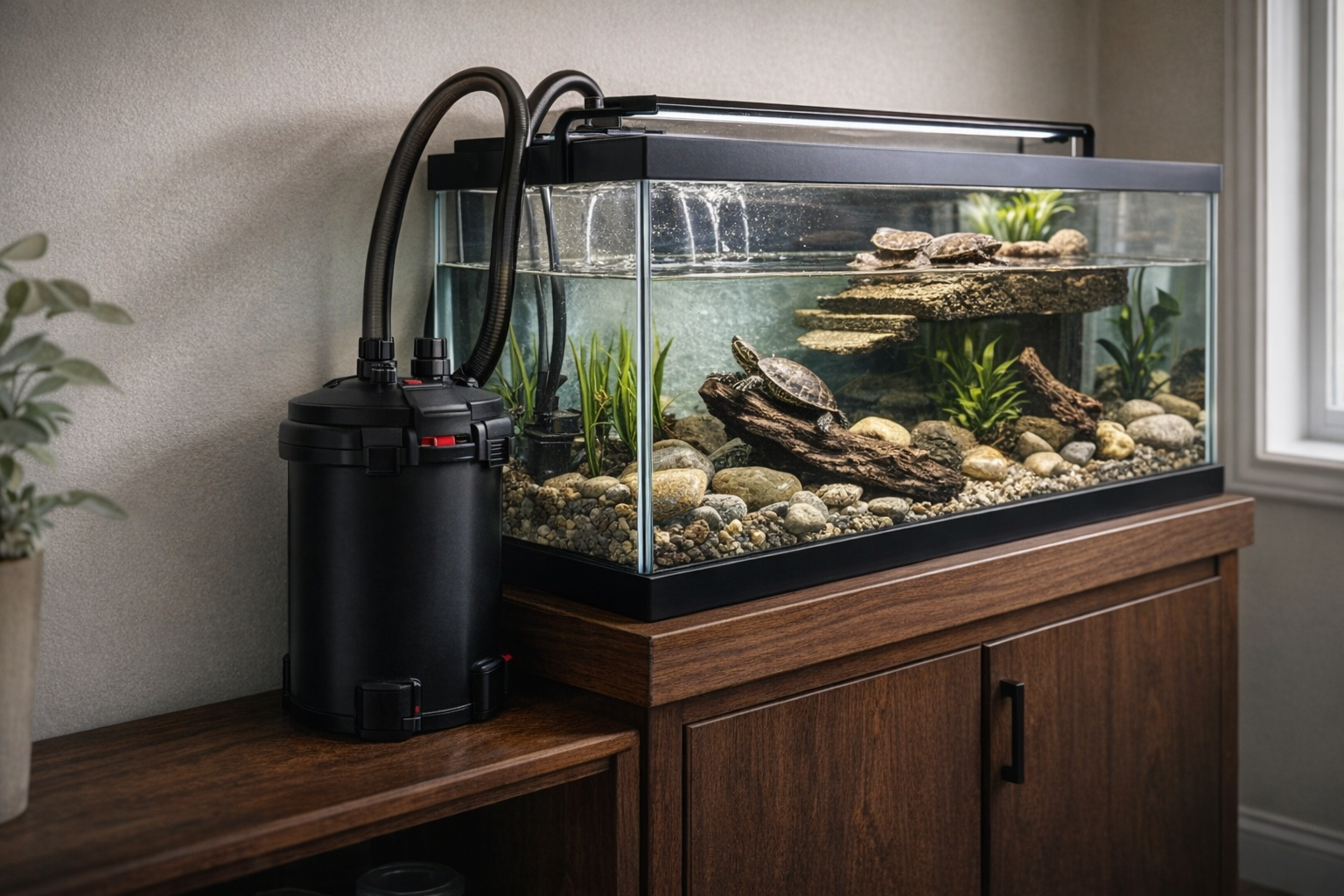
This is the style I would look at when a basic hang-on-back filter is no longer keeping up, but the tank is not big enough to justify a huge floor-standing filter. It gives you a cleaner-looking setup, more room for filter media, and better waste control without taking over the whole cabinet area.
It is a practical fit for smaller aquatic turtle setups, juvenile turtles, or keepers who want a real upgrade without jumping straight into a heavy-duty canister. You still need to clean the mechanical media regularly, but the extra capacity makes the tank easier to manage.
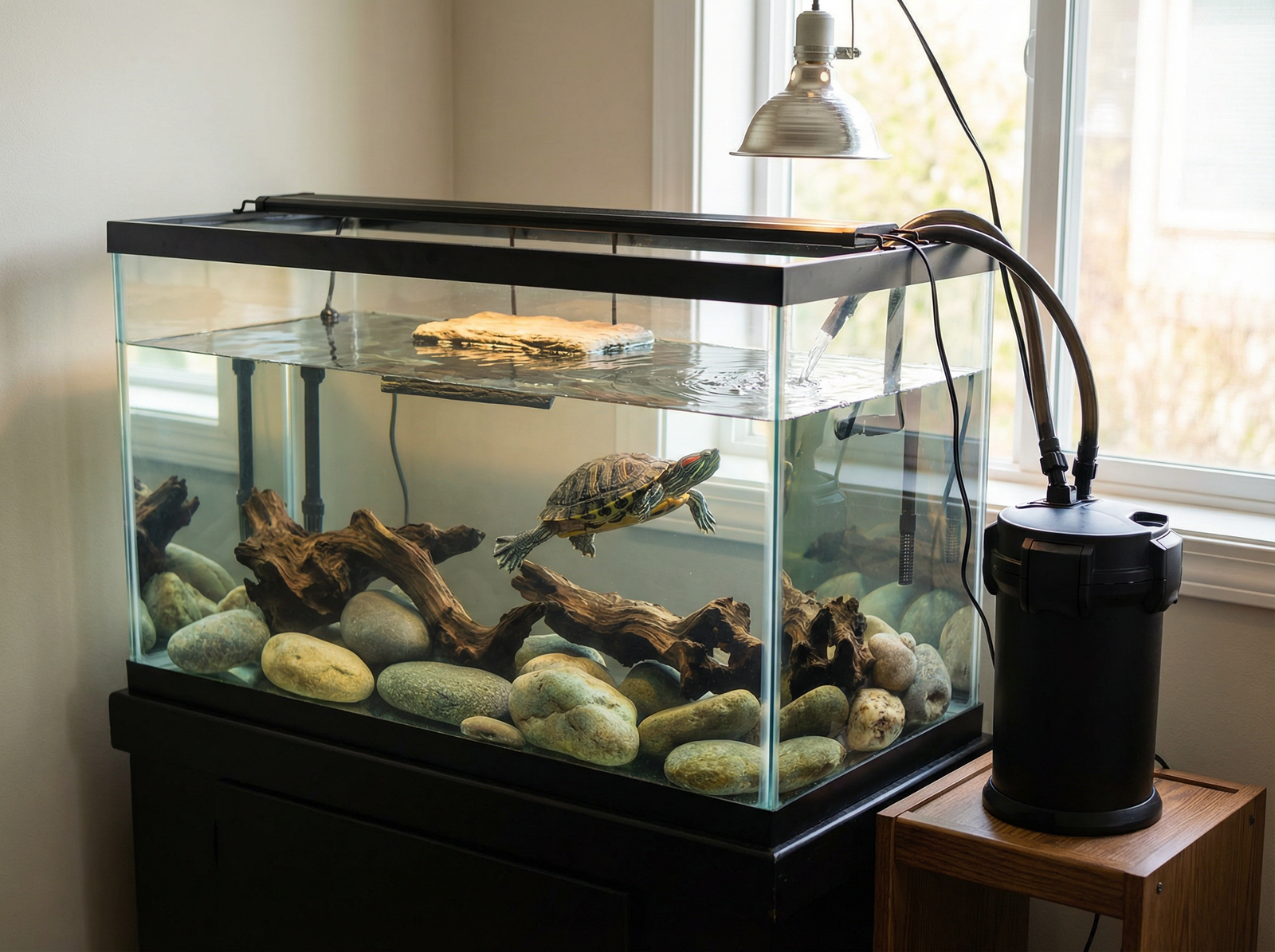
This is the kind of canister filter that makes sense once a turtle is growing and the tank needs stronger circulation, better waste pickup, and more biological media space. It is not the biggest option on the page, but it gives a nice balance of power, size, and everyday usability.
For many medium turtle tanks, this is the sweet spot. It gives you more serious filtration than a small unit, but it is still easier to place, lift, and service than the largest drum-style filters.
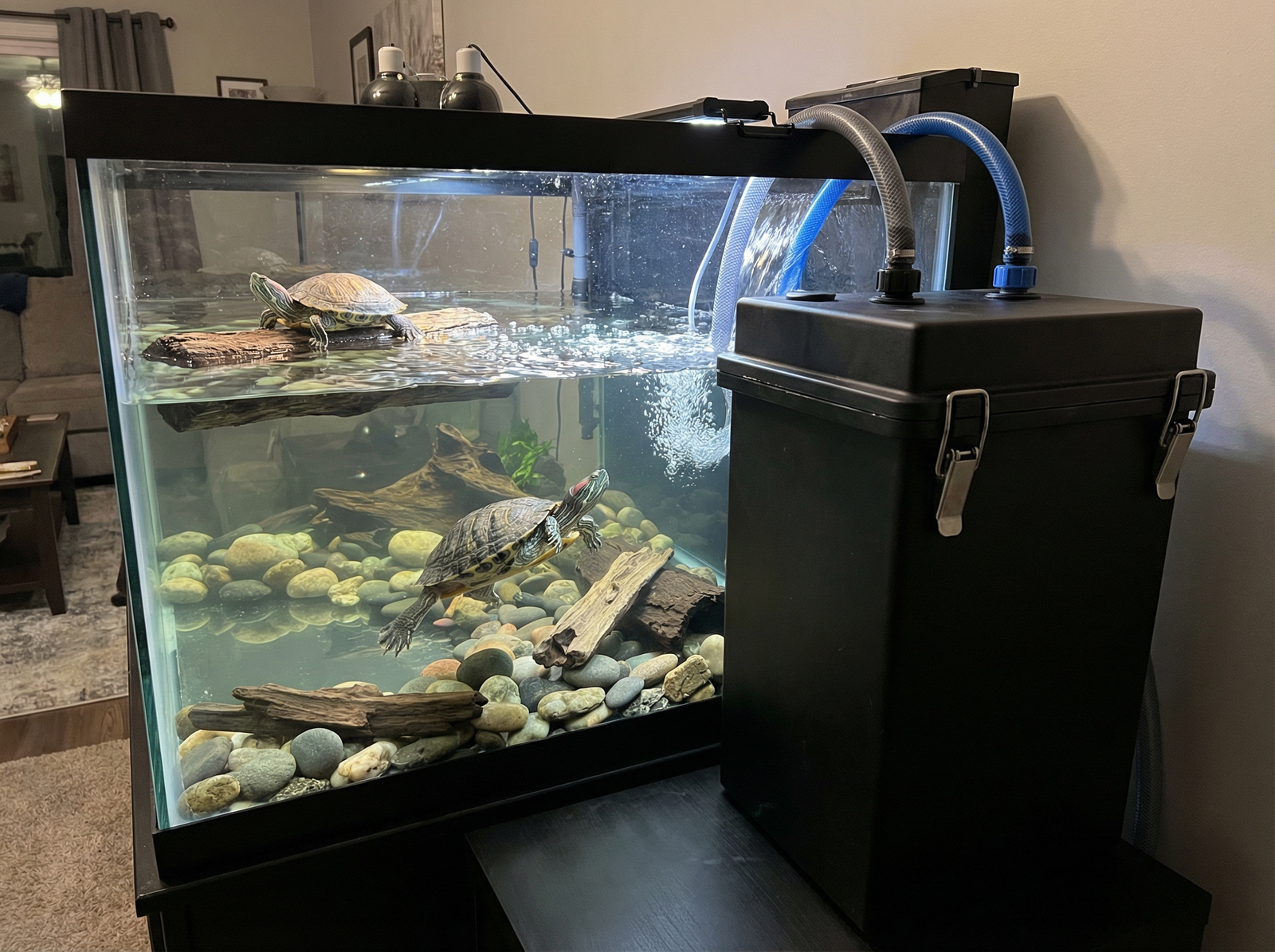
Long turtle tanks can be tricky because waste does not always move toward the intake evenly. This style is useful when you want more media organization and better circulation across the length of the aquarium instead of relying on one small filter area to do all the work.
The tray-style layout is the main advantage. It lets you separate mechanical and biological media more cleanly, which helps when you are dealing with turtle waste, leftover food, and cloudy water problems.
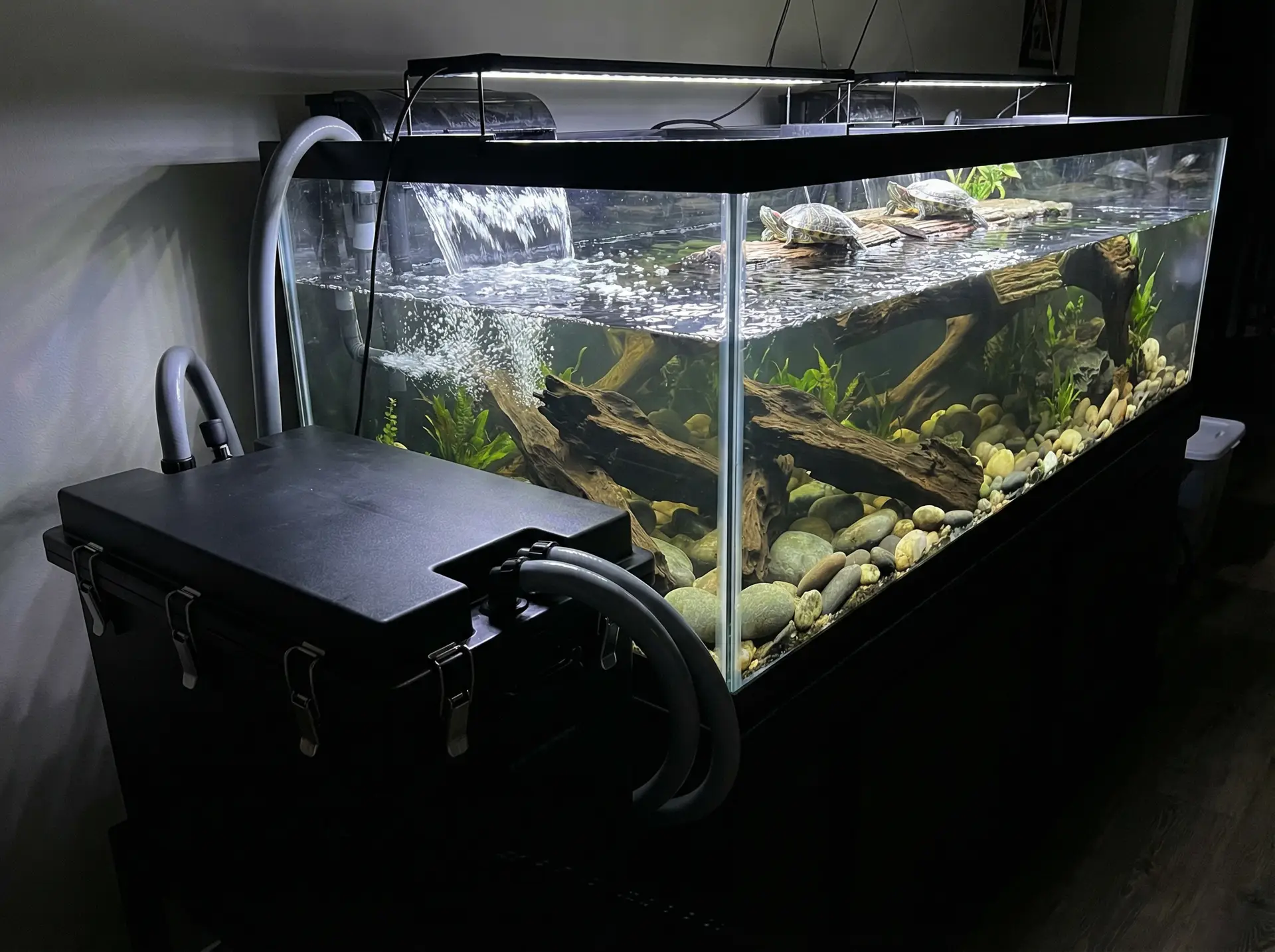
Once a turtle tank gets larger, a small filter can become frustrating fast. This drum-style option is for bigger systems where you need more media volume, stronger turnover, and a filter that can handle heavier waste without feeling undersized from day one.
It takes more room and it is heavier to service, but that is the tradeoff for stronger filtration capacity. For large turtle tanks, that extra size can make the difference between constantly fighting cloudy water and having a setup that is easier to keep under control.
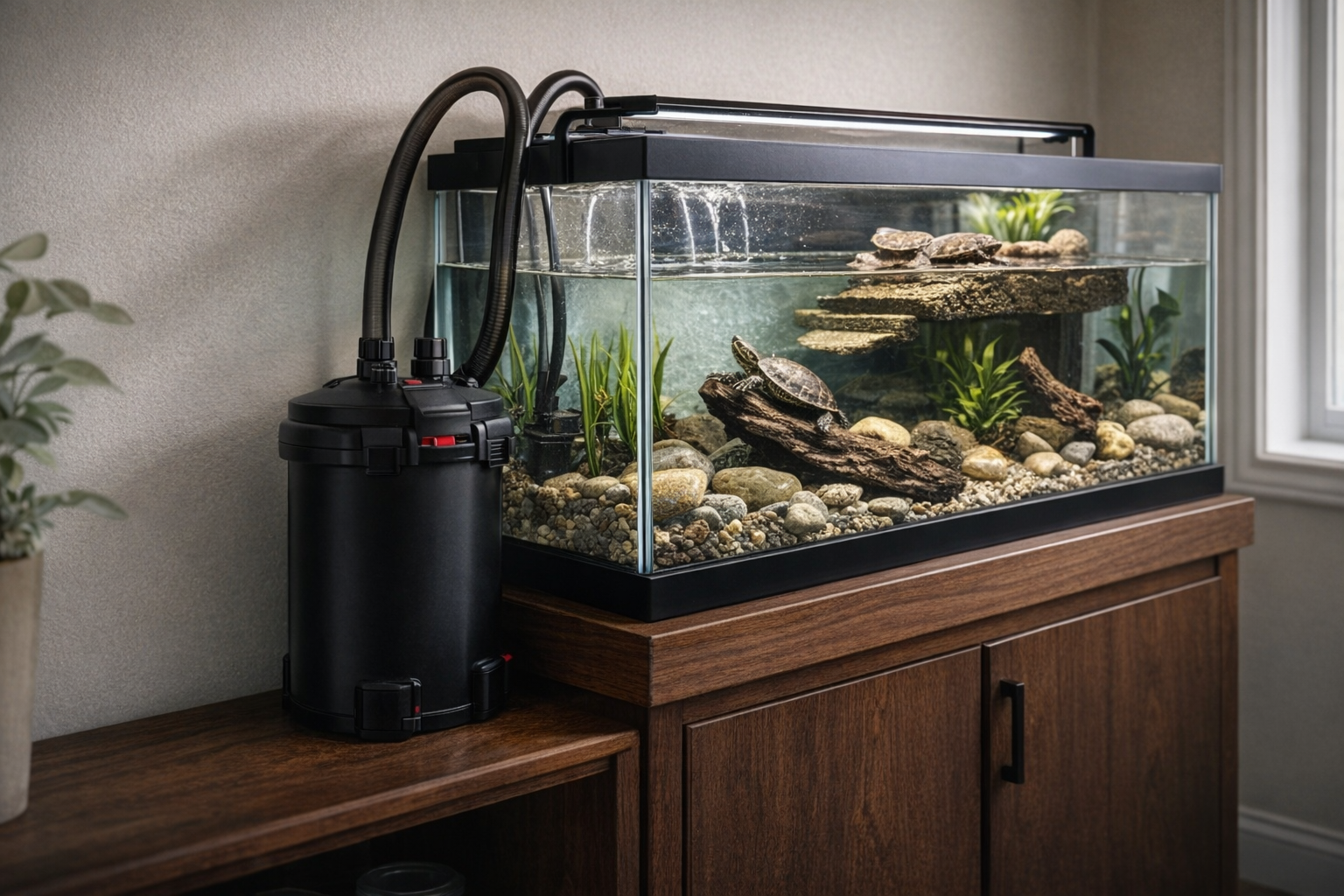
This is the heavy-duty choice for adult turtles, larger aquariums, and tanks that seem to get dirty no matter how often you clean. The main advantage is simple: more media space, stronger water movement, and more room to trap waste before it breaks down in the tank.
If your turtle is already full-grown or the tank has a serious bio-load, this is the style that gives you the most breathing room. It is not the smallest or cheapest option, but it is the kind of filter you look at when under-filtering has become the problem.
For turtle tanks, the biggest things are mechanical waste handling, media capacity, and real-world maintenance. A filter can look strong on paper, but if it clogs fast or is miserable to service, it will not stay effective.
The best pick is usually the one that gives you more capacity than you think you need. Turtles are harder on filtration than many people expect, and a slightly stronger filter is usually easier to live with than one that is barely keeping up.
A strong canister filter helps with water clarity and waste control, but it does not replace regular care. Turtle tanks still need water changes, rinsed mechanical media, and routine filter service. The more waste your turtle produces, the more important that schedule becomes.
A simple pre-filter sponge on the intake can also help catch larger debris before it reaches the canister. That can make cleanings easier and help prevent the mechanical stages from clogging too quickly.
For many permanent turtle tanks, yes. Canister filters usually give you more media space, stronger water movement, and better waste-handling capacity. Hang-on-back filters can still work for smaller or temporary setups, but they often get overwhelmed faster with turtles.
In most cases, yes. Turtles create a heavier waste load than many fish, so choosing a filter with extra capacity is usually a better move than picking one that barely matches the tank volume.
It depends on turtle size, feeding habits, tank size, and how much solid waste collects in the filter. Many turtle keepers need to rinse mechanical media regularly and do deeper filter maintenance as flow slows down or debris builds up.
No. A canister filter helps remove debris and support biological filtration, but it does not eliminate the need for water changes. Turtle tanks still need fresh water and routine maintenance to stay healthy.
The biggest mistake is under-filtering. A filter that works fine for fish may not be enough for a turtle. If the water gets cloudy quickly, smells bad, or the filter clogs constantly, the setup may need more filtration capacity.
Building a cleaner turtle setup usually takes more than one piece of equipment. These guides can help you finish the rest of the habitat.