
Menu
Cloudy water after cleaning is common, but the cause depends on whether the water looks dusty, milky, or green.
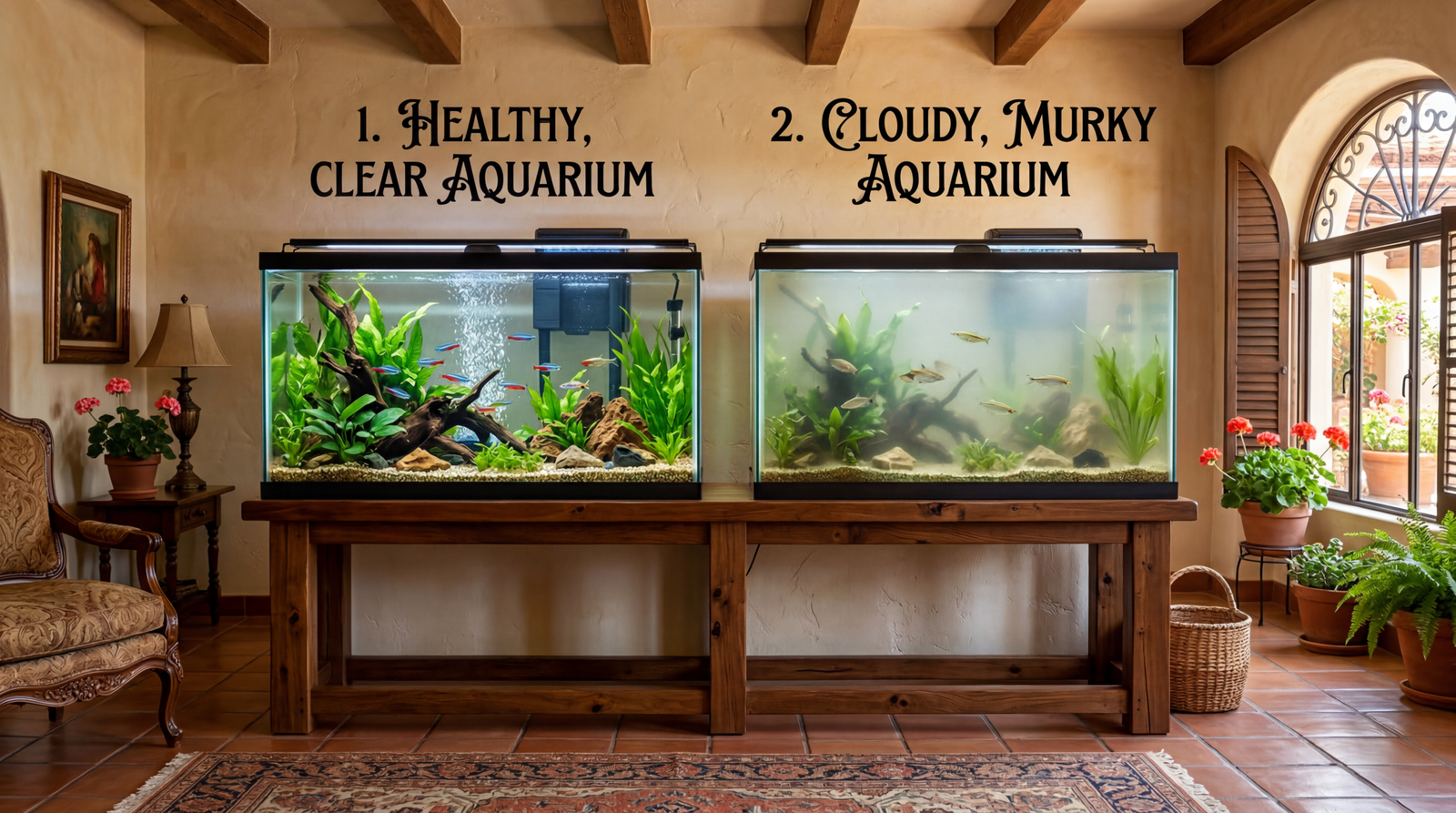
If your fish tank turns cloudy right after cleaning, it does not always mean you did something wrong. Most of the time, something in the tank was stirred up or the aquarium was knocked a little out of balance during maintenance.
Gravel dust, tiny waste particles, leftover food, algae, or a short bacterial bloom can all make the water look cloudy. The key is figuring out what kind of cloudiness you are seeing before you start changing more water or cleaning the tank again.
Before you clean more, pause and check the basics. A cloudy tank can sometimes clear on its own, but you want to make sure the fish are safe first.
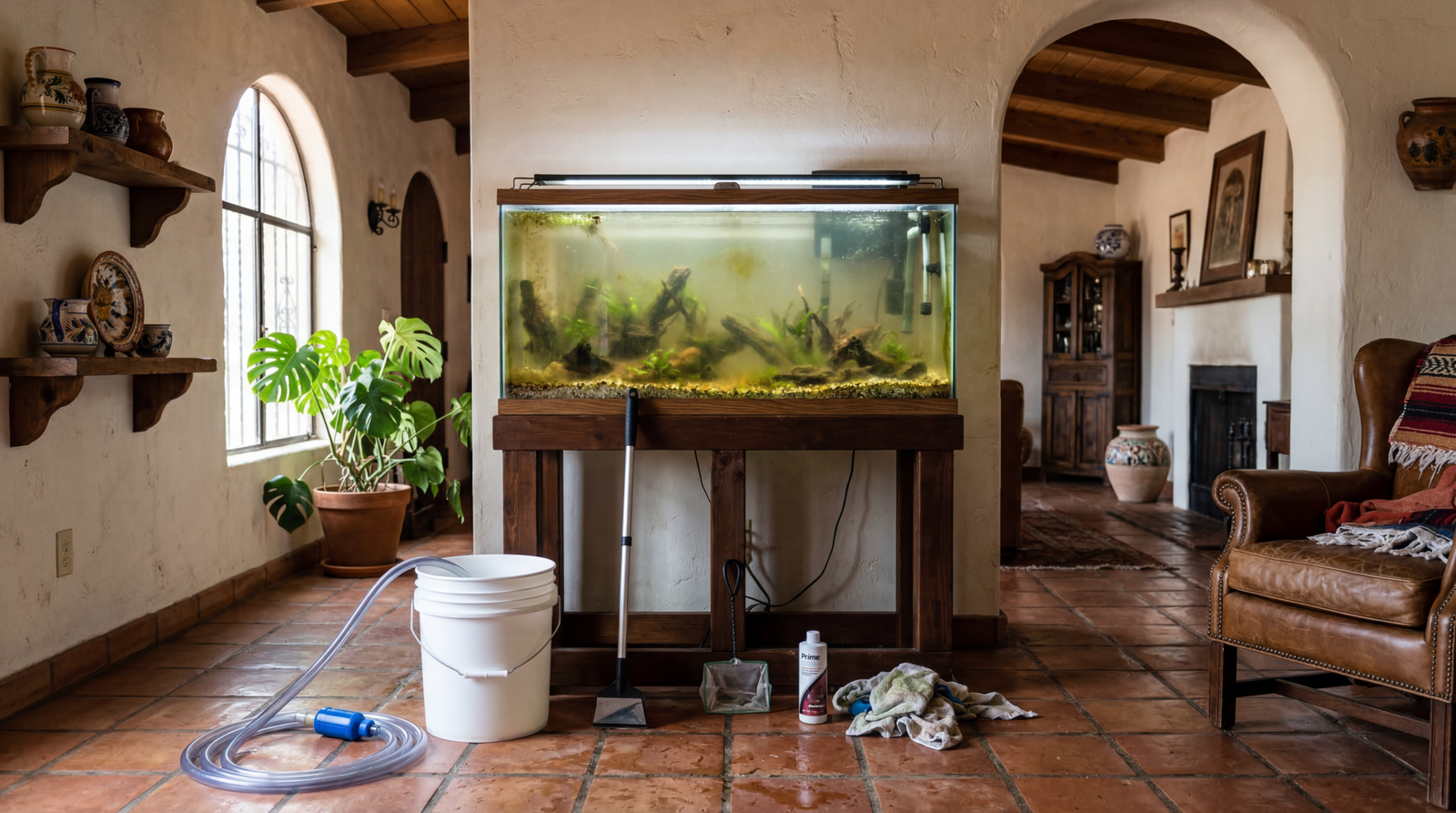
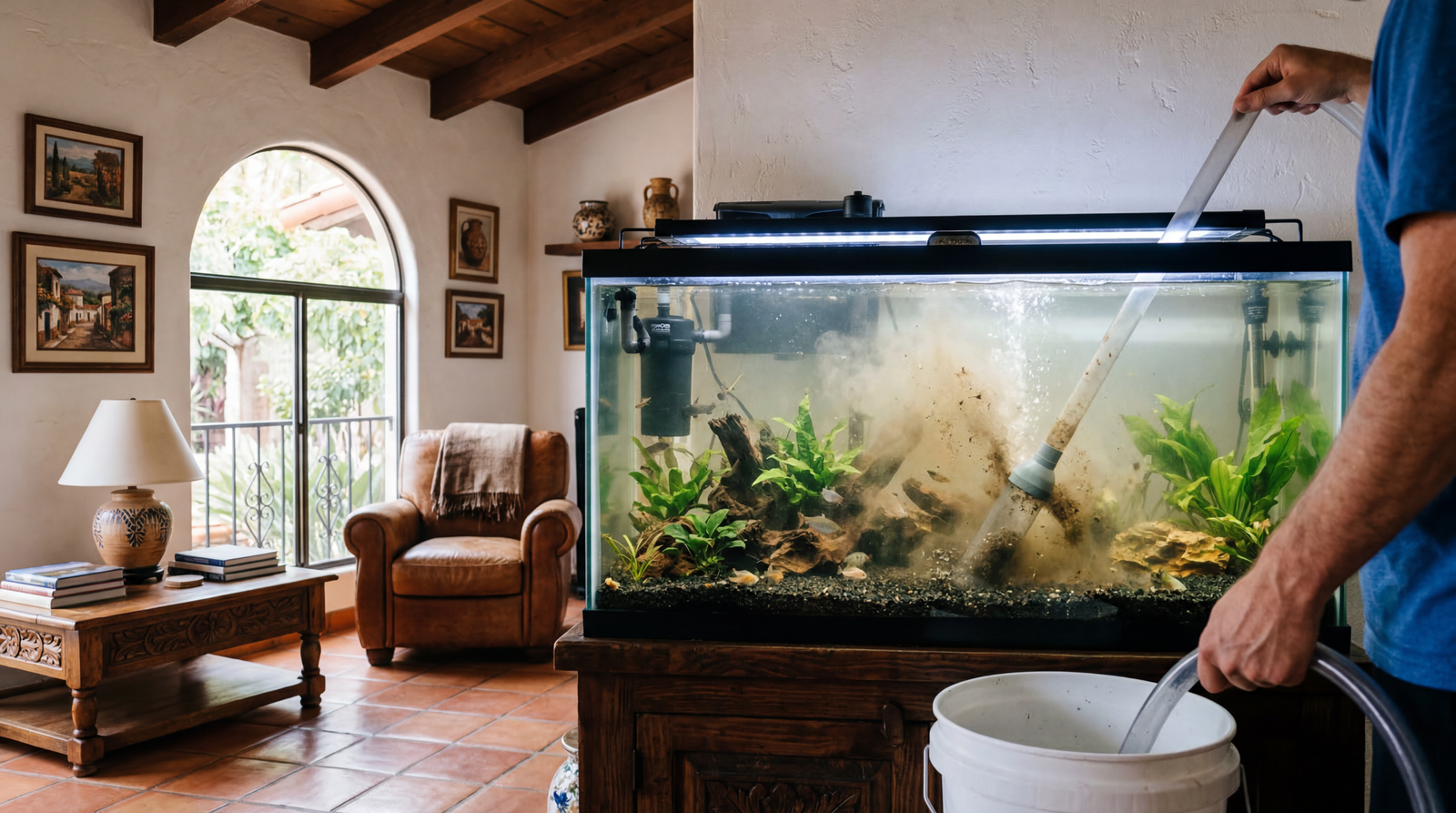
One of the most common reasons a fish tank gets cloudy after cleaning is disturbed gravel or sand. When you vacuum the substrate, move decorations, trim plants, or scrub near the bottom of the tank, tiny particles can lift into the water and make the aquarium look dusty or muddy.
This type of cloudiness is usually not a major problem if your fish are acting normal and the filter is working. The filter can catch some of the fine particles, and heavier debris often settles back down on its own.
The best move is usually patience. Avoid tearing the tank apart again right away. More scrubbing, more gravel vacuuming, or another big water change can keep stirring the same particles back into the water.
If the water looks white, cloudy, or milky after cleaning, the tank may be going through a bacterial bloom. This can happen when the aquarium’s balance gets disturbed, especially if too much beneficial bacteria was removed during cleaning.
Beneficial bacteria live mostly on surfaces inside the tank, including filter media, gravel, decorations, and hardscape. If you scrub everything at once, rinse filter media under untreated tap water, or replace too much filter material, the tank may need time to stabilize again.
Light milky water can clear on its own, but it should not be ignored if your fish look stressed. If ammonia or nitrite is present, the cloudy water is no longer just a cosmetic issue.
Not all cloudy aquarium water means the same thing. White or gray cloudiness usually points to stirred-up debris or a bacterial bloom. Green cloudy water usually points to algae.
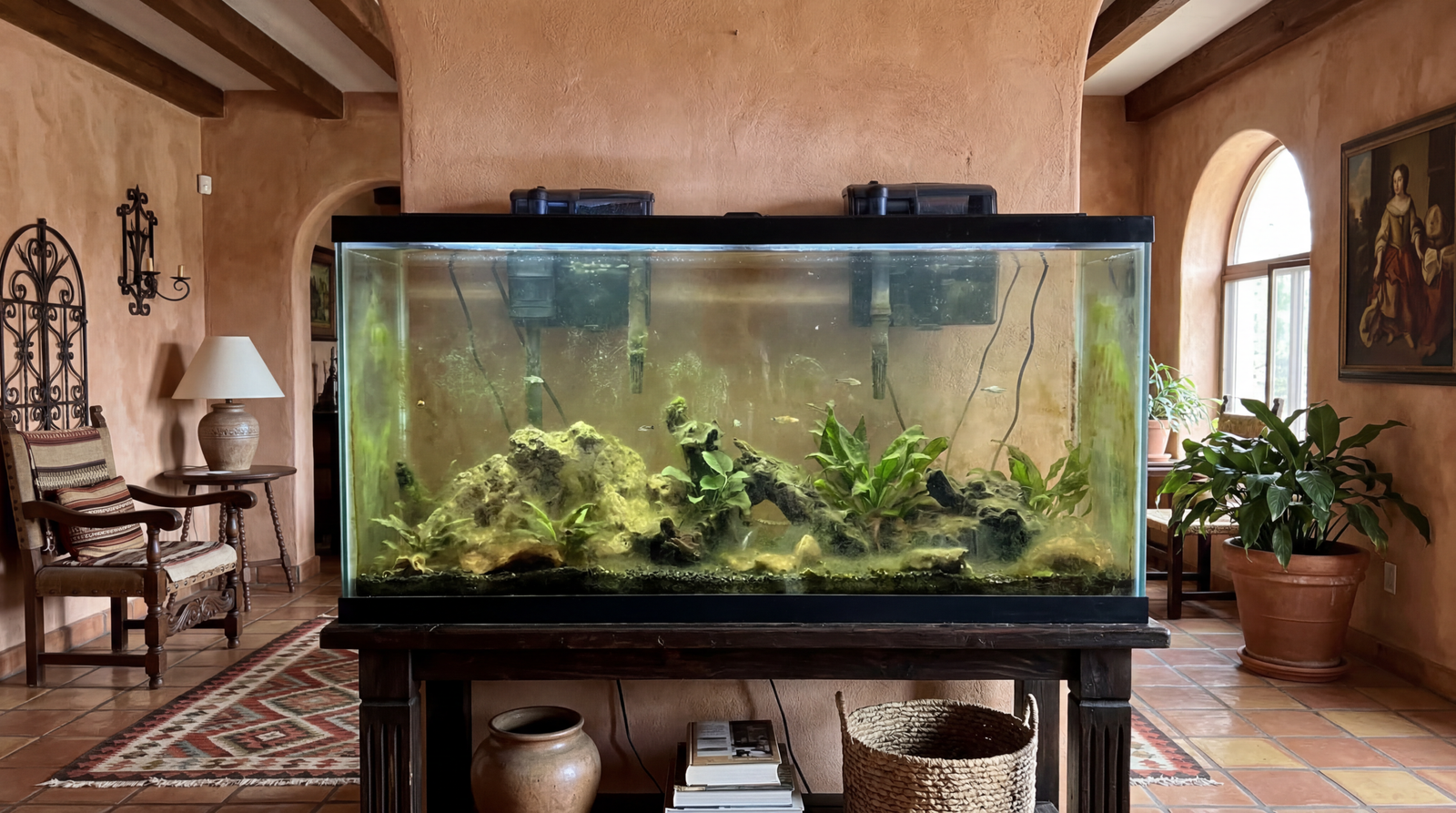
Green water can show up when the tank gets too much light, too much food, or too many nutrients in the water. Cleaning the glass may make the tank look better for a short time, but algae usually comes back if the cause is still there.
To reduce algae-related cloudiness, keep the tank out of direct sunlight, avoid overfeeding, remove uneaten food, and stay on a steady maintenance schedule instead of doing one huge cleanup once in a while.
A water change is supposed to help the tank, but changing too much at once can sometimes cause stress. This is especially true if the new water was not treated, the temperature was very different, or the tank already had a weak biological filter.
Tap water may contain chlorine or chloramine, which should be neutralized with aquarium water conditioner before the water goes into the tank. Sudden changes in water chemistry can stress fish and make the aquarium look cloudy while the system adjusts.
For routine maintenance, smaller and more consistent water changes are usually safer than waiting too long and then doing a major deep clean. A steady schedule helps the filter, bacteria, plants, and fish stay balanced.
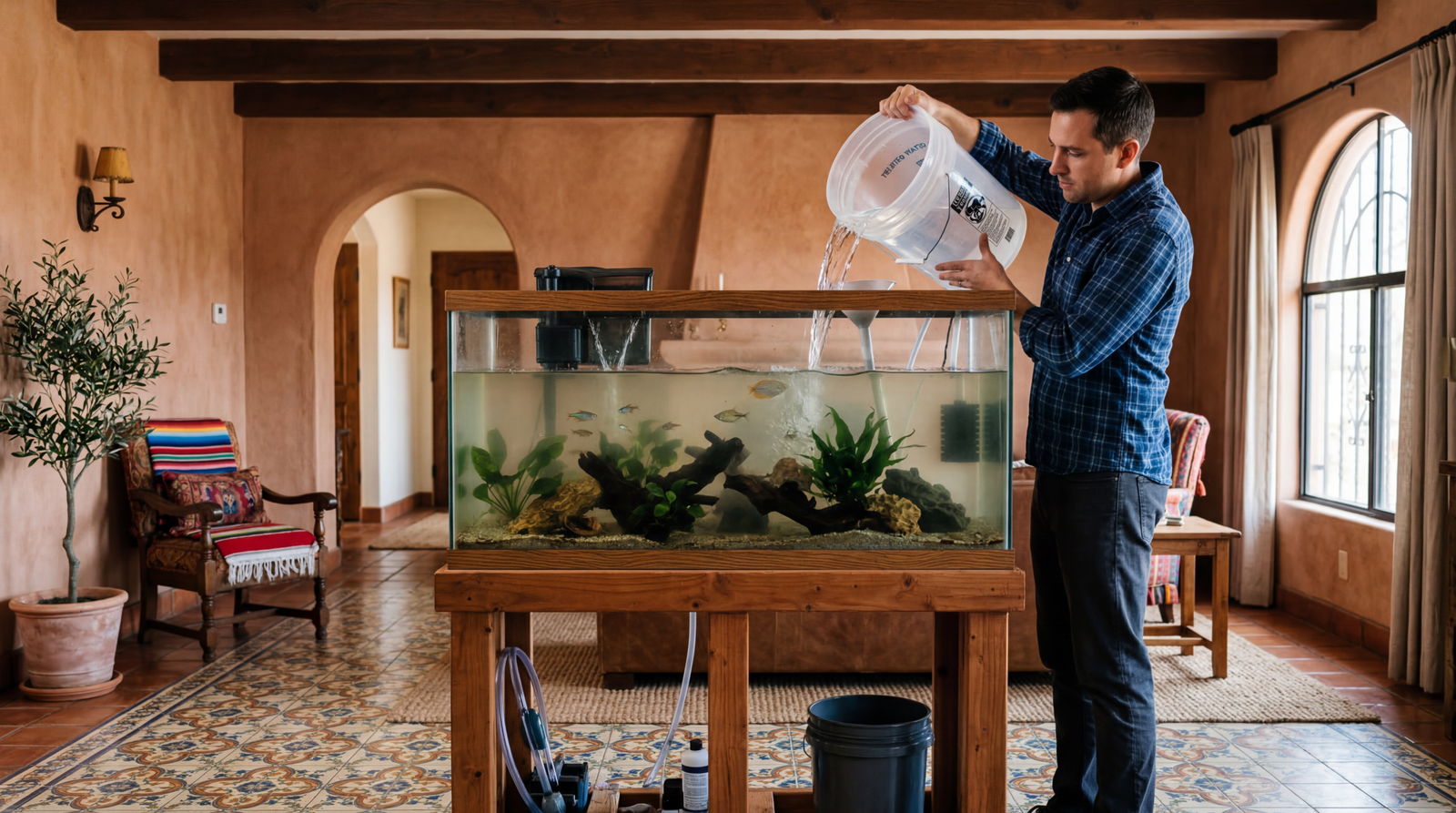
One of the biggest mistakes beginners make is cleaning too much at once. It feels helpful, but it can remove the bacteria that keep the aquarium stable.
Try not to deep-clean the gravel, replace the filter cartridge, scrub every decoration, wipe every surface, and do a large water change all on the same day. That can shock the tank and make cloudy water more likely.
A better approach is to clean in stages. Vacuum part of the substrate, keep useful filter media when possible, and rinse reusable filter parts in removed tank water instead of untreated tap water.
Cloudy water is not always dangerous, but it should be taken seriously if your fish are acting different. Watch for fish gasping near the surface, hiding more than usual, clamped fins, heavy breathing, or sudden loss of appetite.
If you see those signs, test the water as soon as you can. Ammonia and nitrite are the big ones to check because they can rise when the biological filter is disturbed. When in doubt, focus on water quality first instead of trying to make the tank look perfect.
If fish are gasping, dying, or acting severely stressed, contact a qualified aquarium professional or aquatic veterinarian when possible.
Light cloudiness from stirred-up gravel may clear in a few hours. A bacterial bloom can take longer. If the water stays cloudy for several days or your fish seem stressed, test the water and check your filter.
Not always. If the fish are acting normal and water tests are safe, another water change may not be needed right away. Repeated cleaning can keep disturbing the tank. If ammonia or nitrite is present, then a careful water change may be necessary.
Avoid replacing all filter media at the same time unless it is damaged or falling apart. Filter media holds helpful bacteria, and removing too much at once can make the tank unstable.
Green cloudy water usually means algae. It can happen when the tank gets too much light, too much food, or too many nutrients in the water. Reducing light, feeding less, and improving maintenance can help.
Sometimes it is harmless, especially if it is only dust from disturbed gravel. But cloudy water can also be a sign of poor water quality. If your fish are breathing heavily, gasping, or acting stressed, test the water and take action.
If your aquarium stays cloudy after routine cleaning, start by checking whether the filter media was replaced, rinsed too aggressively, or clogged with debris. A stable filter and steady cleaning routine are usually more helpful than another deep clean.
Jump to Filter Media Tips →Written by the Paws Fins and Shells editorial team for beginner aquarium keepers who want simple, practical fish tank care advice without overcomplicating the process.