
Best Dog Car Ramps and Stairs for Senior or Small Dogs
Compare ramp length, step height, rated use and setup before helping your dog into a vehicle.
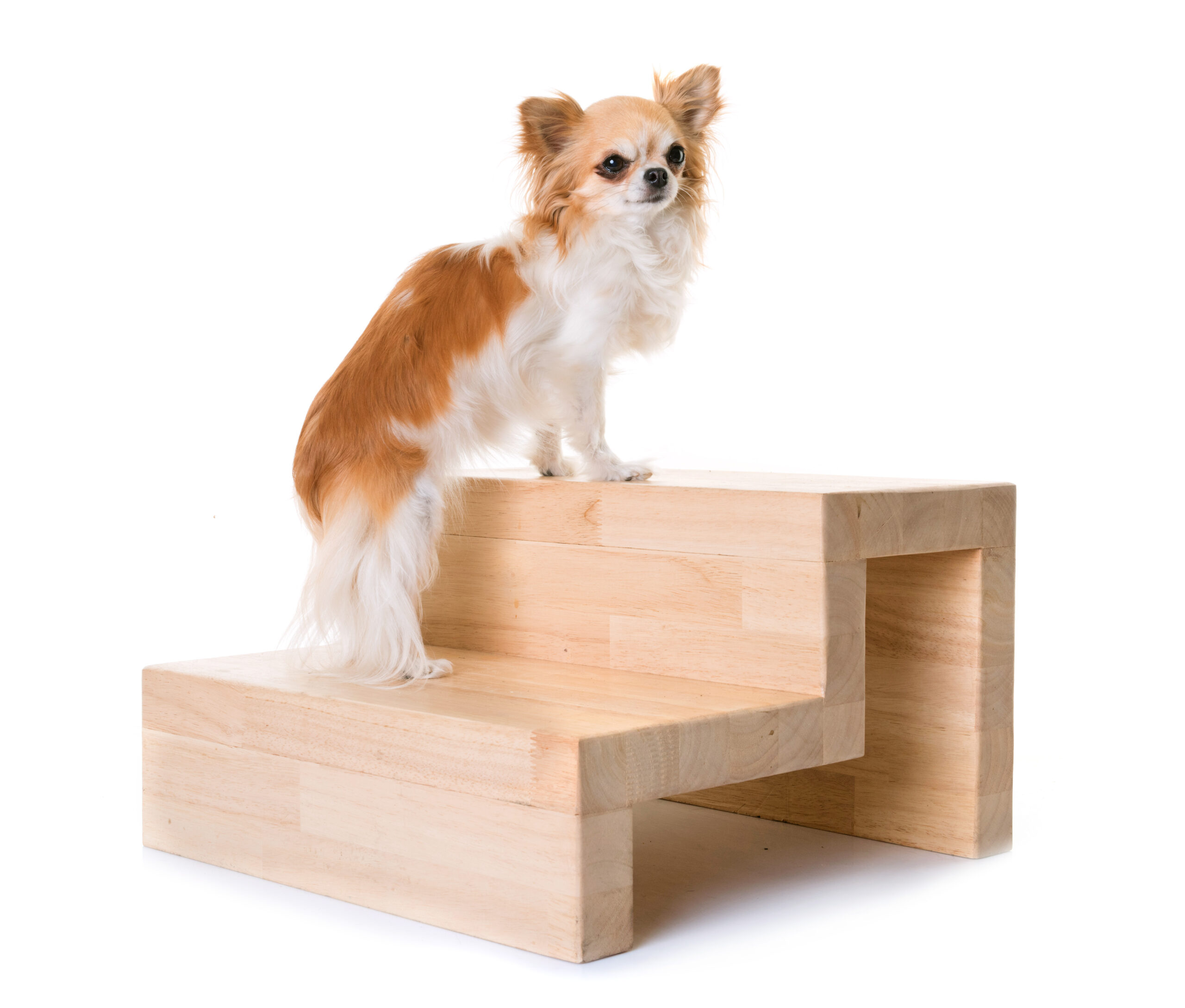
Illustration of a dog on pet steps; the pictured steps are not one of the linked models.
If your dog hesitates at the tailgate or lands stiff-legged after jumping down, pain, fear, vision, or the surface could be involved; discuss new hesitation with your veterinarian. A ramp or steps may be part of an access plan, but equipment does not establish a cause or prevent every injury. Follow your veterinarian’s restrictions for pain, limited mobility or recovery.
Ramps provide an incline; stairs provide separate steps. Compare the actual vehicle height, available ground space and your dog’s access needs. Neither format is automatically appropriate for arthritis or recovery.
Comparison at a Glance
| Pick | Product | Why | Watch For |
|---|---|---|---|
| Telescoping ramp | PetSafe Happy Ride Extra Long Telescoping Dog Ramp | Manufacturer: extends 47–87 inches; rated up to 300 lb when used as directed | Check the 18 lb unit weight and storage dimensions |
| Tri-fold ramp | Pet Gear Travel Lite Tri-Fold Ramp | Folds into three panels, ~15 lbs, supports up to 200 lbs | Needs clear space to unfold |
| Folding steps | PetSafe CozyUp Folding Dog Stairs | Linked listing: folding XL steps with side rails and nonslip pads | Confirm step height, rated use and vehicle access before purchase |
Quick Picks
PetSafe Happy Ride Extra Long Telescoping Dog Ramp
Compare the extra-long model’s 47–87 inch length with your actual vehicle height and setup space.
Check Price on AmazonPet Gear Travel Lite Tri-Fold Ramp
Compare the 71 inch tri-fold model’s folded dimensions and 15 lb unit weight with your storage and handling needs.
Check Price on AmazonPetSafe CozyUp Folding Dog Stairs
Compare the linked folding steps’ dimensions with the actual surface you want your dog to reach.
Check Price on AmazonPetSafe Happy Ride Extra Long Telescoping Dog Ramp
The linked retailer identifies the Extra Long model. PetSafe lists an adjustable 47–87 inch length, an 18 lb unit weight, a high-traction surface and side rails. Measure the intended setup; adjustability alone does not establish a comfortable incline.
Review the extra-long model’s storage size, weight limit and installation directions. Decide whether you can handle and secure it consistently at your vehicle.
- Adjustable 47–87 inch length on the manufacturer’s Extra Long model
- Manufacturer lists up to 300 lb; follow the selected model’s setup and load limit
- High-traction surface and side rails; observe your dog’s response
- Check the listed 18 lb unit weight before choosing it
Pet Gear Travel Lite Tri-Fold Ramp
Pet Gear lists this Travel Lite Tri-Fold model at 71 by 16 by 4 inches and 15 lb, with a carry handle. Compare the folded size and weight with your available storage and handling needs.
The maker lists a 200 lb load limit for this model. Follow the installation directions and allow space for the ramp; a stated load limit does not determine an appropriate incline for your dog.
- Folds compact and weighs about 15 lbs
- Maker describes a skid-resistant tread; inspect and use it as directed
- Rated up to 200 lbs despite the packable design
- Needs clear space behind the vehicle to unfold fully
PetSafe CozyUp Folding Dog Stairs
The linked listing identifies PetSafe CozyUp Folding Dog Stairs in the Extra Large variant, with side rails and nonslip pads. Check that exact variant’s height, step dimensions, load limit and intended use before choosing it for your vehicle.
Compare each step and the final gap with the surface your dog needs to reach. Ask your veterinarian about restrictions for a dog with pain or limited mobility rather than relying on a vehicle-type label.
- Linked folding XL variant has side rails and nonslip pads
- Check the selected variant’s weight and handling instructions
- Follow the selected folding steps’ cleaning directions
- Check step dimensions and the remaining gap at your vehicle
How to Choose
Weight capacity
Follow the selected model’s load limit and installation directions. Inspect it before use; do not infer stability or flex from the stated capacity alone.
Incline and height match to your vehicle
Measure the actual height from the ground to your cargo area or back seat before buying. A ramp too short for a tall SUV creates a steep angle that defeats the purpose; an adjustable ramp still needs a measured, secure setup.
Non-slip surface
Look for textured tread, raised ridges, or a fabric cover rather than bare plastic or smooth rubber, especially for wet weather.
Foldability and storage
If you're loading this in and out regularly, weight and fold size matter as much as capacity. A ramp you dread setting up stops getting used.
FAQ
Is a ramp or stairs better for a dog with arthritis?
Ask your veterinarian which access method fits your dog’s mobility and restrictions. Compare incline, traction and step dimensions; neither format is automatically suitable for arthritis.
What weight capacity should I look for?
Follow the selected model's stated weight limit and setup instructions, and choose dimensions and incline your dog can use comfortably. Ask your vet about mobility restrictions.
Will my dog actually use a ramp or stairs?
Introduce it gradually with the vehicle parked and the equipment secured. Let your dog approach without forcing them; the time needed varies.
Can one ramp work for both an SUV and a sedan?
Possibly. Measure both setups against the selected model’s length and installation directions; telescoping adjustment does not guarantee that one ramp fits both.
Final Take
Compare these three access options by actual setup, dimensions and handling needs. A purchase is not a substitute for assessment of pain or recovery restrictions. If unsure which style fits your vehicle, the PetSafe Happy Ride is an option to compare when its length and rated setup match your vehicle; if space or weight matters more, the Pet Gear Travel Lite or PetSafe CozyUp Folding Dog Stairs are alternatives to compare against the same access checks.