
Affection and Social Communication
Dogs may lick during social interaction. The meaning depends on the individual and circumstances; a greeting or apparently relaxed posture does not prove that persistent licking is harmless.
Note whether the behavior is brief, repeated, easy to interrupt, or accompanied by skin or health changes. Share a new or persistent pattern with your veterinarian.
You can gently redirect unwanted contact, but persistent licking should not automatically be treated as only a training issue. Seek assessment if it is new, hard to interrupt, or causing irritation.
Exploring the World Through Taste and Smell
Dogs investigate their surroundings with smell and taste. Prevent access to cleaners, harmful foods, plants, and objects that could be swallowed rather than assuming investigation is safe.
Food residue or unfamiliar materials may attract attention, but the target surface alone cannot identify why your dog is licking it.
Limit access to harmful substances and seek prompt veterinary advice after suspected ingestion. Normal eating, drinking, or activity does not prove that persistent surface licking is harmless.
Boredom, Anxiety, or a Need for an Outlet
Boredom or anxiety may contribute to repetitive behavior, but physical and behavioral causes can overlap. Veterinary evaluation should come before labeling persistent licking a habit or compulsive disorder.
Record whether licking happens around departures, quiet periods, or other events. Timing alone cannot establish separation anxiety, insufficient exercise, or a breed-related cause.
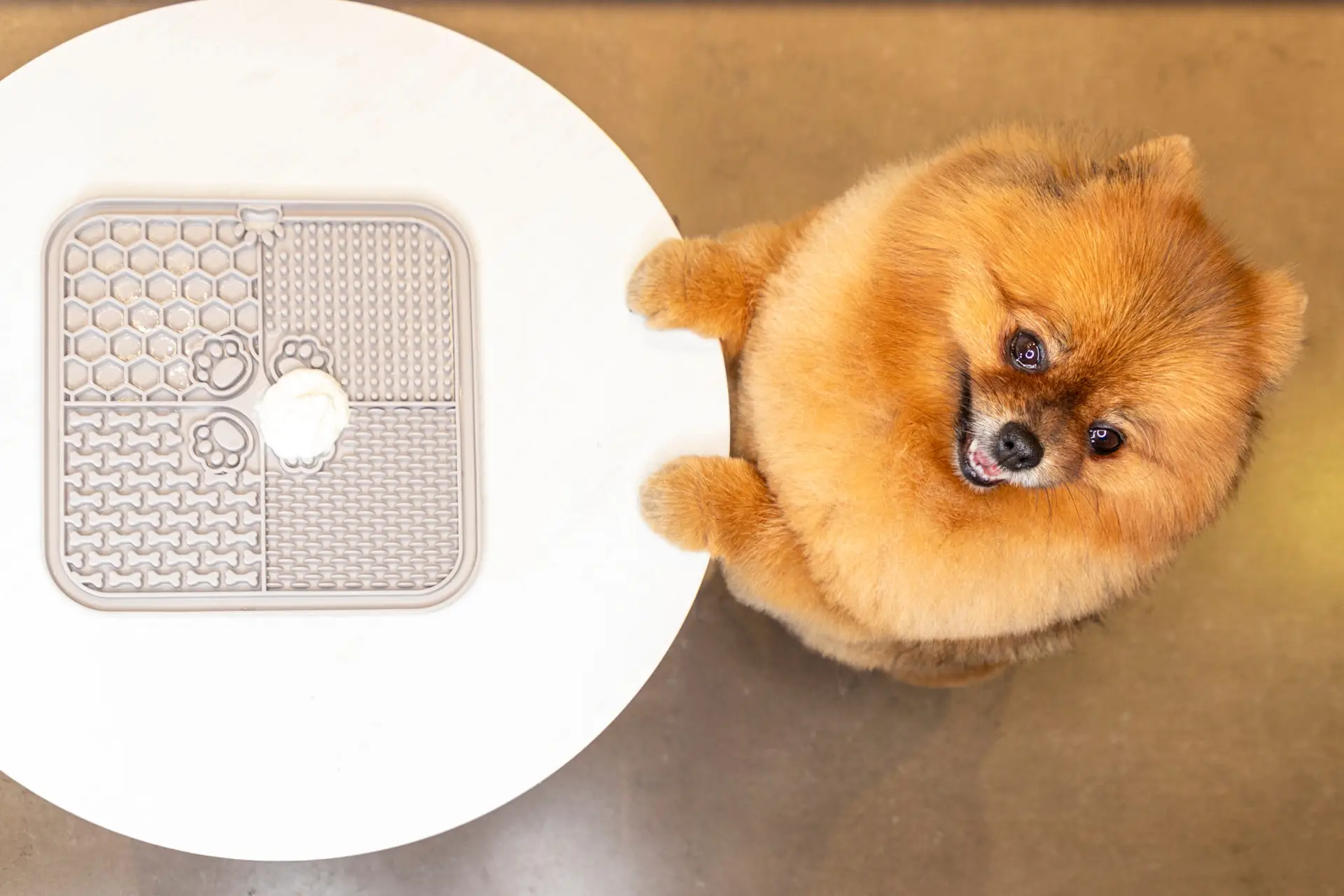
Avoid punishment. Appropriate enrichment may be useful as part of a plan, but a lick mat cannot identify or treat the cause of persistent licking.
Compare the exact LickiMat model and its instructions. Select foods and portions that suit your dog, supervise introduction, and remove the mat if chewed. It does not identify or treat the cause of compulsive licking, which may need veterinary or behavior assessment.
Check Price on AmazonUse it only as an appropriate food activity, following the model directions. Remove the mat if your dog chews it; do not assume a mat is suitable for unsupervised crate or departure use.
Illness or Discomfort Is Possible
Lip licking, drooling, or repeated swallowing can accompany nausea or other problems. Surface licking does not establish a gastrointestinal cause, and extra saliva is not a treatment.
Report changes in appetite, vomiting, drooling, swallowing, or behavior to your veterinarian. Multiple conditions can produce overlapping signs; neither sudden onset nor frantic movement identifies the cause.
Ask your veterinarian promptly about new or excessive licking with appetite loss, vomiting, drooling, or other symptoms. Suspected poisoning or foreign-object ingestion, collapse, or severe illness needs urgent advice; no same-day/next-day waiting rule applies.
Attention-Seeking
Responses from people can influence behavior, but attention is not the only possible explanation. Record what happens before and after licking without assuming an intent or diagnosis.
Stopping when interrupted does not rule out discomfort or illness. Share recurring or hard-to-interrupt licking with your veterinarian before treating it solely as attention-seeking.
After assessment, a tailored plan may include rewarding an alternative behavior and appropriate activity. Avoid scolding, and do not ignore new licking or skin injury as a training tactic.
When to Call the Vet
- Sudden, excessive licking of the air, objects, or their own lips — especially combined with drooling, repeated swallowing, or a dog that's suddenly not interested in food.
- New or persistent licking with vomiting, reduced appetite, or other illness signs: contact your veterinarian promptly rather than waiting a day.
- Licking one specific spot on their body raw, bald, or irritated — a sign of pain, an allergy, a skin infection, or a compulsive disorder that needs a vet's help to sort out.
- Any new or intense licking pattern paired with other symptoms — when in doubt, it's worth a call rather than waiting it out.
FAQ
Is it normal for my dog to lick me constantly?
Brief social licking can occur, but constant or hard-to-interrupt licking needs assessment rather than an assumed boredom, anxiety, or attention diagnosis.
Why does my dog lick the floor after I cook?
Food residue may attract licking, but do not assume the surface is harmless. Prevent access to spills and cleaners, and get prompt advice if a harmful substance may have been swallowed.
Can allergies cause excessive licking?
Allergies are one possibility, alongside pain, infection, or other causes. Red, raw, irritated, or hairless skin needs veterinary assessment; the location alone cannot diagnose an allergy.
How do I stop my dog from licking furniture or walls?
Have new or persistent surface licking assessed before labeling it boredom or anxiety. Suitable enrichment may be one part of a plan; follow the mat's instructions and supervision requirements instead of assuming departure use is appropriate.
Should I ever let my dog lick my face?
CDC advises keeping dog licking away from the mouth, face, open wounds, and broken skin. Redirect gently and wash after contact; do not use a healthy appearance as proof that saliva carries no germs.