
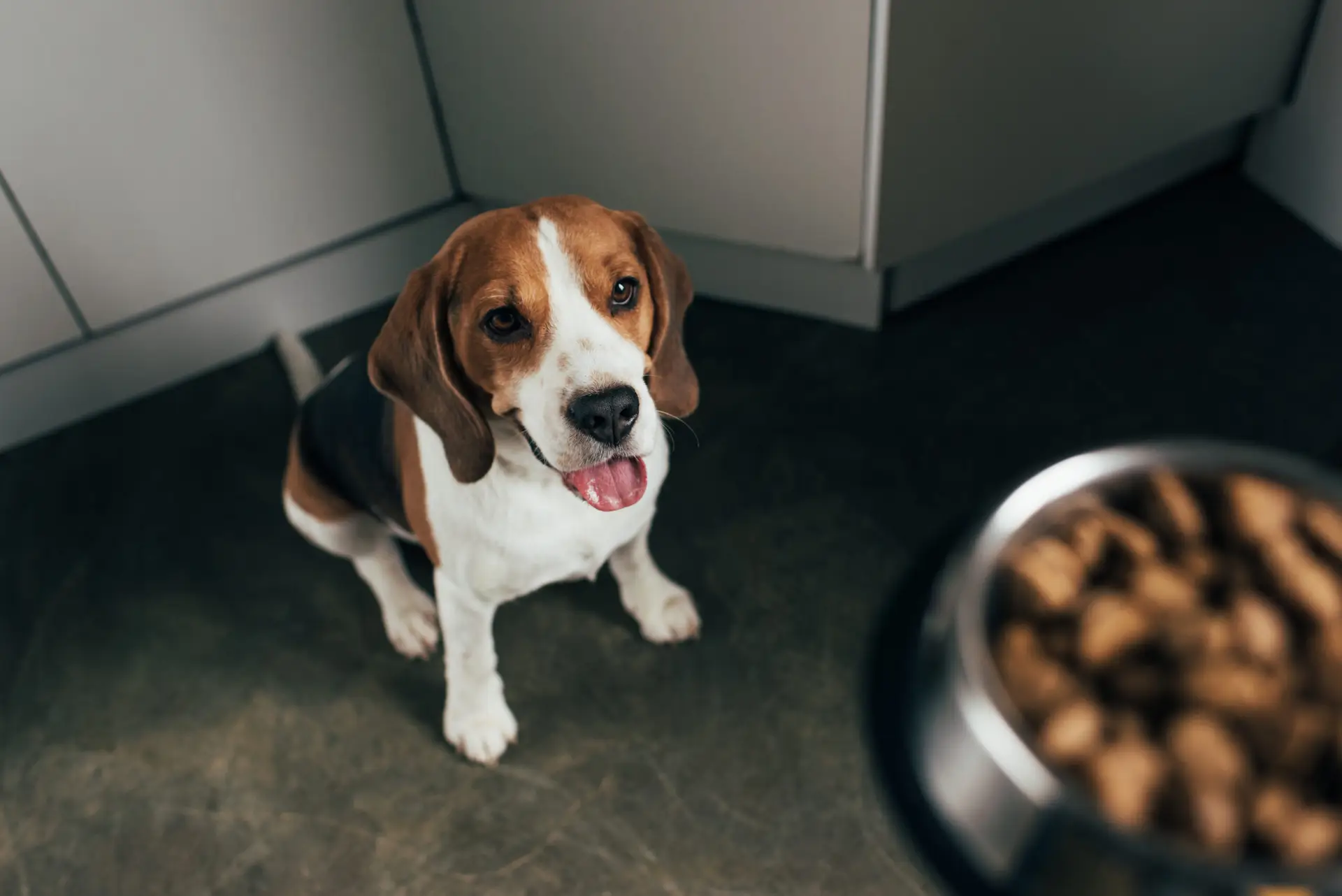
Stress, Anxiety, or a Change in Environment
Dogs are creatures of routine, and their appetite is one of the first things to go when that routine gets disrupted. A move, a new pet or baby in the house, boarding, a thunderstorm, construction noise next door, even rearranging furniture — any of it can be enough to shut down a dog's interest in food for a meal or two. This is especially common in dogs that are naturally anxious or that were recently adopted and haven't settled in yet.
Note routine changes and other behavior alongside food intake. They may help your veterinarian assess the problem, but they do not establish a stress diagnosis or a one-day recovery expectation.
You can help by keeping mealtimes as normal as possible: same spot, same bowl, same time, minimal foot traffic nearby while they eat. Some dogs do better eating in a quiet room or a crate they already feel safe in rather than a busy kitchen. Don't hover over the bowl waiting for them to eat — that adds pressure, and dogs pick up on it. If a dog is eating less but still drinking water, playing, and acting otherwise normal, contact your veterinarian for advice on monitoring and timing; normal drinking or play does not rule out a health problem. If the anxiety itself seems like the bigger issue and it's showing up around other triggers too, not just meals, that's worth digging into separately.
Picky Eating or Food That's Gone Boring
Note changes in food type, storage, and the feeding environment. Apparent pickiness cannot rule out discomfort or illness.
Before adding a topper or changing food, check with your veterinarian if refusal is new, persistent, or accompanied by other symptoms. The Savory Roasted Beef Dog Food Topper with Bone Broth & Probiotics for Picky Eaters is a topper to compare by its current ingredients, calories, and feeding directions. Ask your veterinarian whether adding it fits your dog's nutritional needs.
A dog-food topper to compare by its current label and your dog's nutritional needs.
Check Price on AmazonAsk your veterinarian about unexplained food refusal rather than trying to rule out pain or nausea from appearance alone.
Dental Pain
Dental pain can make eating difficult. Dry kibble requires real chewing pressure, and a cracked tooth, an abscess, advanced tartar, or gum disease can make every bite hurt. Instead of refusing food outright, a lot of dogs with dental pain will approach the bowl, show interest, then back off after a bite or two — or they'll eat on one side of their mouth only, drop food while chewing, or favor soft treats over kibble.
Other signs to watch for alongside reduced eating: bad breath that's gotten noticeably worse, pawing at the face or mouth, drooling more than usual, visible tartar buildup or red/swollen gums, or reluctance to let you touch their mouth or head. Small and toy breeds are especially prone to dental disease because their teeth are crowded into a small jaw, but any dog that hasn't had a dental cleaning in a while is a candidate.
Arrange a veterinary examination if eating seems painful, and ask about suitable feeding while awaiting assessment. A response to softer food does not diagnose dental disease; treatment depends on the examination.
Recent Diet Change
Switching foods too fast is a classic reason dogs suddenly go off their food, and it's easy to miss the connection if the switch happened a few days before the appetite drop rather than the same day. A new food has a different smell, texture, and taste than what a dog is used to, and some dogs simply reject it at first out of pure unfamiliarity — this is separate from a stomach reaction, though the two often show up together.
Timing alone cannot establish that a new food caused the problem. Ask your veterinarian how to handle continued refusal or accompanying symptoms and whether a diet change is appropriate, rather than repeatedly switching foods.
Do not rely on hunger to force acceptance of a new food. Discuss food refusal with your veterinarian.
Illness
Appetite loss can accompany illness. Tell your veterinarian about food intake and symptoms such as vomiting, diarrhea, weakness, pain, or unusual thirst; absence of another obvious sign does not settle the cause.
Normal drinking or interest in a topper cannot rule out illness. Describe food and water intake for your veterinarian rather than testing different foods to identify the cause.
Contact your veterinarian promptly about new or persistent appetite loss or other symptoms. Do not keep experimenting with food swaps while trying to rule out illness yourself.
When to Worry / Call the Vet
Ask your veterinarian early about food refusal. Puppies, very small dogs, and dogs with medical conditions need individualized advice. Vomiting, weakness, a painful or distended abdomen, or other illness signs increases the concern; no general one-day rule applies.
When to Call the Vet
- New or persistent refusal of food, with earlier individualized advice for vulnerable dogs
- Food refusal alongside vomiting
- Food refusal alongside diarrhea
- Lethargy or a dog that seems "off" and withdrawn
- Unsteadiness
- A distended or painful belly
- Noticeable weight loss
- Fever
FAQ
My dog is still drinking water but won't eat — is that less serious?
Drinking or playing does not rule out illness. Tell your veterinarian about the appetite change and seek advice early rather than using normal activity as a waiting test.
Should I switch my dog's food if they suddenly stop eating it?
Ask your veterinarian before changing food or adding a topper for unexplained refusal. Nutrition choices should suit your dog's health, diet, and actual intake.
Is it okay to hand-feed a dog that won't eat?
Ask your veterinarian whether assisted feeding is appropriate and how to do it. Do not use hand-feeding response as a reason to delay assessment.
Can stress alone really cause a dog to stop eating?
Stress can affect food intake, but timing or behavior alone cannot establish the cause. Share routine changes with your veterinarian.
How long can a healthy adult dog safely go without eating?
Do not use a fasting limit to decide whether a dog is well. Ask your veterinarian promptly about food refusal, and seek earlier advice for puppies, small dogs, diabetic dogs, or any dog with other symptoms.